If you spend enough time in cross-border freight, you’ll notice a pattern.
When a shipment misses its delivery window, the first reaction is often to blame customs, inspections, or congestion at the border. While those issues certainly happen, they’re rarely the root cause.
More often than not, the shipment was already heading toward failure before it reached the crossing.
Incomplete paperwork. A carrier arriving hours earlier than scheduled. A warehouse that wasn’t ready to load. A drayage handoff that wasn’t coordinated. An appointment booked without accounting for border wait times.
Those small operational mistakes compound quickly.
In this market, where freight continues to grow while capacity remains selective, brokers who can prevent these failures create significantly more value than brokers who simply recover from them.
This article examines where cross-border logistics usually breaks down, why July 2026 has made planning even more important, and how experienced brokers use better processes, not just better rates, to keep freight moving.
Why Cross-Border Feels Tighter in July 2026
At first glance, the freight market sends mixed signals.
Shipment demand isn’t exploding, yet brokers across many border markets are finding that dependable capacity is becoming harder to secure.
The numbers explain why.
The Cass Freight Index (June 2026) showed shipment volumes remained relatively soft while freight expenditures continued to rise, indicating that transportation costs are increasing faster than overall freight demand [Cass Information Systems, 2026]. At the same time, the Energy Information Administration (EIA) reported diesel prices continued climbing through the week of July 20, increasing operating costs across long-haul trucking [EIA, 2026].
Meanwhile, rail continues gaining momentum. The Association of American Railroads (AAR) reported intermodal traffic in both the U.S. and Mexico continued expanding during June, reflecting stronger use of rail-supported freight corridors [AAR, 2026].
The result is a market where capacity isn’t disappearing, it is becoming more selective.
Reliable carriers are filling their schedules earlier. Border capacity is being allocated more carefully. Every unnecessary delay makes it harder to recover the shipment later.
Why July Feels Different
| Market Indicator | Operational Impact |
| Freight expenditures rising | Higher transportation costs |
| Diesel prices increasing | More pressure on carrier pricing |
| Intermodal growth continues | More routing options but greater planning required |
| Stable shipment demand | Capacity tightening driven by quality, not volume |
For experienced brokers, the takeaway is clear: winning in cross-border freight isn’t about reacting faster. It’s about planning earlier.
“As markets tighten, execution becomes a competitive advantage. The brokers who consistently hit delivery windows are usually the ones who made the best decisions before pickup.”
Is your team spending more time solving border problems or preventing them?
The Three Failure Points Before the Crossing
When shipments fail, many people look at what happened at the border. Experienced brokers look at what happened before it.
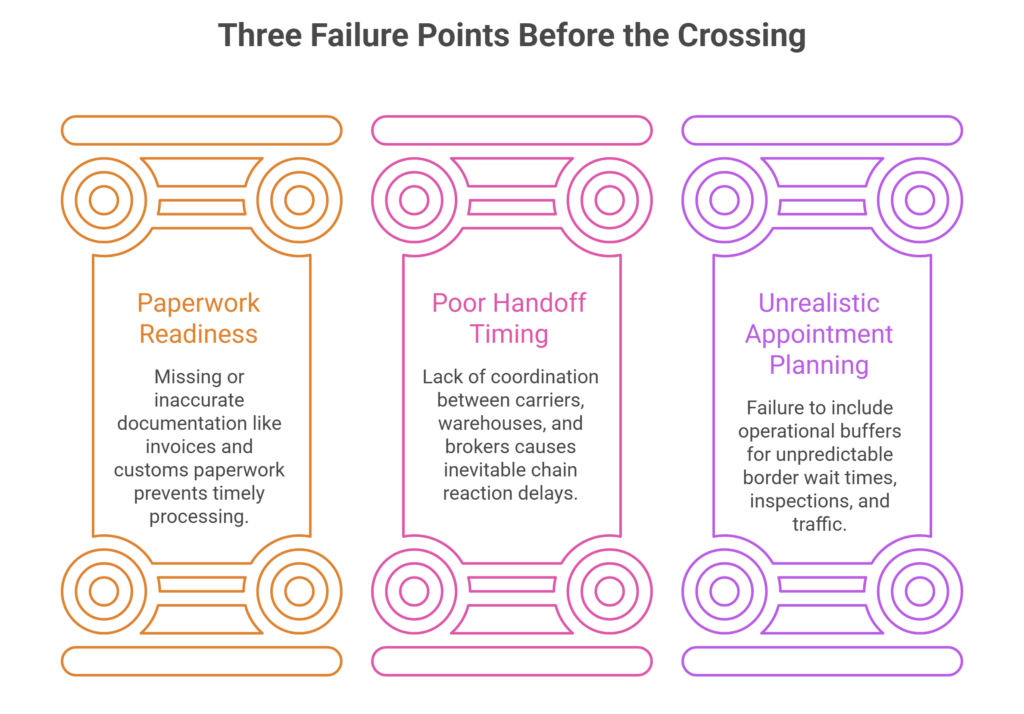
Across industry discussions, three operational issues appear again and again: incomplete paperwork, poorly coordinated handoffs, and unrealistic appointment scheduling. None of them are dramatic, yet together they account for a large share of preventable service failures.
1. Paperwork Readiness
The fastest truck in North America cannot compensate for missing or inaccurate documentation.
Issues commonly include:
- Incorrect commercial invoices.
- Missing customs paperwork.
- Inconsistent shipment descriptions.
- Incorrect weights or commodity codes.
- Late document submission.
Strong shipper documentation processes allow brokers and customs partners to identify issues before the truck departs rather than after it reaches the border.
2. Poor Handoff Timing
Cross-border transportation depends on coordination.
If the carrier, warehouse, customs broker, consignee, or intermodal drayage partner operates on different timelines, delays become almost inevitable.
Even a two-hour loading delay can trigger a chain reaction affecting border appointments, relay drivers, warehouse availability, and final delivery windows.
3. Unrealistic Appointment Planning
Appointment times often look reasonable on paper.
Reality is different. Border wait times fluctuate, inspections are unpredictable, and traffic conditions change daily.
Experienced brokers build schedules with operational buffers instead of assuming every shipment will move under ideal conditions.
Common Pre-Border Risks
| Failure Point | Likely Outcome |
| Missing paperwork | Customs delays |
| Poor handoff coordination | Missed appointments |
| Tight scheduling | Delivery failures |
| Limited communication | Reactive problem solving |
A recurring theme from transportation professionals online is that the most frustrating shipment delays often begin with seemingly minor planning mistakes, not major operational failures. The border simply exposes them.
“Most border delays don’t start at the border. They’re already built into the shipment plan.”
Which of these three issues creates the biggest challenge in your current operation?
When Truckload vs. Intermodal vs. Transload Makes Sense
One of the biggest mistakes in cross-border logistics is assuming every shipment belongs on the same transportation model.
Experienced brokers choose the mode based on the shipment, not habit.
Direct Truckload
Best for:
- Time-sensitive freight.
- High-value cargo.
- Full truckload shipments.
- Customers requiring minimal handling.
Intermodal Drayage
Works well when:
- Freight moves long distances.
- Delivery windows are flexible.
- Cost consistency matters more than maximum speed.
- Rail infrastructure supports the lane.
Transload Operations
A strong choice when:
- Domestic capacity exceeds cross-border capacity.
- Freight must be redistributed.
- Multiple customer locations are involved.
- Border equipment availability is limited.
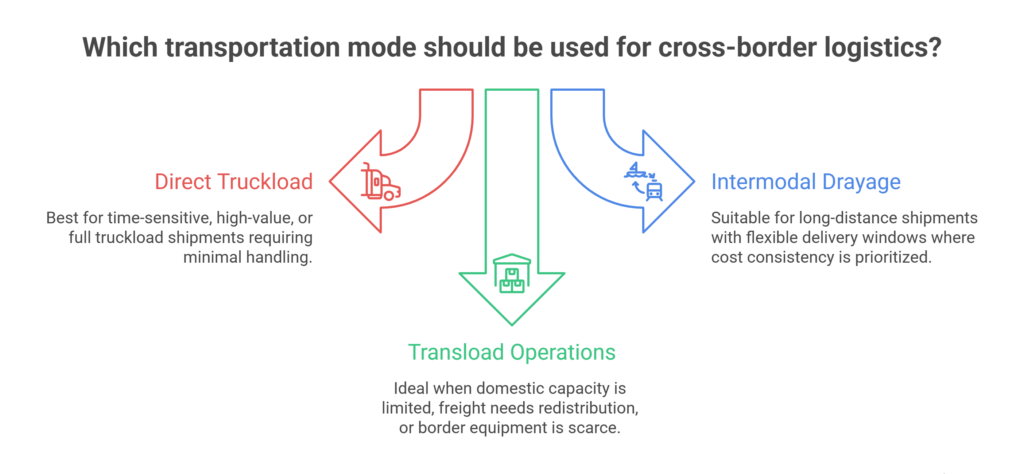
The strongest brokers don’t recommend the cheapest mode. They recommend the operating model most likely to protect service.
Lane Scenario: A broker managing recurring US Mexico freight from Monterrey to Kansas City noticed that deliveries were consistently arriving one day late. Instead of changing carriers, the brokerage reviewed the operation and discovered the shipment was waiting several hours after crossing for available domestic equipment. By restructuring the lane with a planned transload near the border, domestic trailers were staged in advance, reducing delays without increasing transportation costs.
“Mode selection isn’t about replacing truckload, it’s about giving each shipment the operating model it deserves.”
How many of your lanes still operate the same way simply because they’ve always operated that way?
A Simple Pre-Border Checklist for Shippers
A strong cross-border shipping checklist doesn’t eliminate every delay, but it dramatically reduces preventable ones.
Before freight is tendered, experienced brokers encourage shippers to confirm:
- All shipper documentation has been verified.
- Pickup appointments are realistic.
- Delivery appointments allow reasonable transit flexibility.
- Customs documentation is complete.
- Backup carrier communication is established.
- Contact information has been confirmed for every handoff.
- The selected mode matches the shipment’s priorities.
- The shipment has been evaluated for truckload, intermodal drayage, or transload opportunities.
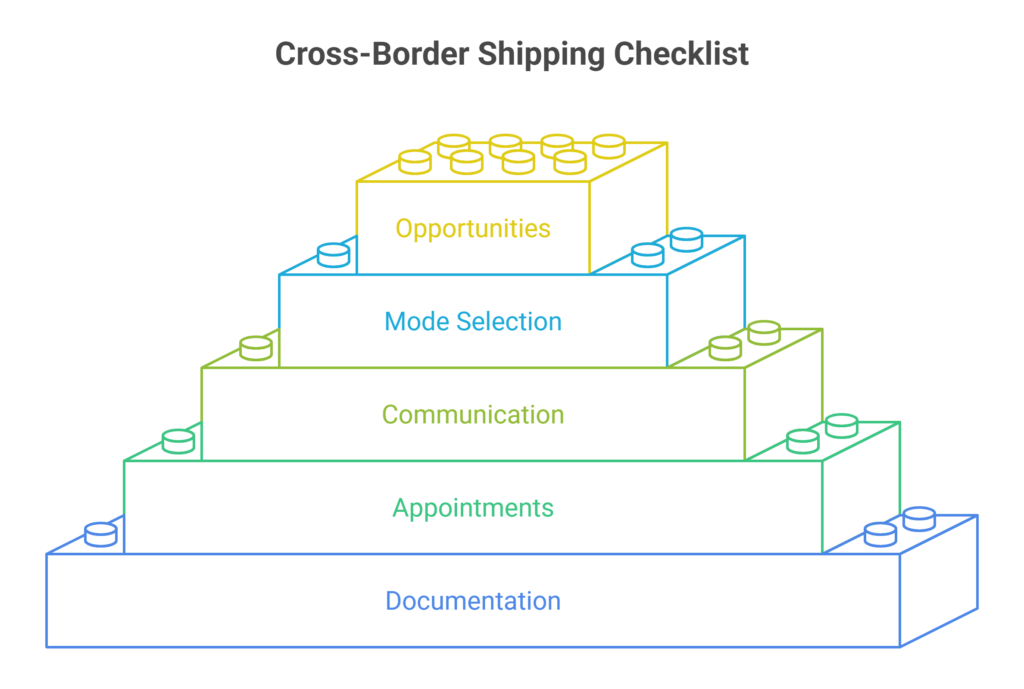
This checklist may take only a few minutes, but it can prevent hours, or even days of disruption.
“The cheapest shipment is usually the one that doesn’t require recovery.”
Want fewer border delays and smoother deliveries? Discover how SPI’s shipping services help keep freight moving.
What Experienced Agents Do Differently
Less experienced brokers often compete on one thing: Price.
Experienced brokers compete on predictability. They understand that customers remember the shipment that arrived exactly when promised far longer than they remember saving a few cents per mile.
The strongest brokers consistently:
- Build contingency plans before pickup.
- Recommend the right transportation mode, not the familiar one.
- Monitor documentation before dispatch.
- Communicate proactively instead of reactively.
- Adjust routing when market conditions change.
- Use operational support instead of trying to solve every issue alone.
That’s also where brokerage platforms begin separating themselves. The best agent networks don’t simply provide load access.
They provide experienced operations teams, technology, carrier relationships, and market intelligence that allow brokers to spend more time advising customers and less time recovering shipments.
Transactional vs. Strategic Brokerage
| Transactional Broker | Experienced Agent |
| Covers loads | Protects customer supply chains |
| Reacts to delays | Prevents delays |
| Competes on rates | Competes on execution |
| Sells capacity | Sells confidence |
Customers rarely ask whether a broker had an easy shipment. They ask whether the broker made the difficult shipment look easy.
“The brokers customers trust most are usually the ones whose planning never becomes visible because nothing goes wrong.”
Ready to broker freight with more confidence and consistency? See what successful agents do differently.
Frequently Asked Questions(FAQs)
1. What causes most cross-border freight delivery delays?
Many delivery failures begin before the shipment reaches the border. Common causes include incomplete paperwork, poor appointment planning, delayed warehouse handoffs, and communication gaps between transportation partners.
2. When should brokers consider intermodal instead of truckload?
Intermodal drayage is often a strong option for longer-distance freight where delivery schedules allow greater flexibility and customers prioritize cost consistency over maximum transit speed.
3. Why is a cross-border shipping checklist important?
A structured cross-border shipping checklist helps verify documentation, appointments, carrier coordination, and routing decisions before freight departs, reducing preventable service disruptions.
Cross-Border Success Begins with Better Planning
Successful cross-border freight operations are built long before a truck reaches the inspection booth. While border congestion, fuel prices, and enforcement all influence transit times, the shipments that consistently meet delivery windows usually have one thing in common: they were planned correctly from the beginning.
Experienced brokers know that execution starts with preparation. By validating shipper documentation, coordinating handoffs, selecting the right transportation mode, and following a disciplined cross-border shipping checklist, they reduce avoidable risk while building stronger relationships with their customers. In a market where US Mexico freight continues to evolve, the brokers who create the most value won’t simply move freight across the border, they’ll make sure it arrives as planned.
Ready to simplify your cross-border freight operations and reduce costly delays? Talk to SPI about building a cross-border book with operational support, mode flexibility, and agent-first economics.
References
Association of American Railroads. (2026). Weekly Rail Traffic Report and Intermodal Trends. Retrieved from https://www.aar.org
Cass Information Systems. (2026). Cass Freight Index® Report – June 2026. Retrieved from https://www.cassinfo.com
U.S. Energy Information Administration. (2026). Weekly Retail On-Highway Diesel Prices. Retrieved from https://www.eia.gov
FreightWaves. (2026). Cross-Border Freight and Mexico Logistics Market News. Retrieved from https://www.freightwaves.com
Reddit. (2026). Discussions from r/FreightBrokers and r/Truckers on Cross-Border Operations and Delivery Challenges. Retrieved from https://www.reddit.com