If you’re looking into becoming a freight broker, you’ve probably come across two main paths: free training resources and paid programs.
Some people swear by free content. Others insist paid training is the only way to learn properly. And then there’s a third question that often comes up:
Do certifications even matter?
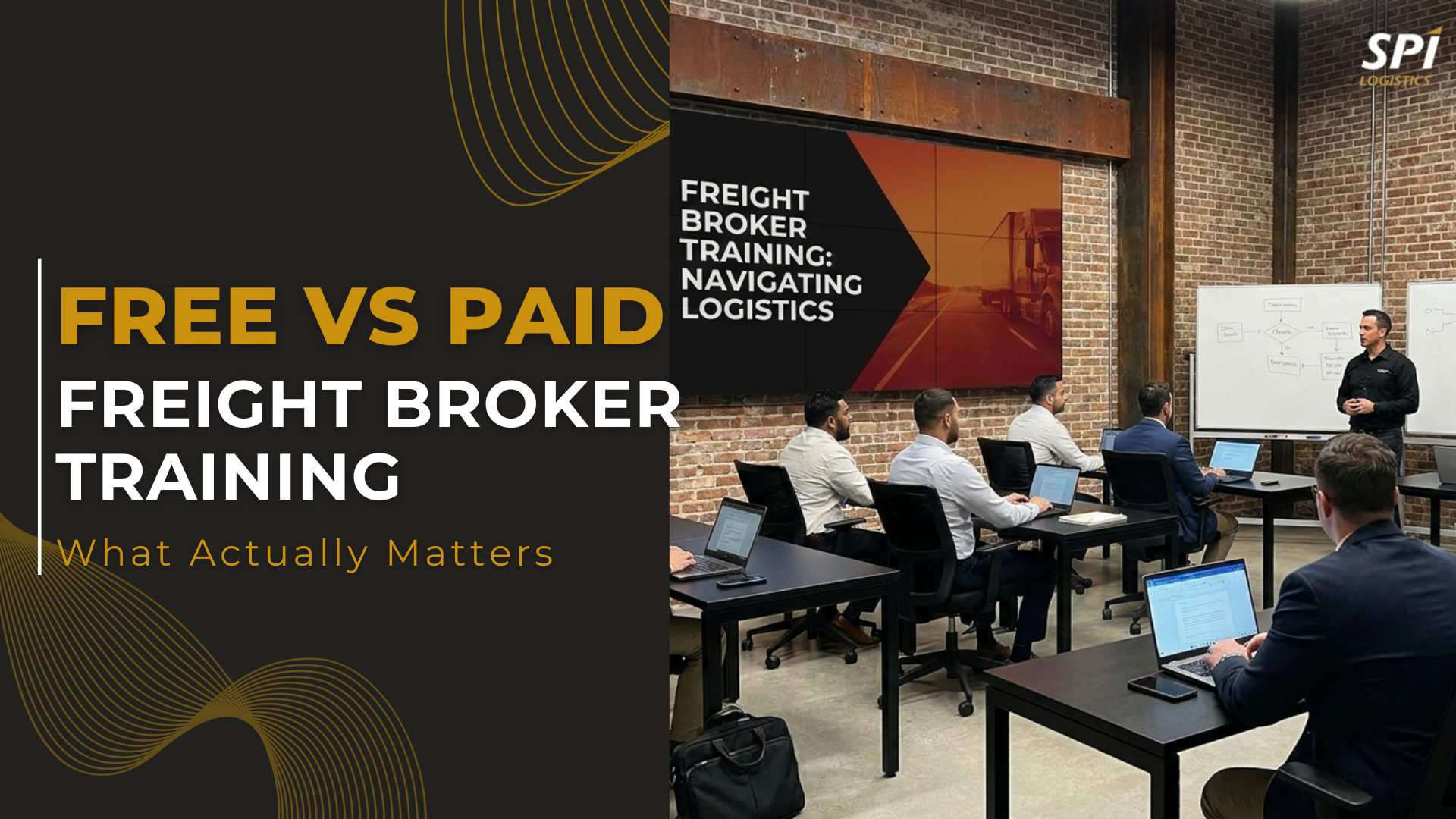
The reality is, each of these plays a different role in your journey. This guide breaks down free vs paid freight broker training, what certifications actually do (and don’t do), and how to combine everything into a path that actually leads to real results.
Free Freight Broker Training: What You Actually Get
Free training is where most people begin, and it plays an important role in building a strong foundation.
It helps you:
- Understand how freight brokerage works
- Learn industry terminology and workflows
- Explore tools like load boards and rate systems
- Build confidence before making bigger commitments
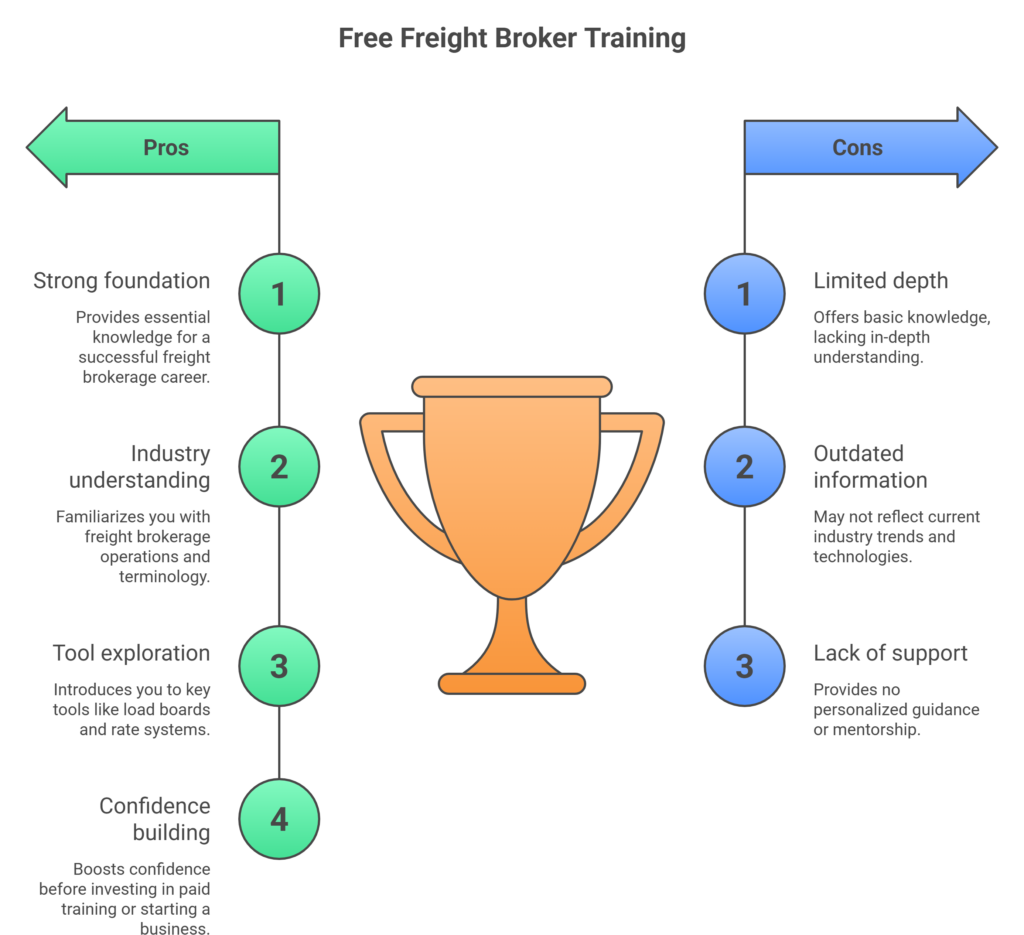
The main advantage of free training is accessibility. It allows you to learn without risk and explore the industry at your own pace.
However, like any self-guided learning, the experience can vary depending on how consistently you apply what you learn and how you connect different pieces of information.
“Free training builds the foundation, it’s often the first step toward understanding how the industry operates.”
How much value do you think you can get from free training before needing more structured guidance?
Paid Freight Broker Training: Is It Worth It?
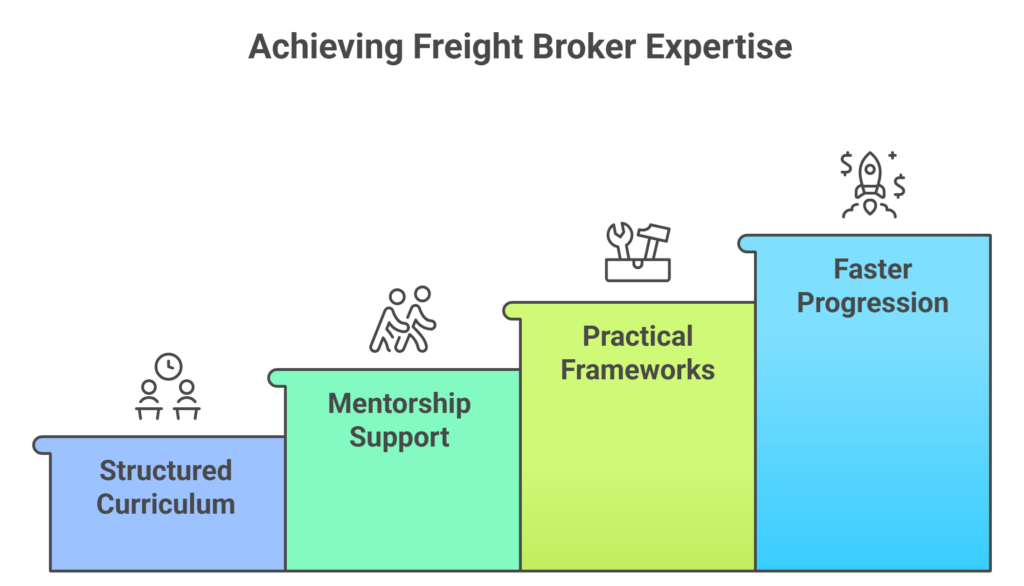
Paid training programs are designed to provide structure, guidance, and a more direct learning path.
They often include:
- Organized, step-by-step curriculum
- Mentorship or instructor support
- Practical frameworks and workflows
- Faster learning progression compared to self-study
For many people, this structure helps reduce confusion and accelerates confidence, especially in the early stages.
That said, the effectiveness of paid training depends on:
- The quality of the program
- How actively you engage with it
- How quickly you apply what you learn
Paid training can be especially helpful if you prefer a clear roadmap instead of piecing information together yourself.
“Paid training can accelerate your learning, but the real value comes from how you apply it.”
Do you learn better through structured programs or by exploring and figuring things out independently?
Free vs Paid Training: The Real Difference
When comparing free and paid training, it’s less about which one is better and more about how they fit into your learning journey.
- Free training offers flexibility and accessibility
- Paid training provides structure and direction
- Both help build knowledge in different ways
The most effective approach is often a combination:
- Start with free resources to understand the basics
- Use structured training to deepen your understanding
- Apply what you learn in real-world scenarios
Each stage builds on the previous one, helping you move from awareness to confidence.
| Feature | Free Training | Paid Training |
| Cost | No cost | Requires financial investment |
| Learning Structure | Self-guided, flexible | Structured, step-by-step curriculum |
| Depth of Content | Basic to intermediate | Often more in-depth and comprehensive |
| Support & Guidance | Limited or none | Access to mentors or instructors |
| Learning Speed | Depends on personal pace | Typically faster due to clear roadmap |
| Practical Application | Requires self-initiative | Often includes guided exercises |
| Risk Level | Low (no financial commitment) | Higher (depends on program quality) |
| Best For | Beginners exploring the industry | Learners seeking direction and clarity |
“Each type of training serves a purpose. The key is knowing when to use each one.”
Where do you think you are right now: Exploring the basics or ready for structured learning?
Do Freight Broker Certifications Actually Matter?
Freight broker certifications are not required to operate, but they can still play a useful role, especially for beginners.
They can help:
- Build foundational knowledge
- Add structure to your learning
- Increase confidence when starting out
In many cases, certifications are used as a learning tool rather than a career requirement.
In real-world operations, success is typically driven by:
- Communication skills
- Market understanding
- Relationship building
- Problem-solving ability
So while certifications can support your development, they’re best viewed as a supplement, not a substitute, for practical experience.
“Certifications can guide your learning, but your results will ultimately come from how you apply that knowledge.”
Do you see certifications as a starting point, a confidence boost, or something essential to success?
The Missing Piece: Hands-On Experience
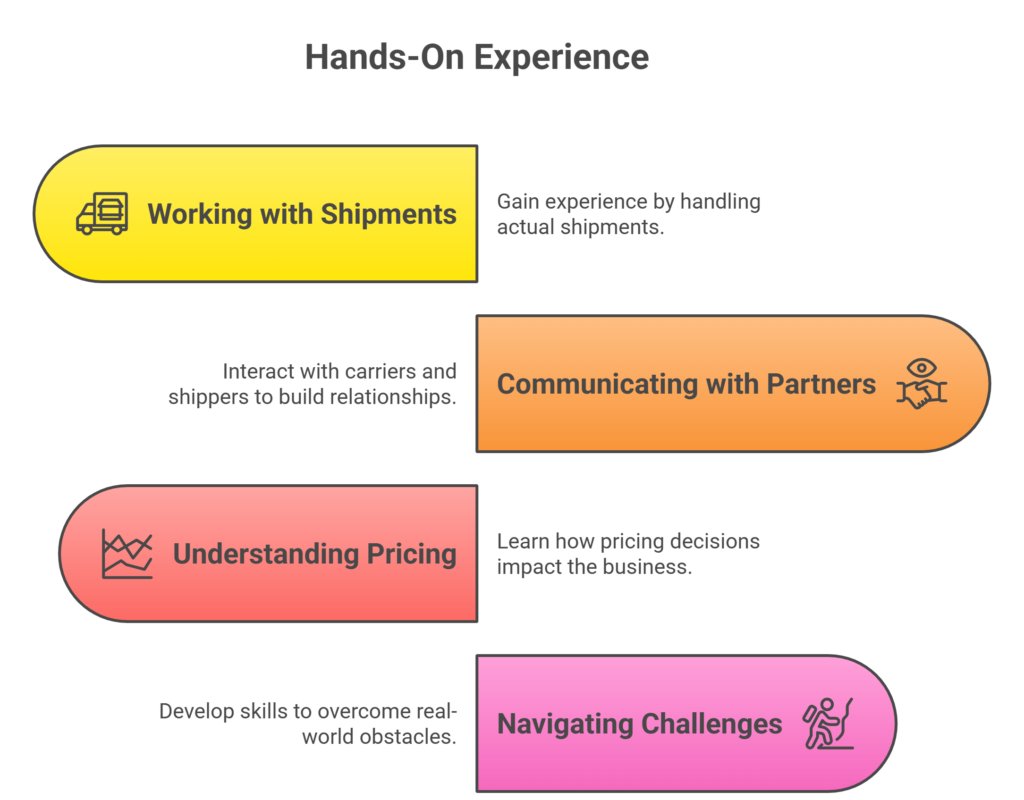
One of the most important steps in becoming a successful broker is transitioning from learning to applying.
This includes:
- Working with real shipments
- Communicating with carriers and shippers
- Understanding how pricing decisions play out
- Navigating real-world challenges
Hands-on experience helps connect everything you’ve learned, whether through free or paid training, and turns it into practical skill.
It’s where:
- Knowledge becomes confidence
- Confidence becomes consistency
- And consistency leads to income
“Experience is where knowledge becomes confidence and consistency.”
Want to gain real hands-on experience instead of just learning theory? See how working inside a live freight operation can accelerate your growth
The Smartest Path to Becoming a Freight Broker
Instead of choosing one path over another, the most effective approach is to combine them.
A practical progression looks like this:
- Use free training to understand the basics
- Use structured (paid) training to build clarity and direction
- Transition into real-world application as early as possible
This approach allows you to:
- Reduce confusion
- Build confidence faster
- Start generating real results sooner
Because ultimately, success in freight brokerage comes from how well you can connect knowledge with execution.
“The goal isn’t just to learn, it’s to become capable and consistent in real operations.”
Looking for a clear path to start strong as a freight broker? See what your first 90 days can look like with the right structure
Frequently Asked Questions (FAQs)
1. Is free freight broker training enough to get started?
Yes, free training is a great starting point for understanding the basics. However, most people benefit from additional structure or hands-on experience as they progress.
2. Are paid freight broker courses worth it?
They can be, especially if you prefer structured learning and guidance. Their value depends on the quality of the program and how actively you apply what you learn.
3. Do I need a certification to become a freight broker?
No, certifications are not required. They can help with learning and confidence, but success depends more on skills and real-world application.
Train with Purpose to build Real-World Results.
Free training gives you access. Paid training gives you structure. Certifications can give you confidence.
But none of these work in isolation. The most effective path is one that combines:
- Learning
- Structure
- And real-world application
When you approach training this way, you’re not just preparing, you’re positioning yourself to actually succeed.
Because in the end, it’s not about choosing one path. It’s about using each step to move forward.
Ready to turn training into real-world success? Contact us to learn how we can support your growth with structure, tools, and real operational experience.
References
Udemy. (n.d.). Freight broker training courses and online learning programs. Retrieved from https://www.udemy.com
Coursera. (n.d.). Supply chain and logistics training programs. Retrieved from https://www.coursera.org
Freight Broker Boot Camp. (n.d.). Online freight broker training and coaching programs. Retrieved from https://www.freightbrokerbootcamp.com