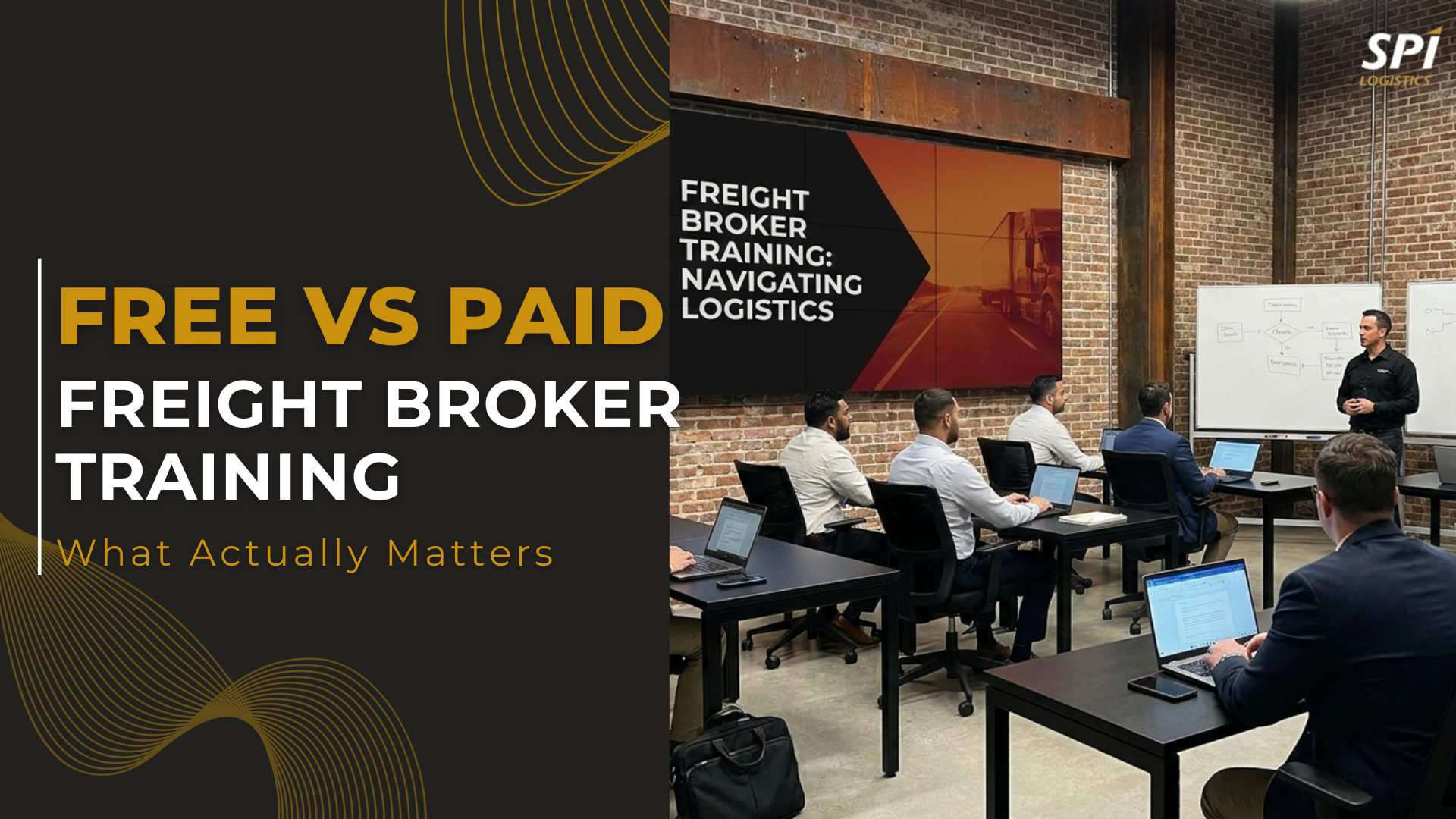
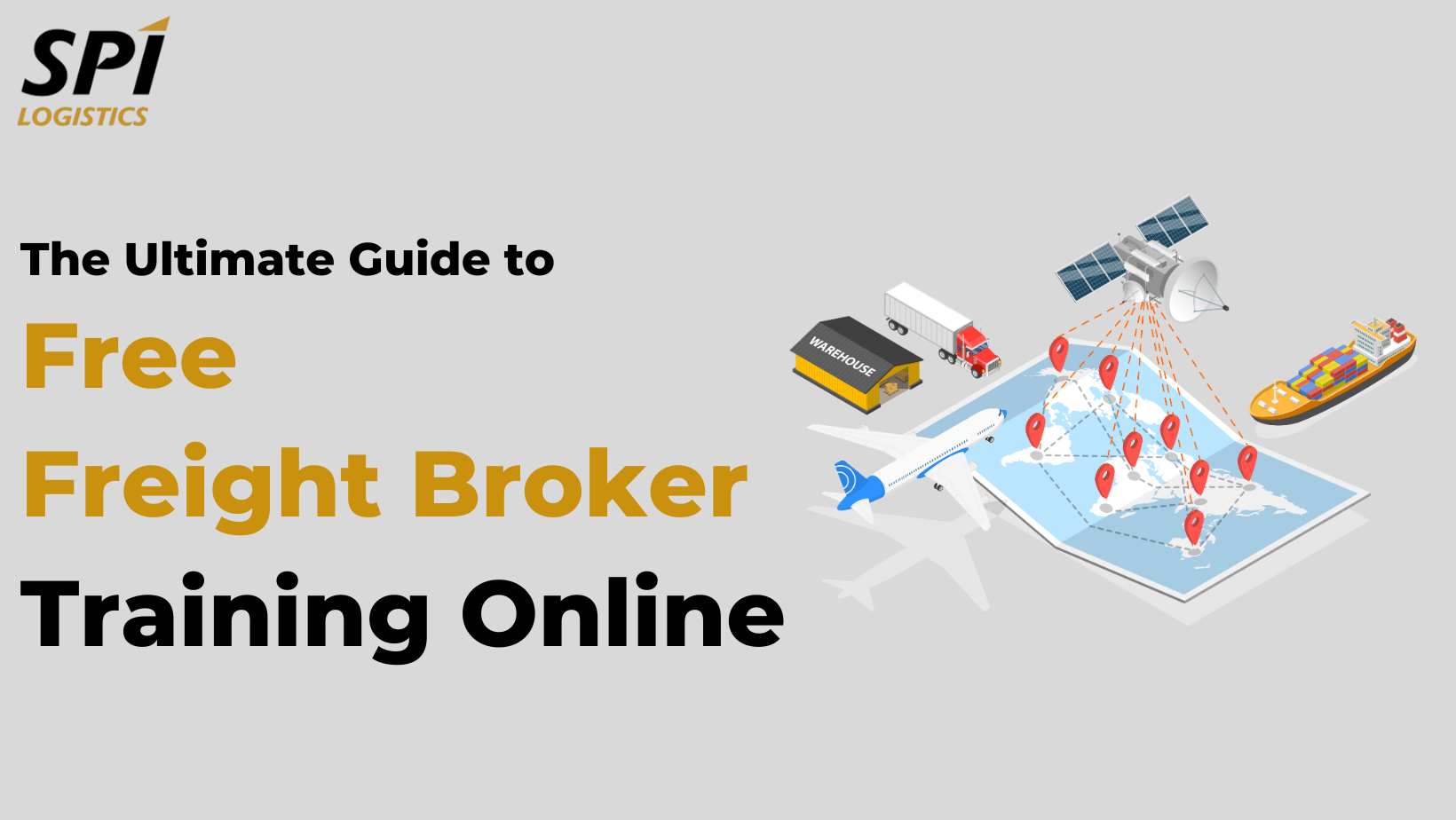
The freight brokerage industry is a lucrative and growing sector that offers excellent career opportunities. The freight brokerage market is projected to reach $41.47 billion by 2027, growing at a CAGR of 5.9% (Statista, n.d.). You’re in luck if you’re interested in logistics and want to break into the field without spending a fortune.
You can start freight broker training for free by learning the fundamentals, using online resources, and gaining real-world experience through a brokerage or agent program.
The fastest way to get started includes:
- Learning how freight brokerage works
- Understanding pricing and load boards
- Practicing carrier and shipper communication
- Getting hands-on experience under an established brokerage
This guide breaks down exactly how to become a freight broker for free, step by step.
Why Choose Freight Broker as a Career?
Freight brokersplay a crucial role in the transportation industry, acting as intermediaries between shippers and carriers to ensure goods are delivered efficiently. With over 17,000 licensed freight brokers in the U.S. (FMCSA, n.d.), the demand for freight brokers continues to rise, making it an attractive career option. Plus, with the right freight agent training free resources, you can get started without upfront costs.
Here are some key reasons why freight brokerage is a great career choice:
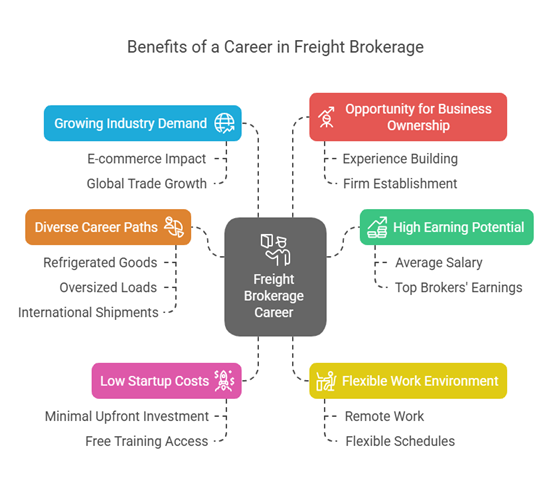
High Earning Potential: The average freight broker earns between $62,105 and $100,000 annually, with top brokers making over six figures (Indeed, n.d.).
Low Startup Costs: Unlike other businesses, becoming a freight broker requires minimal upfront investment, especially since freight broker agent training is available online for free.
Flexible Work Environment: Many freight brokers work remotely, allowing them to set their schedules and work from anywhere.
Growing Industry Demand: With the rise of e-commerce and global trade, the need for skilled freight brokers continues to increase, ensuring long-term job stability.
Opportunity for Business Ownership: After gaining experience, many brokers establish their firms, creating opportunities for entrepreneurship.
Diverse Career Paths: You can specialize in different freight types, such as refrigerated goods, oversized loads, or international shipments, tailoring your career to your interests.
“Freight brokerage offers one of the best opportunities for financial freedom with minimal investment. With strong industry demand and scalable income potential, it’s a smart career choice for anyone interested in logistics.”
What aspects of freight brokerage appeal to you the most—financial potential, flexibility, or industry demand?
How to Become a Freight Broker for Free (Step-by-Step)
One of the most common questions aspiring brokers ask is how to become a freight broker for free. If you’re starting from scratch, here’s the most practical way to become a freight broker without paying for training:
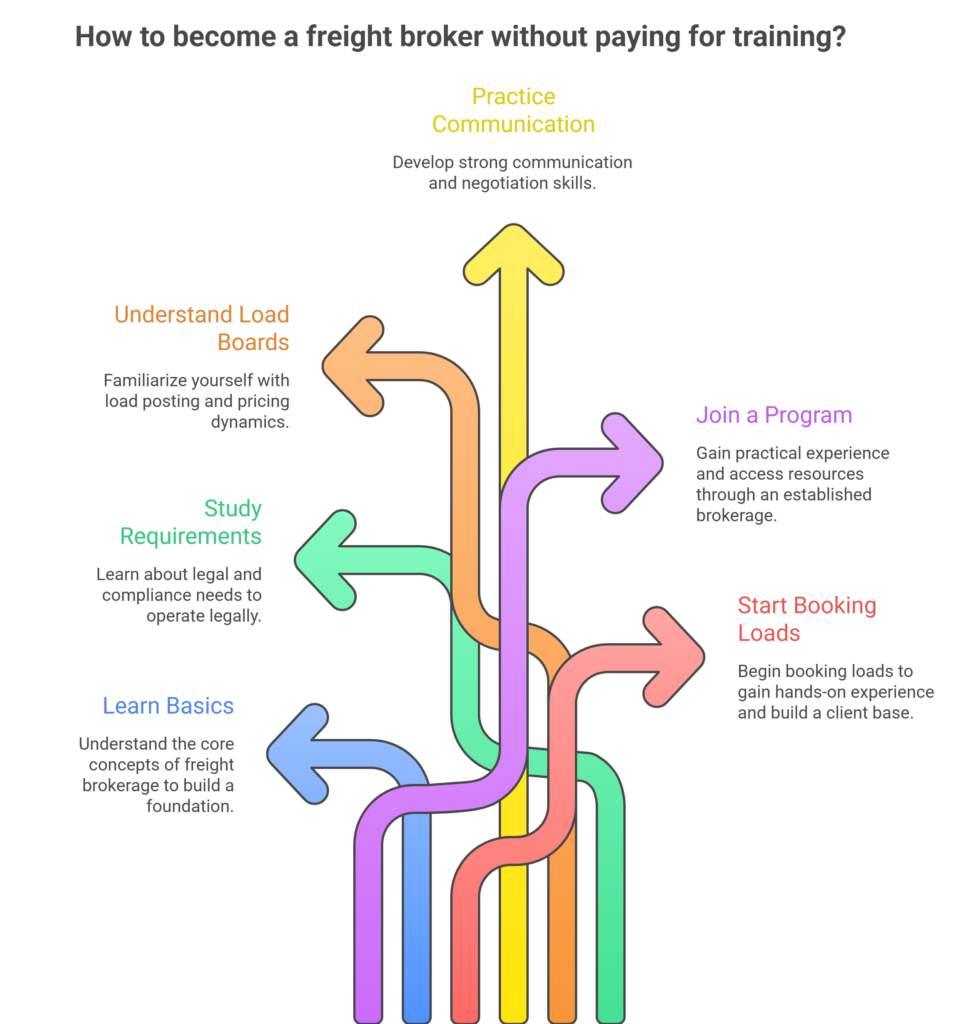
1. Learn the Basics of Freight Brokerage
Start by understanding what a freight broker actually does on a daily basis. A broker acts as the middle point between a shipper (the company that needs goods moved) and a carrier (the trucking company that moves those goods). Your job is to match the right carrier with the right shipment while ensuring everything runs smoothly from pickup to delivery.
You should focus on learning key concepts such as how loads are booked, how brokers make money through margins, and how communication flows between all parties. Think of this step as building your foundation. Without it, everything else will feel confusing. Use free videos, articles, and industry blogs to get familiar with terminology and workflows.
2. Study Industry Requirements
Once you understand the basics, it’s important to learn what it takes to legally operate as a freight broker. This includes understanding terms like MC authority (Motor Carrier authority), FMCSA registration, and the $75,000 surety bond requirement.
Even if you’re not planning to start your own brokerage immediately, knowing these requirements helps you understand how the industry is structured and what responsibilities brokers carry. It also prepares you for future growth if you decide to go independent. Focus on understanding the process step-by-step rather than memorizing everything at once.
3. Understand Load Boards and Pricing
Load boards are one of the main tools brokers use to find available shipments and carriers. Learning how to navigate these platforms is essential. You should understand how loads are posted, how to search for lanes, and how to evaluate whether a rate is fair or profitable.
Pricing is one of the most challenging parts for beginners because it constantly changes based on supply and demand. For example, if there are more trucks than loads in a region, prices drop. If there are fewer trucks available, prices increase. Spend time observing patterns and comparing rates so you can start developing a sense of what a good deal looks like.
4. Practice Communication and Negotiation
Freight brokerage is heavily based on communication. You’ll be speaking with carriers, negotiating rates, updating customers, and solving problems throughout the day. Strong communication skills can make the difference between closing a deal and losing it.
Start practicing how to speak clearly, confidently, and professionally. Learn how to ask the right questions, handle objections, and negotiate rates in a way that benefits both you and the carrier. Remember, building trust is key—carriers are more likely to work with brokers who are reliable and easy to communicate with.
5. Join a Brokerage or Agent Program
This is where your learning becomes real. Joining an established brokerage or agent program allows you to apply everything you’ve learned in a live environment. You’ll gain access to tools, systems, experienced professionals, and actual freight to work with.
Instead of trying to figure everything out on your own, you’ll be able to learn by doing and seeing how experienced brokers handle situations, manage loads, and communicate with clients. This step significantly shortens your learning curve and helps you avoid common beginner mistakes.
6. Start Booking Loads and Gaining Experience
The final step is taking action. Booking your first loads may feel challenging, but it’s the most important part of your growth. Every load you handle teaches you something new, whether it’s negotiating better rates, solving unexpected issues, or improving your communication.
Experience builds confidence. The more shipments you manage, the more comfortable you become with the process. Over time, you’ll develop your own strategies, build relationships with carriers, and improve your ability to make quick decisions. This is where you transition from learning about freight brokerage to actually becoming a skilled broker.
Most people think free training means learning everything before starting, but in reality, the brokers who succeed are the ones who start working with partial knowledge and figure things out in live environments. The faster you move from learning to doing, the faster you close the experience gap.”
Ready to move beyond free training and start working with real freight? Learn how SPI’s model helps you gain experience, access real loads, and build your career faster here
Things to Consider When Selecting a Freight Agent Training Program
Choosing the right freight agent training free program is essential to gaining the necessary knowledge and skills. Here are some factors to consider:
Course Content: Ensure the program covers critical topics such as industry regulations, load matching, and business development.
Instructor Experience: Look for courses taught by experienced freight brokers with practical industry knowledge.
Certification Availability: Some free courses may offer certificates upon completion, which can enhance your credibility.
Networking Opportunities: Programs that provide access to industry forums and mentorship can be highly beneficial.
“A quality freight agent training program should teach logistics and cover customer acquisition and compliance. The right training can set you up for long-term success.”
What factors matter most to you when selecting a freight broker training program—content depth, certification, or networking opportunities?
Top Resources for Freight Broker Training Online Free
Finding quality training is essential to becoming a successful broker. Here are some of the best resources for free freight broker training:
1.Online Videos and Tutorials
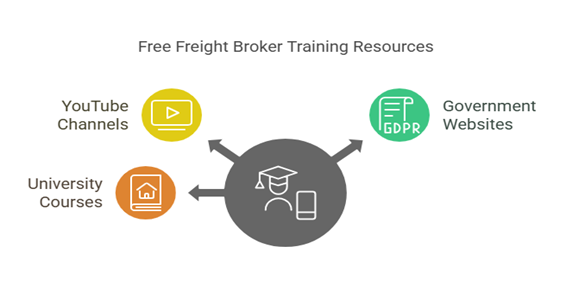
Video platforms offer practical breakdowns of brokerage workflows, terminology, and real-world scenarios.
-
Best YouTube Channels for Freight Broker Training
- Freight 360 – Offers in-depth tutorials on freight brokerage fundamentals.
- Brandon Scott’s Freight Broker Bootcamp – Provides free tips and strategies for success.
- DAT Freight & Analytics – Features industry insights and expert discussions.
2. Government and Industry Websites for Training
- Federal Motor Carrier Safety Administration (FMCSA) – Provides regulatory guides and compliance resources.
- Small Business Administration (SBA) – Offers business development resources for freight brokers.
- National Association for Small Trucking Companies (NASTC) – Shares industry training materials.
3. Free Courses and Educational Platforms
- MIT OpenCourseWare – Offers logistics and supply chain management courses relevant to freight brokering.
- Harvard Online Learning – Provides freight broker course free programs, including business and negotiation courses that can benefit aspiring brokers.
- Alison.com – Features freight broker course free options with modules covering supply chain management and brokering concepts.
These resources are valuable, but they don’t replace real-world execution.
“Free online courses provide a solid foundation for new brokers, covering essential topics like load matching, compliance, and contract negotiation.”
Are you looking for a comprehensive freight broker training program? Explore Our Independent Freight Broker Agent Program and take the next step in your career.
“YouTube is a powerful tool for aspiring freight brokers, offering free real-world case studies and expert insights.”
Want more in-depth freight brokerage insights? Explore Our Blogs for expert advice and industry trends.
The Fastest Way to Learn Freight Brokerage
The fastest way to learn freight brokerage is by getting direct exposure to real freight operations as early as possible.
Reading and watching content can help you understand the basics, but real skill comes from being involved in actual shipments, conversations, and decision-making.
To gain real-world experience, you need to put yourself in environments where freight is actively moving. This can include:
- Working under an established freight brokerage as an agent or trainee
- Assisting experienced brokers with quoting, booking, and tracking loads
- Observing how negotiations happen between brokers and carriers
- Participating in daily operations like dispatching and problem-solving
One of the most effective ways to get started is by joining a brokerage that allows beginners to learn while working. These environments give you access to real customers, real carriers, and real challenges—without having to build everything from scratch.
You can also create exposure by:
- Reaching out to brokers and asking to shadow their workflow
- Applying for entry-level logistics or dispatch roles
- Networking in online freight communities and industry groups
- Practicing on load boards to understand pricing and lane dynamics
The key is consistency. The more time you spend interacting with real freight scenarios, the faster you build confidence and decision-making ability.
Most experienced brokers improve by:
- Quoting real shipments
- Talking to carriers daily
- Managing live loads
- Handling unexpected issues
There’s a clear difference between understanding brokerage and operating in it. Real-world exposure is what bridges that gap and turns knowledge into skill.
“There’s a major difference between knowing how freight brokerage works and actually operating inside it. The fastest learners aren’t the ones consuming the most content, they’re the ones exposed to real shipments, real pricing decisions, and real-time problem solving every day.”
Want to learn freight brokerage by actually doing it instead of just studying it? See how SPI gives you hands-on experience with real shipments, real tools, and real support.
How Freight Brokers Make Money
Freight brokers earn by charging shippers more than they pay carriers and keeping the difference.
Income varies based on:
- Experience level: More experienced brokers typically earn higher margins due to better pricing judgment and negotiation skills.
- Volume of loads: Handling a higher number of shipments increases total earnings even if margins per load stay consistent.
- Strength of relationships: Strong connections with reliable carriers and loyal customers lead to better rates and repeat business.
- Market conditions: Freight rates fluctuate based on supply and demand, directly impacting profitability on each load.
Beginners typically earn less at first but increase income as they gain experience and build networks.
“New brokers often focus on the margin per load, but experienced brokers focus on consistency and volume. Long-term success comes from repeat customers, reliable carriers, and the ability to move freight efficiently, not just maximizing a single transaction.”
Do you think it’s better to aim for higher margins on fewer loads, or consistent smaller margins across higher volume?
Common Mistakes New Freight Brokers Make
Most beginners run into the same issues early on:
- Focusing too much on theory instead of execution
- Underestimating the importance of communication
- Mispricing loads due to lack of market awareness
- Not building strong carrier relationships
- Trying to learn everything before taking action
What actually works is learning while doing.
“The biggest mistake new brokers make isn’t lack of knowledge, it’s hesitation. Spending too much time preparing instead of executing slows down progress, while real growth comes from handling live situations, even if mistakes happen early on.”
What do you think holds most beginners back more: lack of knowledge or fear of making mistakes in real scenarios?
Frequently Asked Questions
1. Can you become a freight broker with no experience?
Yes. Many brokers start with no experience and learn through free resources and hands-on work.
2. What is the fastest way to learn freight brokerage?
The fastest way is by working with real shipments rather than relying only on theory.
3. Do you need a license to be a freight broker?
Yes, you need broker authority (MC number) to operate independently, but you can start as an agent under a brokerage.
4. Is free freight broker training worth it?
Yes, it’s useful for learning basics. but real-world experience is what builds skill.
5. How do beginners get their first load?
Most beginners get their first loads by working under an established brokerage or agent program.
Build a Successful Freight Brokerage Career
Once you complete your freight broker agent training online for free, the next step is gaining practical experience. Consider working under an experienced freight broker or joining a brokerage as a freight agent to learn the ropes. With determination and the proper training, you can establish yourself in this exciting industry without spending a dime on education.
Ready to move beyond theory and start working with real freight? SPI’s Independent Freight Agent Program gives you:
- Access to real customers and loads
- Back-office support and technology
- A network of experienced brokers
- The ability to earn while you learn
👉 Explore the program and see if it’s the right fit for you.
References
Federal Motor Carrier Safety Administration (FMCSA). (n.d.). Freight broker registration and compliance. Retrieved from https://www.fmcsa.dot.gov
Statista. (n.d.). U.S. freight brokerage market growth. Retrieved from https://www.statista.com
Indeed. (n.d.). Freight broker salary insights. Retrieved from https://www.indeed.com