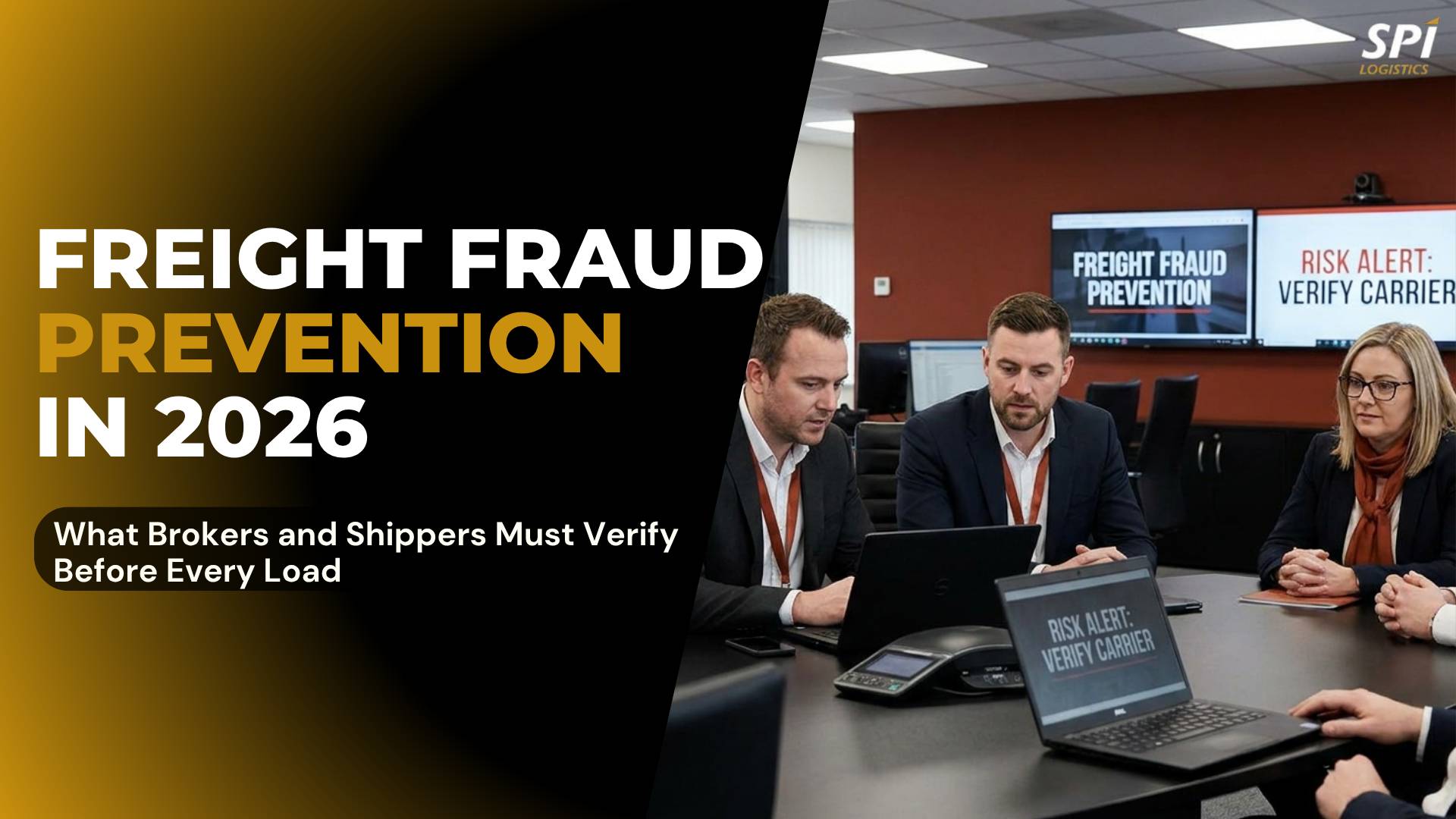
For years, freight fraud was treated like a rare event that happened somewhere else.
A broker would hear a story about a stolen load hundreds of miles away. A shipper would see a headline about missing cargo and assume their existing controls were enough. A carrier would talk about a bad experience with a fake broker and everyone would shake their heads before moving on to the next load.
That mindset no longer works.
In 2026, freight fraud has evolved from an occasional disruption into one of the biggest operational risks facing the supply chain. The criminals involved are no longer relying solely on breaking seals or physically stealing trailers. They are exploiting the same digital tools that legitimate freight professionals use every day.
According to the FBI Internet Crime Complaint Center (IC3), cargo theft losses across the United States and Canada reached nearly $725 million in 2025, representing a 60% increase year over year. Confirmed cargo theft incidents rose 18%, and the average loss per incident increased 36% to $273,990 [FBI IC3, 2026].
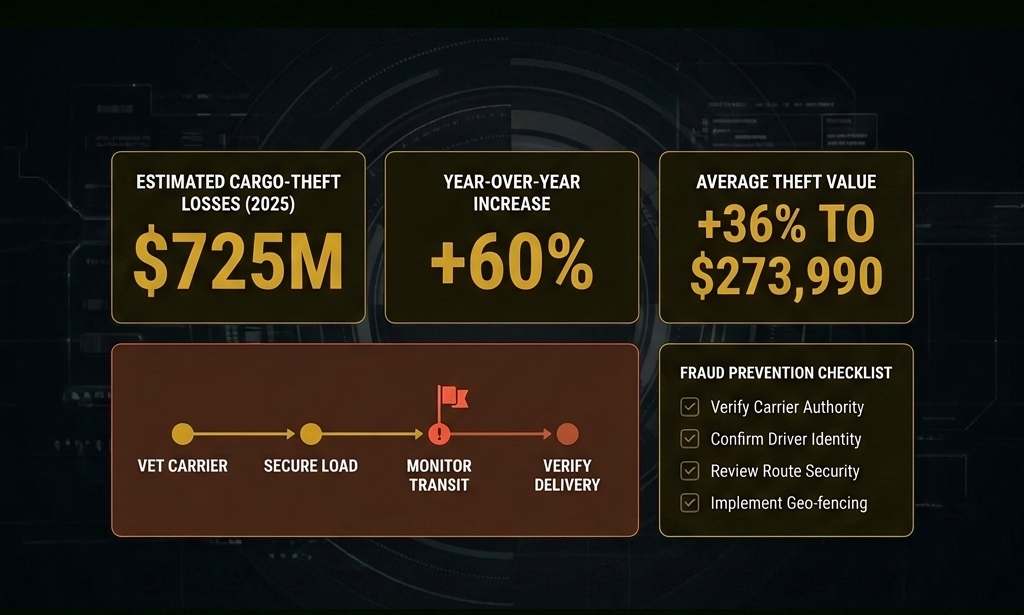
The message behind those numbers is simple: freight fraud prevention is no longer a back-office compliance task. It is a competitive advantage.
The current threats include:
- Fake carrier identities using stolen MC numbers
- Email spoofing that mimics legitimate companies
- Altered insurance documents
- Compromised dispatcher contacts
- Load board fraud schemes
- Double brokering arrangements designed to hide who is actually moving the freight
For brokers and shippers, the message is clear: hoping fraud does not happen is no longer a strategy. A documented process for cargo theft prevention, strong carrier vetting, and consistent verification must be part of every load movement.
“The future of brokerage is not just about moving freight quickly. It is about proving that every load moved through your network is moving with verified and trustworthy partners.”
If one of your customers asked you today how your freight fraud prevention process works, could you clearly explain every step?
Why Freight Fraud Has Become More Dangerous in 2026
Freight fraud is growing at the same time the market is becoming more valuable.
After a prolonged freight downturn, signs of recovery are beginning to appear. The American Trucking Associations reported that April 2026 truck tonnage remained unchanged month-over-month but increased 3.5% year over year, with total tonnage up 4.7% since the end of 2025 [ATA, 2026].
Pricing is also moving upward.
DAT reported that March 2026 spot and contract rates reached their highest levels in more than two years. Van and reefer spot rates increased for the seventh consecutive month, and by May 2026, dry-van top 50 lane rates increased $0.15 per mile week-over-week to $2.51 per mile [DAT, 2026].
| Market Indicator | 2026 Trend |
| Truck tonnage | +3.5% year-over-year |
| Tonnage growth since end of 2025 | +4.7% |
| Spot and contract rates | Highest level in 2+ years |
| Van and reefer spot rates | Increased 7 straight months |
| Dry van top-50 lane rates | $2.51 per mile |
For legitimate carriers and brokers, these are encouraging signs. For criminals, they represent opportunity.
Higher freight values, rising freight rates, and tighter capacity create more opportunities for fraud. When brokers are pressured to secure capacity quickly, fraudsters rely on urgency to bypass normal verification processes.
The relationship between market tightening and fraud risk can be summarized clearly:
| Market Condition | Fraud Impact |
| Rising freight rates | Higher-value loads become attractive targets |
| Increased freight activity | More opportunities to exploit transactions |
| Tight carrier availability | Pressure to onboard carriers faster |
| Heavy digital communication | More opportunities for identity and email fraud |
This does not mean brokers should slow down. The best operations move quickly because they have strong systems, not because they skip them.
In a tighter market, speed without verification becomes a liability.
“Every freight cycle creates winners and losers. The winners are usually the companies that improve their processes before the market forces them to.”
Is your current verification process designed to handle higher-risk freight environment, or was it built for a different market?
What the FBI Cargo Theft Warning Means for Brokers and Shippers
The FBI’s cargo theft warning should not create panic. The transportation industry depends on thousands of honest carriers, dispatchers, and brokers who move freight successfully every day.
However, it should change how the industry thinks about trust.
In the past, a broker might review an MC number, confirm insurance coverage, and consider the carrier approved. Nowadays, that process is often only the starting point.
Modern cargo theft prevention requires confirming that the person communicating with your team actually represents the company they claim to represent.
Strong verification processes include:
- Confirming carrier information through official databases instead of relying only on email signatures or submitted documents.
- Calling verified company phone numbers to confirm dispatch contacts.
- Reviewing unusual changes in banking information or communication patterns.
- Monitoring authority history, insurance status, and operational records.
- Maintaining documented carrier vetting procedures for every new carrier relationship.
For shippers, this changes how they evaluate brokerage partners.
The best brokers are not simply the fastest at finding a truck. They are the brokers with systems that balance speed with security.
A load covered in ten minutes means nothing if it ends up in the wrong hands.
“The best operations are not the ones that move the fastest. They are the ones that can move quickly without skipping verification.”
If your freight disappeared tomorrow, could you confidently prove that every reasonable verification step was completed beforehand?
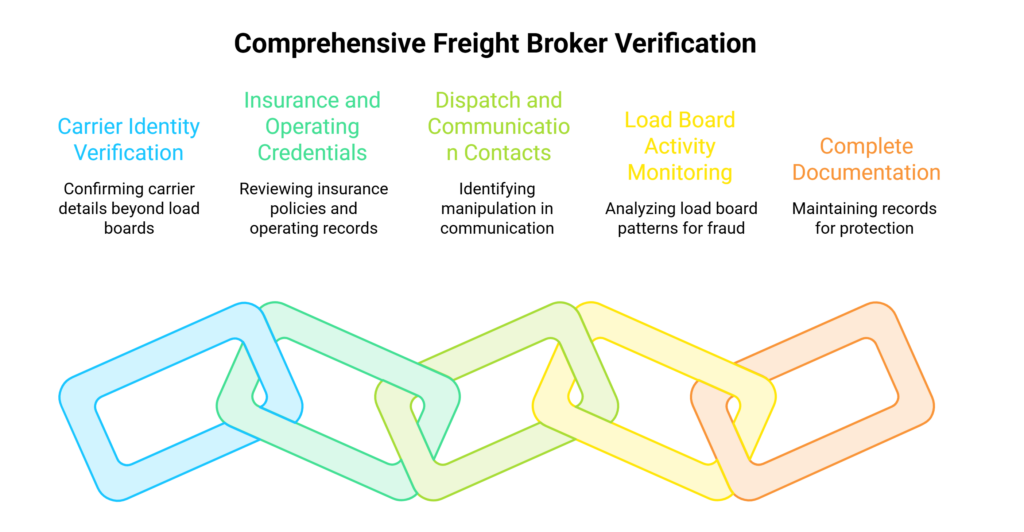
The Five Verification Steps That Should Happen Before Every Load
Strong freight broker risk management does not depend on one phone call, one software platform, or one employee catching a suspicious detail.
The most successful fraud prevention strategies use multiple layers of verification.
1. Independently Verify Carrier Identity
Never rely only on information submitted through a load board.
Verification should include:
- Confirming FMCSA authority details
- Reviewing company history
- Matching phone numbers and addresses
- Checking email domains
- Reviewing safety and operating records
2. Confirm Insurance and Operating Credentials
A certificate of insurance should never be accepted without additional review.
Experienced brokers verify:
- Insurance provider information
- Policy status and coverage limits
- Effective dates
- Recent changes that may indicate suspicious activity
3. Verify Dispatch and Communication Contacts
Many fraud attempts begin with communication manipulation.
Red flags include:
- A dispatcher using an unfamiliar email address
- Last-minute changes to contact information
- Requests to change payment instructions
- Unusual urgency to secure the load
4. Monitor Load Board Activity Carefully
Load boards remain essential tools, but they also create opportunities for fraud.
Strong load board fraud prevention includes:
- Reviewing carrier history
- Looking for inconsistent company information
- Checking how recently authority was activated
- Monitoring unusual bidding or communication patterns
5. Maintain Complete Documentation
A strong paper trail protects everyone involved.
Records should include:
- Carrier verification notes
- Communication logs
- Insurance confirmations
- Rate agreements
- Pickup and delivery documentation
The best verification systems are not designed to slow down operations. They are designed to make the right decisions repeatable.
“The strongest fraud prevention process is one that works the same way on your busiest day as it does on your slowest.”
Which of these verification steps is currently your strongest safeguard, and which one represents your biggest vulnerability?
How Experienced Brokers Reduce Risk Without Slowing Service
One of the biggest misconceptions about carrier vetting and freight fraud prevention is that stronger security means slower operations.
Experienced brokers know the opposite is true.
The most efficient brokerages are efficient because they have systems. They do not make critical decisions based on memory, assumptions, or whether a specific employee happens to notice something suspicious.
Effective operations build freight fraud prevention into their normal workflow through:
- Standardized carrier onboarding procedures
- Clear verification checklists
- Centralized documentation systems
- Technology that flags unusual activity
- Regular training on emerging fraud tactics
These processes support stronger cargo theft prevention while reducing exposure to broker liability.
The consistency allows brokers to provide both speed and protection, two things that shippers increasingly expect from their logistics partners.
“The best brokerages do not have fewer problems because they are lucky. They have fewer problems because they build processes that catch issues before they become claims.
Wondering how top freight agents maintain speed without compromising security? See what successful brokers do differently with SPI.
Warning Signs of Double Brokering, Fake Carriers, and Spoofed Dispatch Contacts
Not every unusual situation is fraud, but unusual situations should always trigger additional verification.
Many cases of double brokering and load board fraud happen because fraudsters take advantage of urgency. They know that brokers are under pressure to cover loads quickly, especially when capacity becomes tighter.
That is why brokers need to pay attention to small inconsistencies.
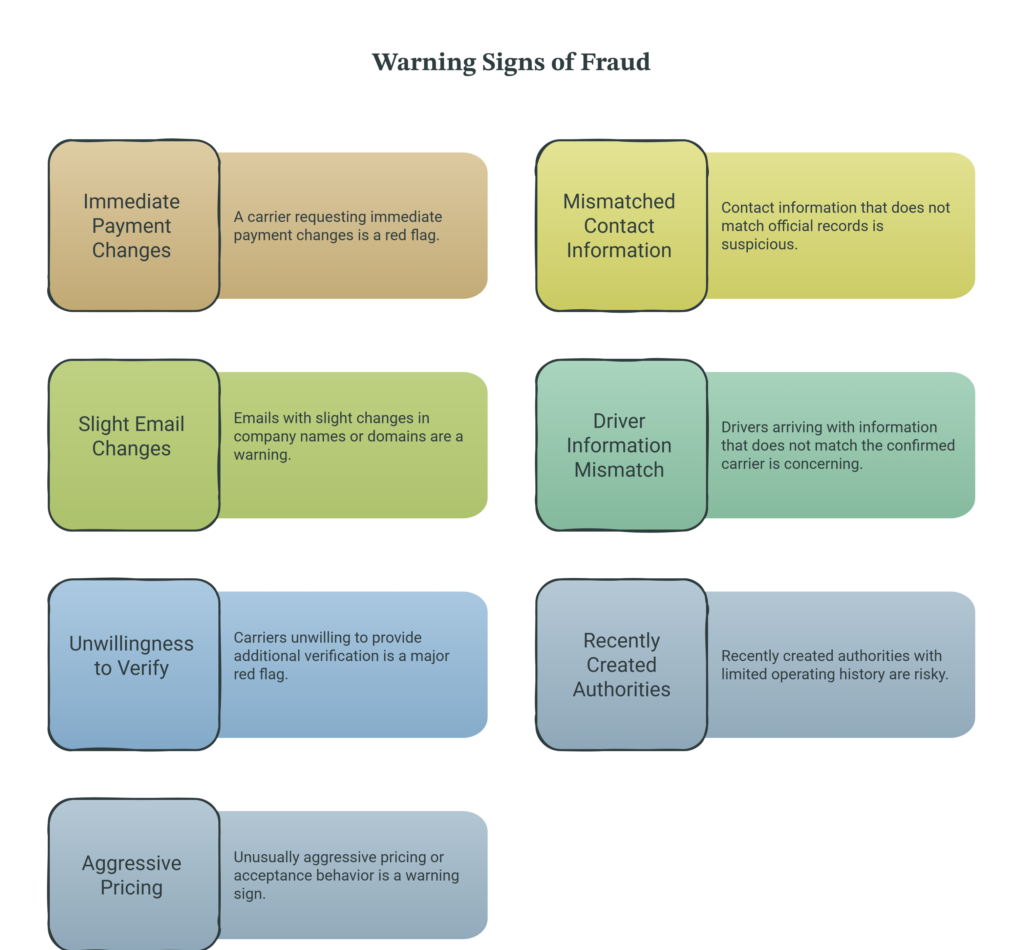
Common warning signs include:
- A carrier requesting immediate payment changes
- Contact information that does not match official records
- Emails with slight changes in company names or domains
- Drivers arriving with information that does not match the confirmed carrier
- Carriers unwilling to provide additional verification
- Recently created authorities with limited operating history
- Unusually aggressive pricing or acceptance behavior
Double brokering remains particularly dangerous because the company that accepted the load may not be the company actually hauling it.
This creates additional risks involving cargo security, insurance coverage, claims responsibility, and customer trust.
Experienced brokers understand that every unusual detail may not indicate fraud, but every unusual detail deserves investigation.
“Fraud prevention is often about noticing small inconsistencies before they become expensive problems.”
Does your team have a process for investigating suspicious behavior, or do they only react after something goes wrong?
What Shippers Should Demand From a Brokerage Partner Right Now
The role of a brokerage partner has changed.
Shippers should no longer evaluate brokers based only on price and capacity access. In this environment, security, operational discipline, and risk management are equally important.
Questions every shipper should ask include:
- What does your carrier vetting process look like?
- How do you verify dispatch contacts?
- What technology supports your freight fraud prevention strategy?
- How do you monitor carriers after onboarding?
- What controls are in place for cargo theft prevention?
The answers to these questions reveal whether a brokerage simply moves freight or actively protects supply chains.
Strong freight broker risk management has become part of customer service.
A broker who prevents a problem that never happens may provide more value than one who solves a problem after millions of dollars in cargo are already at risk.
“The broker of the future is part transportation provider, part risk manager, and part supply chain advisor.”
If you were selecting a new brokerage partner today, would their fraud prevention process influence your decision?
How SPI Supports Agents and Customers Through Better Verification and Operational Discipline
In a market where freight fraud continues to evolve, brokers need more than access to carriers. They need a system designed to support responsible growth.
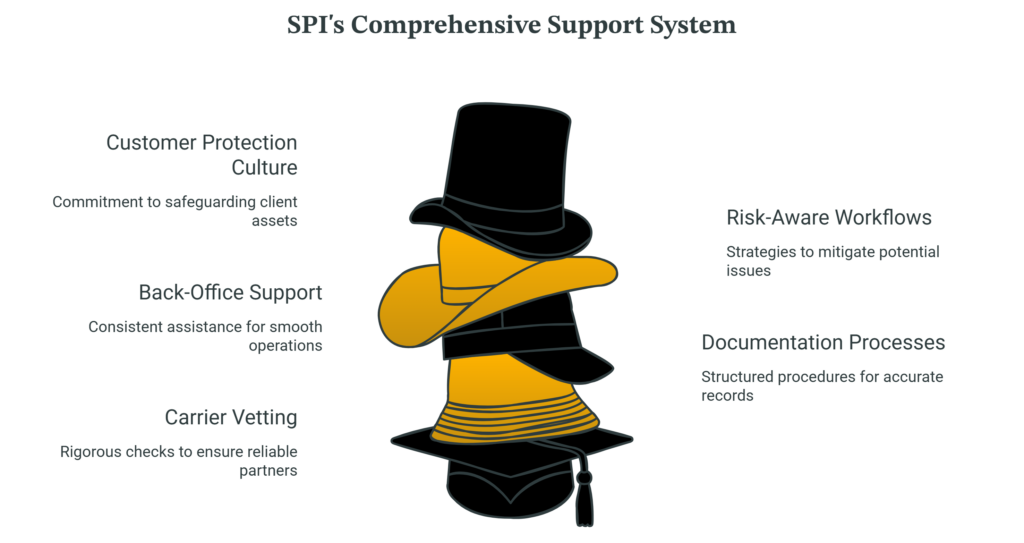
SPI supports agents and customers through disciplined operational practices, including:
- Thorough carrier vetting procedures
- Structured documentation and verification processes
- Back-office support that helps maintain consistency
- Risk-aware operational workflows
- A culture focused on protecting customer freight
The goal is not simply to move loads. It is to move loads with confidence.
The strongest brokers understand that their reputation is built one shipment at a time. A single fraudulent transaction can damage relationships that took years to build.
That is why strong freight broker risk management is becoming one of the biggest competitive advantages in the industry.
“In a tighter freight market, the brokers who stand out are not just the ones who find capacity, they are the ones customers trust to protect their freight.”
Looking for the tools and operational support to protect freight with confidence? Discover how SPI helps brokers strengthen every shipment.
Frequently Asked Questions(FAQs)
1. How can brokers prevent freight fraud in 2026?
Brokers can improve freight fraud prevention through stronger carrier vetting, identity verification, insurance confirmation, documentation procedures, technology monitoring, and employee training.
2. What is the biggest warning sign of double brokering?
One major warning sign is when the company communicating about the load does not match the carrier that ultimately arrives for pickup. Changes in contact information, payment requests, and missing documentation should also be investigated.
3. Why is cargo theft prevention becoming more important?
Cargo theft is increasing in both frequency and financial impact. FBI data showed that cargo theft losses reached nearly $725 million in 2025, with both incidents and average losses increasing significantly [FBI IC3, 2026].
In Freight, Trust Is Your Strongest Defense
Freight fraud in 2026 is not a rare exception or a problem that only affects careless companies. It has become a major operational challenge that requires every broker and shipper to rethink how freight is verified before it moves.
The companies that will succeed are not necessarily the ones that cover the fastest loads. They are the ones that combine speed with discipline, strong carrier vetting, effective cargo theft prevention, and a consistent freight fraud prevention process.
As freight values increase and criminals become more sophisticated, trust becomes one of the most valuable products a broker can offer.
Want a brokerage network built to help you protect freight, strengthen carrier controls, and grow with confidence? Talk with SPI about joining the agent network or improving your freight fraud prevention strategy.
References
Federal Bureau of Investigation Internet Crime Complaint Center (IC3). (2026). Cyber-enabled strategic cargo theft surging. Retrieved from FBI IC3 Public Service Announcement
American Trucking Associations. (2026). ATA truck tonnage index unchanged in April. Retrieved from American Trucking Associations News & Insights
DAT Freight & Analytics. (2026). Truckload freight rates hit two-year highs as diesel costs surge. Retrieved from DAT Freight & Analytics News Release