Cargo theft is not new in the freight industry. But in 2026, it’s becoming something else entirely, faster, more organized, and harder to detect.
What used to be opportunistic theft has evolved into structured operations targeting freight at multiple points in the supply chain. Brokers are no longer just coordinating shipments, they’re also managing risk in an environment where fraud tactics are constantly evolving.
The challenge is not just preventing theft. It’s understanding why it’s increasing and how to respond before it impacts your operation.
Cargo Theft Is Becoming More Organized and Data-Driven
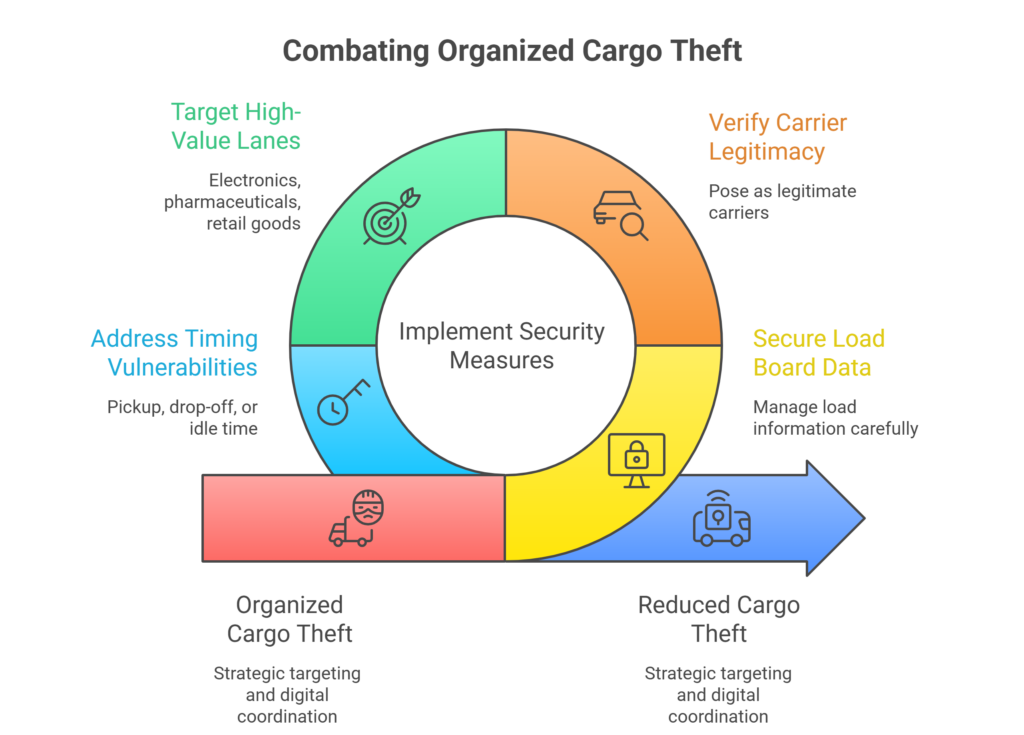
Cargo theft today is less about physical break-ins and more about strategic targeting and digital coordination. Organized groups are using data, load information, and communication gaps to identify high-value shipments (FreightWaves, n.d.).
In our experience analyzing freight risk trends, theft incidents are increasingly tied to:
- Load board data exposure: Publicly posted loads can reveal valuable shipment details if not managed carefully(DAT Freight & Analytics, n.d.)
- Carrier impersonation schemes: Fraudulent actors pose as legitimate carriers to secure loads
- Targeting high-value freight lanes: Electronics, pharmaceuticals, and retail goods are often prioritized
- Timing vulnerabilities: Theft frequently occurs during transitions like pickup, drop-off, or idle time
For example, a broker might unknowingly assign a load to a fraudulent carrier that has mimicked a legitimate company’s credentials. Once the freight is picked up, it disappears before delivery confirmation.
This shift toward data-driven theft means brokers must treat information security as seriously as physical security.
“Cargo theft has evolved from a physical risk into an information and verification challenge. Brokers who adapt to that shift reduce exposure significantly.”
How confident are you in your current carrier verification process before assigning a load?
Increased Freight Volume and Market Pressure Create More Opportunities for Theft
Freight demand fluctuations and operational pressure can unintentionally create gaps that bad actors exploit.
When brokers are managing high volumes or tight timelines, the focus often shifts toward speed over verification. This creates opportunities for fraudulent carriers or coordinated theft attempts (Transportation Intermediaries Association [TIA], n.d.).
Common operational pressures that increase risk include:
- Urgent load coverage: Quick decisions may reduce verification checks
- High shipment volume: Increased activity can overwhelm standard processes (FreightWaves, n.d.)
- Limited carrier availability: Brokers may work with unfamiliar carriers
- Communication overload: Important verification steps may be skipped or rushed
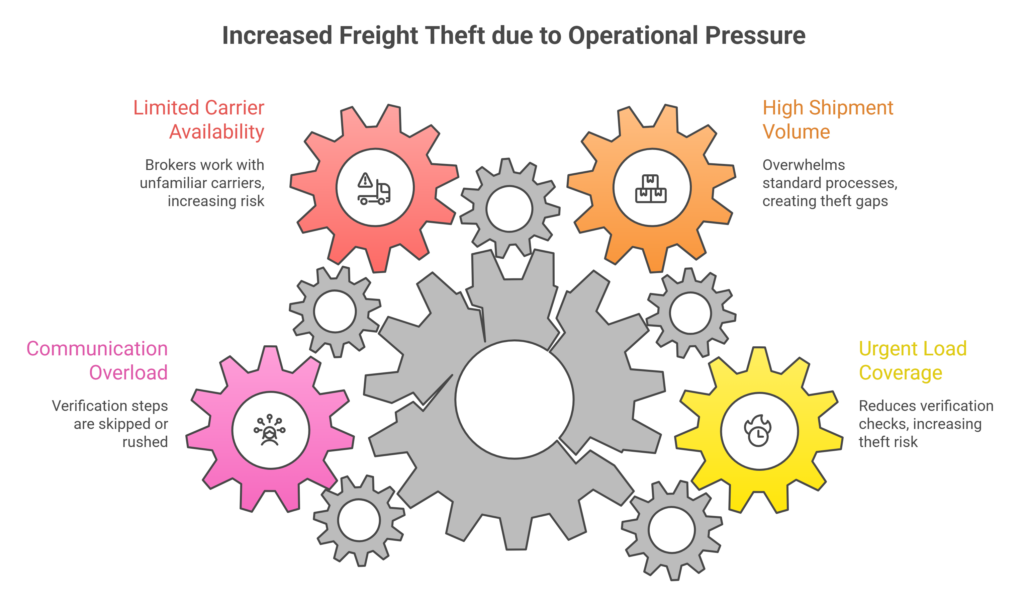
In our experience, theft incidents often occur not because brokers lack knowledge, but because operational pressure leads to shortcuts in verification.
For instance, during a busy week, a brokerage might onboard a new carrier quickly to cover a time-sensitive load. If verification steps are incomplete, that decision could expose the shipment to risk.
Balancing speed and security is one of the biggest challenges brokers face in today’s environment.
“Most cargo theft incidents are not caused by a lack of awareness. They happen when operational pressure overrides standard processes.”
Where in your workflow are you most likely to sacrifice verification for speed?
Case Study: How a Small Verification Gap Led to a Lost Load
To understand how cargo theft can occur in practice, consider a hypothetical brokerage scenario.
A mid-sized brokerage was handling a high-value shipment of consumer electronics. The load needed to be covered quickly due to tight delivery deadlines.
Initial Situation:
- High-value freight with strict delivery timeline
- Limited available carriers for the lane
- Urgent need to secure capacity
What Happened:
- A carrier submitted credentials that appeared legitimate
- Verification steps were completed, but not thoroughly cross-checked
- The load was assigned and picked up successfully
Outcome:
- The shipment never reached its destination
- Communication with the carrier stopped after pickup
- The brokerage identified inconsistencies in the carrier’s identity after the fact
Post-Incident Findings:
- The carrier had replicated details from a legitimate company
- Contact information used during booking did not match official records
- Additional verification steps could have prevented the assignment
In our experience, incidents like this are rarely caused by a single failure. They are usually the result of small gaps in verification that align at the wrong time.
After reviewing the incident, the brokerage implemented stricter onboarding checks, including direct carrier contact verification and enhanced documentation review.
“The difference between a secure load and a stolen load often comes down to one additional verification step.”
If a similar situation occurred today, what extra step would your team take to prevent it?
High-Value Freight and Specific Lanes Are Primary Targets
Not all freight carries the same level of risk.
Cargo theft operations often focus on shipments that are easy to resell, high in value, and frequently moved across predictable lanes (FreightWaves, n.d.).
Based on industry observations, commonly targeted freight includes:
- Electronics and consumer goods due to high resale value
- Pharmaceuticals and medical supplies due to demand and regulatory complexity
- Retail shipments during peak seasons
- Food and beverage products with consistent movement patterns
In our experience, certain lanes also become known for higher risk due to traffic volume, warehouse density, or proximity to distribution hubs.
For brokers, understanding these patterns is critical. It allows for stronger planning, better carrier selection, and more focused risk management.
“Risk in freight is rarely random. Patterns exist, and brokers who recognize them can proactively reduce exposure.”
Do you track which freight types or lanes in your operation carry higher risk?
Technology and Verification Processes Are the First Line of Defense
As cargo theft becomes more sophisticated, brokers are increasingly relying on technology and structured processes to reduce risk.
Effective prevention strategies often combine operational discipline with digital tools.
Key protective measures include:
- Carrier identity verification systems to confirm legitimacy before load assignment (DAT Freight & Analytics, n.d.)
- Real-time tracking tools to monitor shipment movement
- Secure communication platforms to reduce exposure to fraudulent contact methods
- Automated alerts for unusual activity during transit
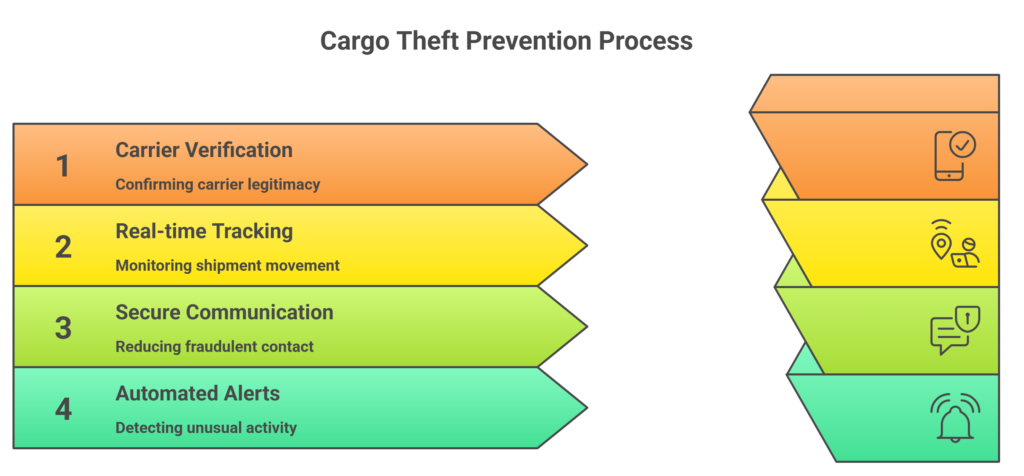
In our experience, combining multiple layers of verification significantly reduces risk. For example, verifying carrier details through both digital systems and direct communication can help identify inconsistencies early.
Technology alone is not enough. It must be supported by consistent processes and trained teams.
“The most effective theft prevention strategies combine technology, process discipline, and consistent execution.”
Are you using the right technology to prevent cargo theft before it happens? Explore tools that can strengthen your verification and tracking processes.
Freight Brokers Who Treat Risk as an Operational Priority Stay Ahead
Cargo theft is becoming a regular part of freight risk management rather than an occasional incident.
Brokerages that proactively address this challenge often treat risk management as part of their daily operations rather than a separate function.
This includes:
- Regularly reviewing verification procedures
- Training staff on fraud detection
- Monitoring shipment patterns and anomalies
- Continuously improving internal processes
In our experience, the most resilient brokerages are those that adapt quickly and refine their workflows as new risks emerge.
Preventing cargo theft is not about eliminating risk entirely, it’s about reducing exposure through consistent, informed decision-making.
“Risk management is no longer optional in freight brokerage, it is a core operational function.”
Is your brokerage built to manage risk proactively, not reactively? See how the right solutions can help you stay ahead of evolving freight challenges.
Frequently Asked Questions (FAQs)
1. Why is cargo theft increasing in 2026?
Cargo theft is increasing due to more organized operations, digital fraud tactics, and greater access to shipment data across the supply chain.
2.What types of freight are most commonly targeted?
High-value and easily resold goods such as electronics, pharmaceuticals, and retail shipments are among the most commonly targeted.
3. How can freight brokers reduce cargo theft risk?
Brokers can reduce risk by improving carrier verification processes, using real-time tracking tools, implementing secure communication systems, and regularly auditing operational workflows.
Stay Ahead of Evolving Cargo Theft Risks
Cargo theft in 2026 is not just increasing, it’s evolving.
The shift toward organized, data-driven tactics means that brokers must adapt their processes to keep up with changing risks. What worked in the past may no longer be sufficient in today’s environment.
For freight brokers, the focus should be on proactive risk management. Strengthening verification processes, leveraging technology, and maintaining operational discipline can significantly reduce exposure.
In a market where both opportunity and risk are growing, the brokerages that succeed will be those that treat security as part of their everyday operations, not just a response to incidents.
Ready to protect your freight and reduce risk in a changing threat landscape? Contact us to learn how we can help you strengthen security and stay ahead.
References
FreightWaves. (n.d.). Cargo theft trends and freight market insights.
https://www.freightwaves.com
Transportation Intermediaries Association (TIA). (n.d.). Fraud prevention and carrier verification best practices.
https://www.tianet.org
DAT Freight & Analytics. (n.d.). Load board and freight data insights.
https://www.dat.com