
Freight sales used to be simpler. Have capacity. Pick up the phone. Offer a competitive rate. Move the load.
That playbook worked for years.But in 2026, something shifted.
Shippers are more informed. Margins are tighter. And just being available no longer closes deals. The brokers who are winning today aren’t doing more of the same. They’re doing things differently.
What Worked Before: Availability, Price, and Speed
For a long time, freight sales success came down to a few core factors.
In our experience, brokers who consistently won freight relied on:
- Being available: Answering calls quickly and responding faster than competitors gave brokers a clear edge in time-sensitive situations (FreightWaves, n.d.)
- Having capacity: Access to reliable carriers often mattered more than anything else, especially during tight market conditions
- Winning on price: Competitive rates were often enough to secure loads, even without deeper relationships
This approach worked because the market rewarded reactive execution. If you could cover the load quickly and cheaply, you were valuable.
But that model had a hidden weakness, it didn’t build long-term differentiation.
Anyone else with a phone, a load board, and a lower rate could replace you.
“Old freight sales rewarded speed and price. New freight sales rewards insight and consistency.”
If your main advantage is still speed and price, how easily could a competitor replace you today?
What Changed in 2026: Shippers Expect More Than Load Coverage
The biggest shift in 2026 isn’t just market conditions, it’s shipper expectations.
In our experience, shippers are no longer just looking for someone to move freight. They want brokers who understand their business.
Key changes include:
- More informed buyers: Shippers now have access to real-time pricing tools and market data, making it harder to win purely on rate (DAT Freight & Analytics, n.d.)
- Higher service expectations: Consistency, visibility, and proactive communication are now baseline expectations, not value-adds
- Focus on reliability over price: Many shippers are willing to pay slightly more for brokers who consistently deliver without issues
- Longer evaluation cycles: Relationships and track records now influence decisions more than one-off quotes
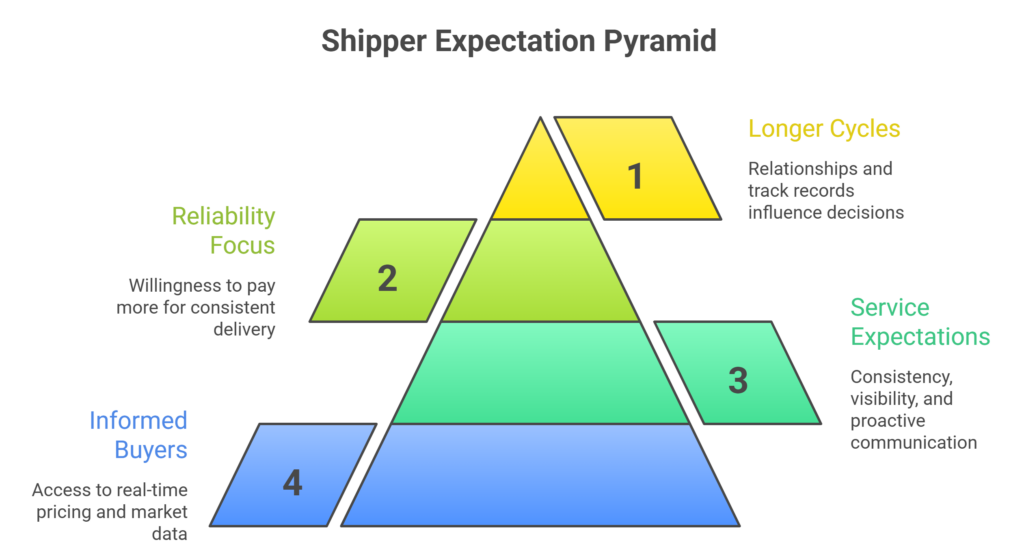
For example, a shipper comparing brokers today isn’t just asking, “Who’s cheapest?” They’re asking, “Who can I trust not to create problems?”
That’s a very different sales environment.
“The sale no longer ends when the load is booked, it starts there.”
Are you selling a rate, or are you selling reliability and outcomes?
Case Study: How a Broker Shifted from Price-Based Selling to Value-Based Growth
Let’s look at a practical, real-world-style scenario based on patterns we’ve seen.
Initial Situation:
- Broker focused heavily on spot market pricing
- Won loads primarily through competitive rates
- Struggled with customer retention and margin consistency
What Changed (Over 120 Days):
In our experience, the shift began when the broker adjusted their approach:
- Started providing consistent shipment updates without being asked
- Focused on specific lanes instead of chasing every opportunity
- Built repeat carrier relationships for reliability
- Positioned themselves as a problem-solver rather than a rate provider
Results After 120 Days:
- Repeat business increased by ~40%
- Customer churn decreased significantly
- Margins stabilized due to reduced price competition
One key moment stood out. Instead of quoting lower on a competitive lane, the broker explained how they would ensure on-time delivery during a tight capacity period.
They didn’t win every load, but they won the right ones.
“When brokers shift from selling price to selling outcomes, they stop competing with everyone.”
What would change in your sales approach if your goal was retention instead of just closing the load?
Freight Sales Today Is About Understanding Lanes Better Than Your Customer
In 2026, knowledge is leverage. In our experience, the brokers closing high-quality business are the ones who understand lanes, capacity trends, and risks better than their customers.
This includes:
- Knowing seasonal patterns: Understanding when capacity tightens or loosens in specific regions
- Anticipating disruptions: Weather, market shifts, and capacity shortages
- Providing data-backed insights: Helping shippers make informed decisions
- Advising on alternatives: Offering solutions instead of just reacting to requests
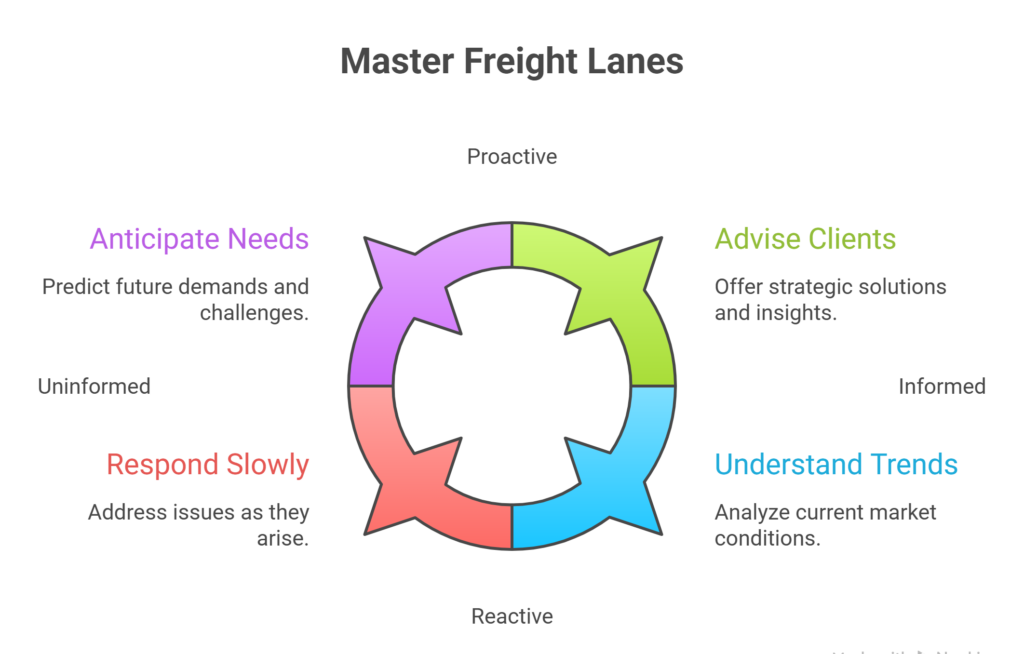
For example, instead of simply quoting a lane, a broker might say: “Capacity is tightening in this region next week, we recommend moving this earlier.”
That level of insight builds trust quickly.
“The broker who understands the lane controls the conversation.”
Do you truly understand your lanes better than your customers? See how the right brokerage solutions can give you that edge.
Speed Still Matters, But Smart Speed Wins
Speed hasn’t disappeared. It’s just evolved. In our experience, the advantage today is not just being fast, it’s being fast and accurate.
Modern freight sales requires:
- Faster quoting with data support: Using real-time pricing tools to avoid underquoting (DAT Freight & Analytics, n.d.)
- Quick but informed decisions: Balancing urgency with risk awareness
- Efficient communication: Clear, concise updates instead of constant back-and-forth
- Prioritizing the right loads: Not every opportunity is worth chasing
For example, a broker who responds quickly but misses key details creates more problems than value.
Smart speed means moving quickly without sacrificing quality.
“Being first is helpful, but being right is what keeps the customer.”
Are you optimizing for speed, accuracy, or both?
Technology Is Changing How Freight Sales Is Done
Freight sales is no longer just relationship-driven, it’s also data-driven. In our experience, brokers who leverage technology effectively gain a significant advantage.
Key areas where technology impacts sales include:
- Market visibility: Access to real-time rate data and capacity trends (DAT Freight & Analytics, n.d.)
- CRM systems: Tracking customer interactions and follow-ups
- Automation tools: Reducing manual tasks and increasing efficiency
- Performance tracking: Measuring conversion rates and customer retention
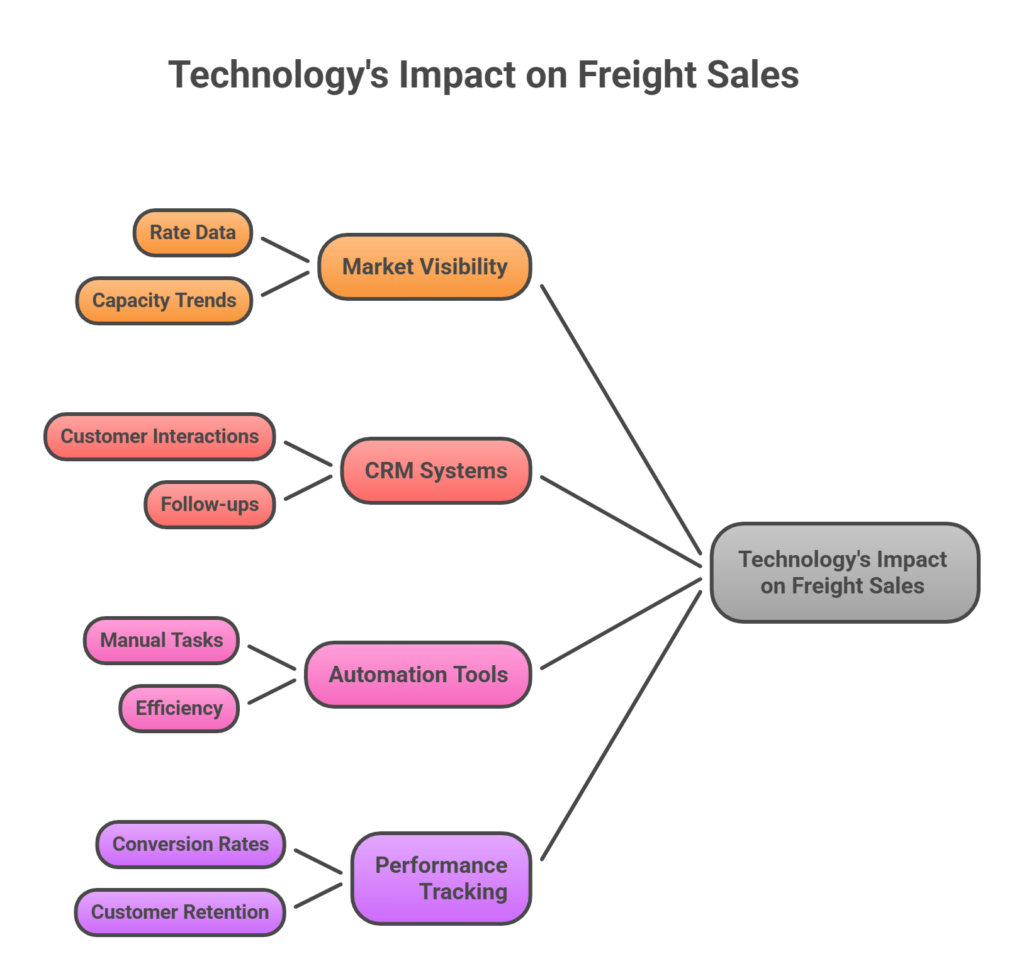
For example, brokers using data to support their pricing can confidently explain rates instead of guessing.
That confidence translates into stronger sales conversations.
“Technology doesn’t replace relationships, it strengthens them with better information.”
Is your technology helping you sell smarter in the current freight market? Discover tools that can elevate your sales performance.
The Real Shift: From Transactional Selling to Strategic Partnerships
The biggest change in freight sales isn’t a tool or a tactic. It’s a mindset shift.
In our experience, successful brokers are moving from:
- Transactional selling → Strategic partnerships
- Short-term wins → Long-term relationships
- Reactive execution → Proactive problem-solving
- Price competition → Value differentiation
This shift doesn’t happen overnight, but it’s what separates brokers who survive from those who grow.
Because in today’s market, customers don’t just want a broker. They want someone who helps their business run smoother.
“The brokers who win in 2026 aren’t selling freight, they’re selling confidence.”
Are you positioning yourself as a vendor, or as a partner your customers depend on?
Frequently Asked Questions (FAQs)
1.What is the biggest change in freight sales in 2026?
The shift from price-based selling to value-based relationships, where reliability, insight, and consistency matter more than just rates.
2.How can brokers improve their sales approach today?
By focusing on lane expertise, proactive communication, and building long-term customer relationships rather than chasing one-off loads.
3.Is price still important in freight sales?
Yes, but it’s no longer the main differentiator. Service quality and reliability often carry more weight in decision-making.
Win Trust, Not Just Freight
Freight sales didn’t disappear in 2026, it evolved. What worked before: speed, price, and availability still matters. But it’s no longer enough on its own.
Nowadays the market rewards brokers who think differently. Those who understand their lanes better, communicate proactively, and build systems, not just pipelines.
In our experience, the brokers who succeed are the ones who stop chasing every load and start focusing on the right ones. Because the goal is no longer just to win freight. It’s to win trust, and keep it.
Ready to evolve your freight sales strategy and build long-term shipper trust? Contact us to learn how we can help you grow with consistency and confidence.
References
FreightWaves. (n.d.). Freight market trends and brokerage insights.
https://www.freightwaves.com
DAT Freight & Analytics. (n.d.). Freight pricing and market data tools.
https://www.dat.com
Transportation Intermediaries Association (TIA). (n.d.). Broker best practices and sales standards.
https://www.tianet.org