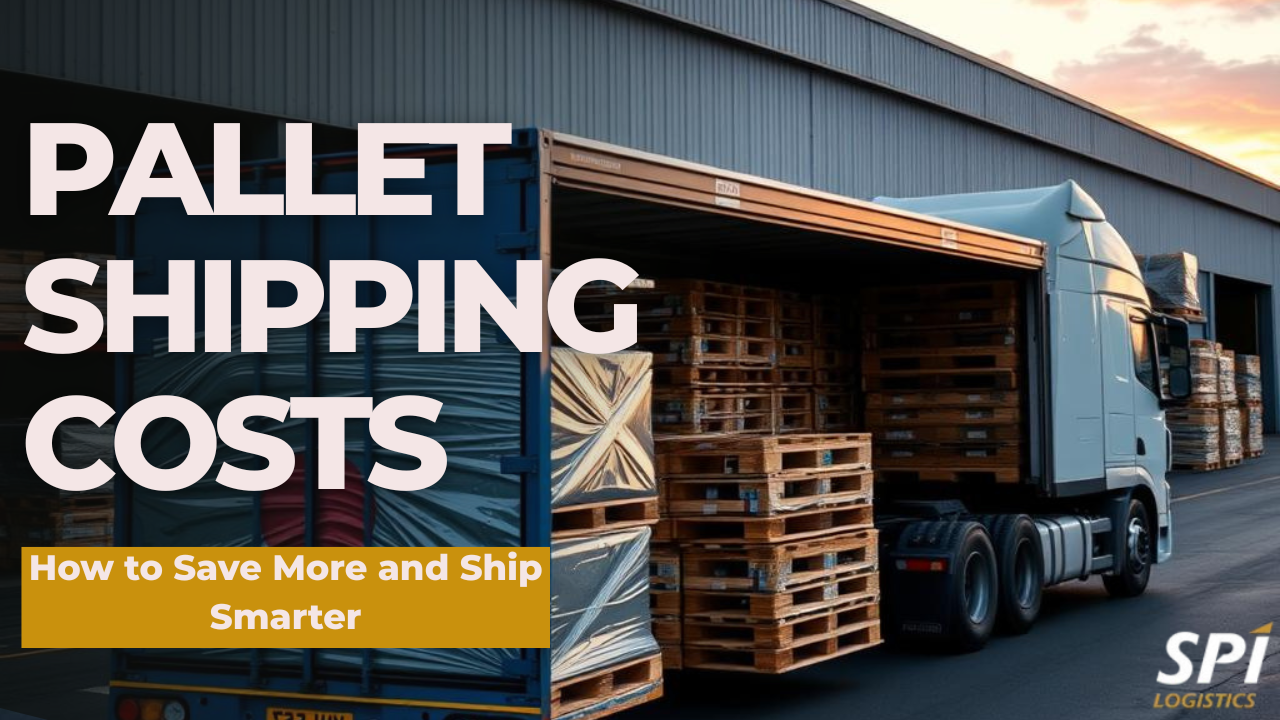
If you’ve ever wondered how much to ship a pallet of freight, you’re not alone. Whether you’re a small business owner or a logistics manager, understanding pallet shipping rates is essential to managing your bottom line. In this guide, we’ll break down everything you need to know, from getting a pallet shipping quote to uncovering the real cost of shipping a pallet across the country or even internationally.
What Is Pallet Shipping?
Pallet shipping is the process of transporting goods that are stacked on a pallet, a flat structure that supports goods in a stable manner while being lifted by a forklift or pallet jack. This method is widely used in freight logistics because it allows for easier handling, efficient loading and unloading, and safer transportation(FedEx,n.d.).
“Pallet shipping has revolutionized freight logistics by enabling businesses to streamline loading processes and reduce product damage, making it a staple in supply chains worldwide.”
Why Pallet Shipping Matters
Shipping freight on pallets is not only efficient but also safer for goods and easier to handle. But navigating pallet shipping prices can be tricky. With options ranging from flat rate pallet shipping to custom quotes based on weight and destination, the choices can be overwhelming. That’s why we’re here to demystify the process.
Shipping goods on pallets offers numerous advantages:
- Improved handling: Forklifts and pallet jacks make loading and unloading faster.
Example: A warehouse team can load 10 pallets of bottled beverages in 20 minutes versus over an hour if loading individually.
- Better protection: Pallets reduce damage during transit by keeping items securely stacked.
Example: Electronics shipped on shrink-wrapped pallets arrive intact compared to loose box shipments prone to tipping.
- Efficient space usage: Goods are consolidated into a compact unit.
Example: A 40-ft truck can fit up to 24 standard pallets, optimizing cubic space.
- Cost-effective: Reduces labor and potential for damage-related claims(Freightquote, n.d.).
Example: A business lowered their freight claims by 30% after switching to palletized shipments.
- Easier inventory management: Pallets are easier to track and organize.
Example: A retailer uses barcode-labeled pallets for faster warehouse scanning and sorting.
“Businesses that adopt pallet shipping typically see improved operational efficiency and cost savings, making it an essential practice for scaling logistics operations.”
How has using pallets impacted your shipping efficiency or product safety?
Types of Pallets
There are several types of pallets used in freight shipping, each suited for different needs:
- Wooden pallets: The most common type, known for being cost-effective and recyclable.
For example, a furniture manufacturer shipping sofas across state lines may opt for wooden pallets due to their affordability and wide availability.
- Plastic pallets: These are durable and resistant to moisture, making them ideal for hygienic shipping needs such as food or pharmaceutical products.
For instance, a dairy company transporting yogurt across a humid region would benefit from plastic pallets that don’t absorb moisture.
- Metal pallets: Strong and long-lasting, metal pallets are typically used for heavy-duty or industrial shipping.
For example, a manufacturer exporting automotive parts internationally might rely on metal pallets to ensure structural integrity during long-haul transit.
- Paper or cardboard pallets: Lightweight and eco-friendly, these are often used for air freight to reduce the overall weight of the shipment.
For example, an e-commerce retailer sending bulk lightweight goods via air courier might choose cardboard pallets to save on shipping costs.
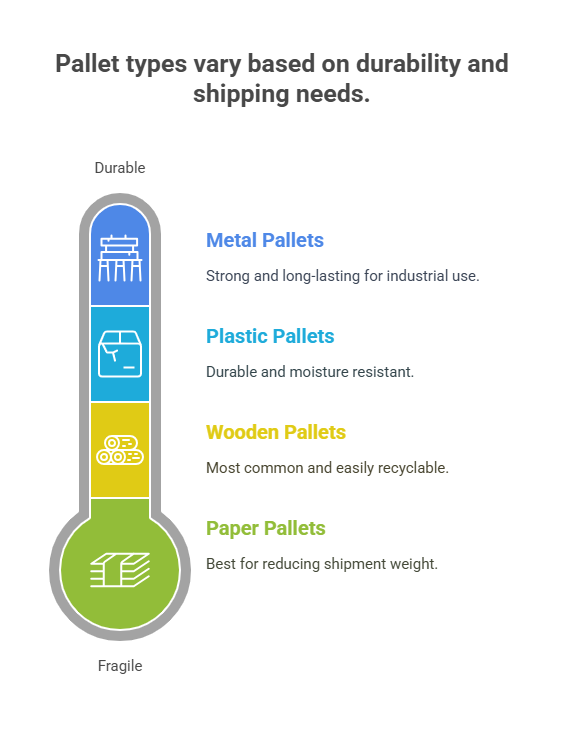
“Choosing the right pallet type is crucial, as it impacts not only shipping costs but also product safety and environmental footprint.”
Which type of pallet has worked best for your products, and why?
Factors That Affect Pallet Shipping Costs
Five factors drive most of what you’ll pay to ship a pallet. Understanding how each one works is the first step to estimating your own cost, not just recognizing that cost varies. When calculating the pallet shipping cost, consider the following:
1. Freight Class
Every LTL shipment is assigned an NMFC freight class between 50 and 500. Lower classes cost less to ship; higher classes cost more, because class is based on density, not just weight.
| Freight Class | Typical Density | Example Freight | Relative Cost |
| 50–85 | Very dense (12+ lbs/cubic ft) | Steel, bricks, canned goods | Lowest |
| 92.5–125 | Medium density | Machinery, boxed retail goods | Moderate |
| 150–250 | Lower density | Furniture, auto parts | Higher |
| 300–500 | Very low density | Empty containers, lightweight/bulky goods | Highest |
Two pallets of identical weight can fall into very different freight classes, and cost very different amounts to ship, depending on how much physical space they take up. This is why density, not weight alone, is the real starting point for any accurate estimate.
2. Density (and how to calculate it)
Density is what determines freight class. You can calculate it yourself with two numbers you already have: your pallet’s weight and its dimensions.
Formula:
Volume (cubic feet) = (Length × Width × Height in inches) ÷ 1,728
Density (lbs per cubic foot) = Total Weight (lbs) ÷ Volume (cubic feet)
Example: A pallet measuring 48″ × 40″ × 48″ and weighing 500 lbs:
Volume = (48 × 40 × 48) ÷ 1,728 = 53.3 cubic feet
Density = 500 ÷ 53.3 = 9.4 lbs per cubic foot
At roughly 9.4 lbs/cubic ft, this pallet would likely fall in the 125–150 freight class range, meaning it costs more to ship than a denser pallet of the same weight would.
3. Distance
As with any freight, longer hauls cost more. LTL carriers typically price in mileage bands rather than a flat per-mile rate, so cost doesn’t scale perfectly linearly, a 1,000-mile shipment usually costs less than double a 500-mile shipment on the same lane.
4. Accessorial Charges
These are add-on fees for services beyond standard dock-to-dock delivery, and they’re one of the most common sources of “surprise” costs on an invoice:
Liftgate service — required when the pickup or delivery location doesn’t have a loading dock
Residential delivery — added cost for non-commercial addresses
Inside delivery — moving freight past the front door or dock
Limited access locations — schools, military bases, construction sites, storage facilities
Notification/appointment delivery — scheduled delivery windows
A shipment’s base rate and its final invoiced cost can differ significantly once accessorials are added, which is why an accurate estimate has to account for them up front, not as an afterthought.
5. Fuel Surcharge
Most LTL carriers apply a fuel surcharge as a percentage of the base rate, adjusted regularly based on current diesel prices. This is added on top of the base freight charge and accessorials.
All these factors can influence the shipping a pallet cost, so it’s crucial to get an accurate ship a pallet quote tailored to your specific shipment. The average LTL pallet shipping cost ranges from $120 to $600 domestically, depending on freight class and distance (Freightquote n.d.).
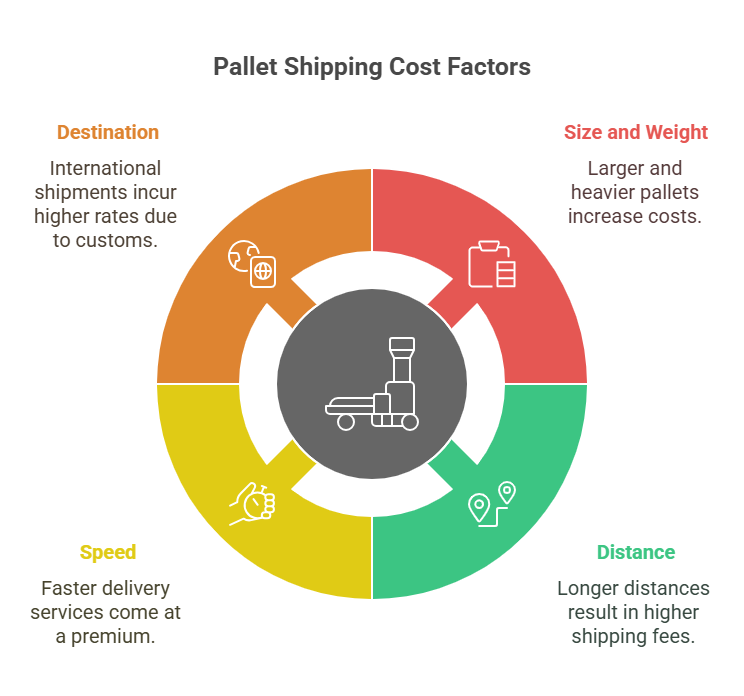
“Accurate estimation of pallet shipping costs depends on knowing how these factors interplay, helping businesses avoid surprises and better plan their supply chain.”
Looking for tailored shipping options that fit your business needs? Explore our shipping services.
Flat Rate vs. Custom Quotes
One of the most searched queries online is, “how much does it cost to send a pallet?” The answer often depends on whether you’re using flat rate pallet shipping or requesting a pallet freight quote from a carrier.
- Flat rate pallet shipping provides predictable pricing, especially useful for standard-sized shipments.
For example, a small business regularly shipping uniform boxes of canned goods within the same region can rely on flat rate pricing to keep budgeting simple and costs transparent.
- Custom quotes give flexibility for non-standard sizes and international routes, offering a personalized pallet quote based on your exact needs.
For instance, a manufacturer shipping oversized machinery overseas would benefit from a custom quote to accurately reflect the additional handling, space, and international shipping logistics involved.
“Flat rates simplify budgeting, while custom quotes provide tailored solutions for unique shipments, choosing wisely can yield significant cost savings.”
Do you prefer the predictability of flat rates or the flexibility of custom quotes? Why?
Domestic vs. International Pallet Shipping Rates
When comparing pallet shipping rates, it’s important to distinguish between domestic and international shipping due to their unique requirements and cost structures:
- Domestic Pallet Shipping: Tends to be more streamlined with predictable costs and fewer regulatory hurdles.
Example: Shipping a pallet of office supplies from Atlanta to Chicago typically only requires a basic bill of lading and carrier coordination, with costs driven by distance and weight.
- International Pallet Shipping: Involves additional considerations like tariffs, customs documentation, and international regulations.
Example: Exporting a pallet of electronic goods from the U.S. to Germany would require customs declarations, possibly VAT registration, and compliance with European standards, resulting in higher overall costs.
If you’re looking at exporting goods, securing an international pallet shipping quote can provide better transparency and help you plan your logistics budget more effectively. International pallet shipments can range from $400 to $1,200 depending on destination, method (air/sea), and documentation requirements (uShip,n.d.).
“International pallet shipping requires careful consideration of customs and regulations, often making advance planning and professional assistance essential.”
What challenges have you faced when shipping pallets internationally versus domestically?
How to Get the Best Pallet Shipping Prices
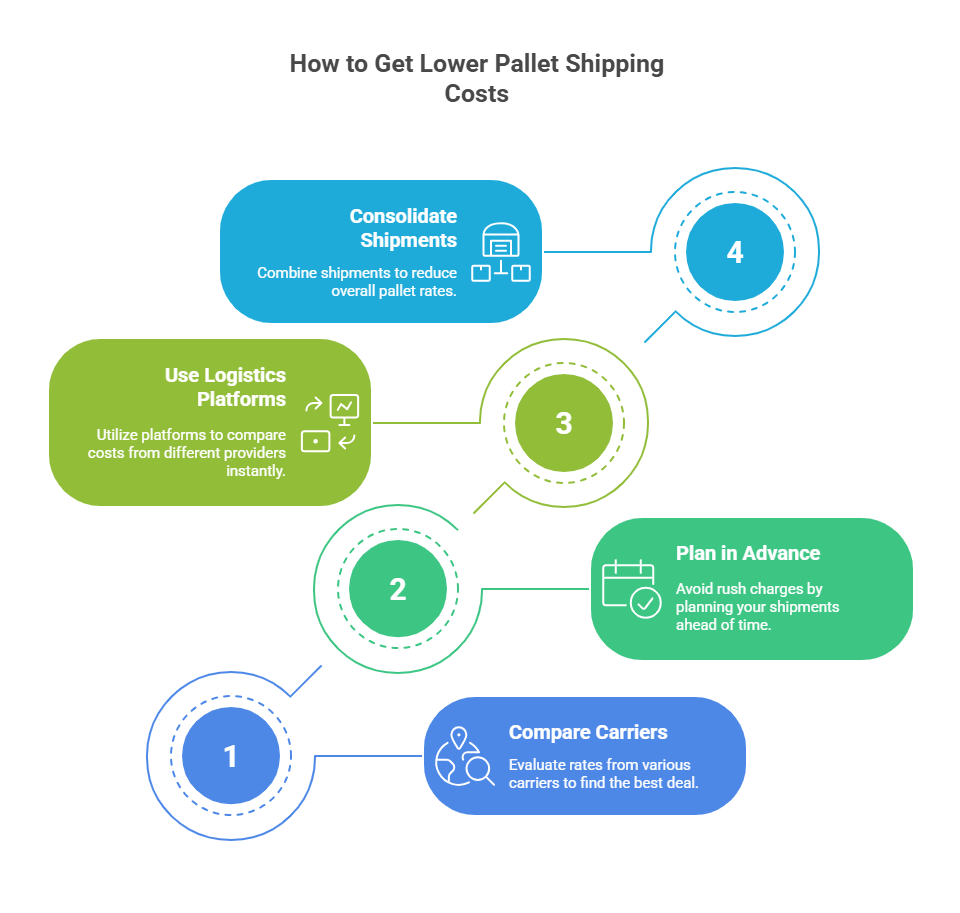
Want to save on the cost of shipping a pallet? Here’s how:
- Compare multiple carriers to find the most competitive pallet shipping rates (FreightRun,n.d.).
- Plan in advance to avoid rush charges.
- Use logistics platforms to instantly compare the pallet shipping cost from different providers.
- Consolidate shipments whenever possible to lower your pallet rates.
By leveraging these strategies, you’ll reduce your average shipping a pallet cost while improving delivery efficiency.
Let’s say you’re trying to find out how much to ship a pallet from Los Angeles to New York. If you choose flat rate pallet shipping, the fee might be around $300. However, if your shipment is oversized or time-sensitive, your pallet shipping quote might jump to $450 or more.
“Knowing your shipment specifics and comparing options can save you hundreds on pallet shipping, making research well worth the effort.”
Looking to lower your shipping costs with smarter strategies? Check out our freight broker solutions.
Estimate Your Pallet Shipping Cost: A Step-by-Step Framework
Use this framework to build a working estimate for your own shipment. It won’t replace a carrier quote, but it will get you in the right range and help you sanity-check any quote you receive.
Step 1: Calculate your freight class.
Use the density formula above to estimate where your shipment falls in the 50–500 class range.
Step 2: Get a base rate per hundredweight (CWT) for your class.
Ask your carrier or broker for their current CWT rate at your freight class. This is the foundation of your quote before any adjustments.
Step 3: Apply your distance band.
Base rates typically increase in mileage tiers rather than a flat per-mile rate. Confirm which distance band your lane falls into.
Step 4: Add applicable accessorial charges.
Check the list above: liftgate, residential delivery, limited access, and inside delivery are the most common additions.
Step 5: Apply the current fuel surcharge.
This is typically a percentage added to the total of Steps 2–4 combined.
Typical Cost Ranges by Distance
These ranges reflect general LTL market patterns for a standard, dock-to-dock pallet shipment with no accessorials. Actual pricing depends on your freight class, current carrier capacity, and fuel prices. Use this as a starting reference point, not a quote.
| Distance | Typical Cost Range (Standard Class) |
| Under 250 miles | $120–$250 |
| 250–500 miles | $200–$350 |
| 500–1,000 miles | $275–$450 |
| 1,000–1,500 miles | $350–$550 |
| Over 1,500 miles | $400–$600+ |
Build your own estimate:
Weight (lbs): ______
Dimensions (L × W × H, inches): ______
Calculated density (lbs/cubic ft): ______
Estimated freight class: ______
Distance (miles): ______
Accessorials needed: ______
Estimated total: ______
Once you’ve worked through your own numbers, request a pallet freight quote to confirm actual pricing for your lane.
Frequently Asked Questions (FAQs)
1. How much does it cost to ship a pallet of freight domestically?
The cost to ship a pallet of freight domestically can range from $120 to $600 depending on factors like weight, dimensions, distance, and freight class. For instance, a standard LTL pallet shipment within a 300-mile radius may cost around $150, while cross-country pallet shipping rates can exceed $400. It’s important to request a pallet freight quote for the most accurate pricing.
2. What are the benefits of flat rate pallet shipping?
Flat rate pallet shipping offers predictable pricing and simplifies budgeting, especially for businesses shipping consistent loads. It’s ideal when pallet size and weight remain uniform, as it eliminates the need to calculate variable costs. This option is popular among subscription services and retailers that ship standardized products regularly.
3. How do I get the best pallet shipping prices for international freight?
To get the best pallet shipping prices internationally, compare multiple carriers, plan ahead, and consolidate shipments when possible. International pallet shipping rates vary widely due to customs, duties, and distance. Using a freight broker or logistics platform can help you secure competitive international pallet shipping quotes tailored to your specific needs.
4. How do I calculate my pallet’s freight class?
Freight class is based on density, how much a shipment weighs relative to the space it takes up. Divide your pallet’s total cubic feet (length × width × height in inches, divided by 1,728) into its weight in pounds. Denser shipments (steel, canned goods) fall into lower, less expensive freight classes. Bulkier, lighter shipments (furniture, empty containers) fall into higher, more expensive classes.
Ship Smarter with Pallet Freight Solutions
Navigating the world of pallet freight doesn’t have to be complicated. Whether you’re wondering how much it costs to ship a pallet or comparing international pallet shipping rates, clarity is key. By getting personalized pallet freight quotes and weighing flat rate vs. custom pricing, you can unlock the most cost-effective and efficient shipping strategy for your business.
Ready to simplify pallet freight shipping? Contact us to get a quote and discover the best solution for your logistics needs.
References
- FedEx. (n.d.). FedEx LTL Select. Retrieved from Discover more
- Freightquote. (n.d.). LTL freight rates and quoting. Retrieved from Discover more
- uShip. (n.d.). LTL shipping rates. Retrieved from Discover more
- FreightRun. (n.d.). LTL freight quote calculator. Retrieved from Discover more