Shipping costs aren’t fixed. They change based on multiple variables like weight, distance, service level, and market conditions. To accurately estimate shipping rates, you need to understand both the basic pricing formula and how real-world freight markets behave.
This guide breaks down exactly how shipping costs are calculated, how to estimate them step-by-step, and how brokers actually price freight in real operations.
Key Factors That Determine Shipping Costs
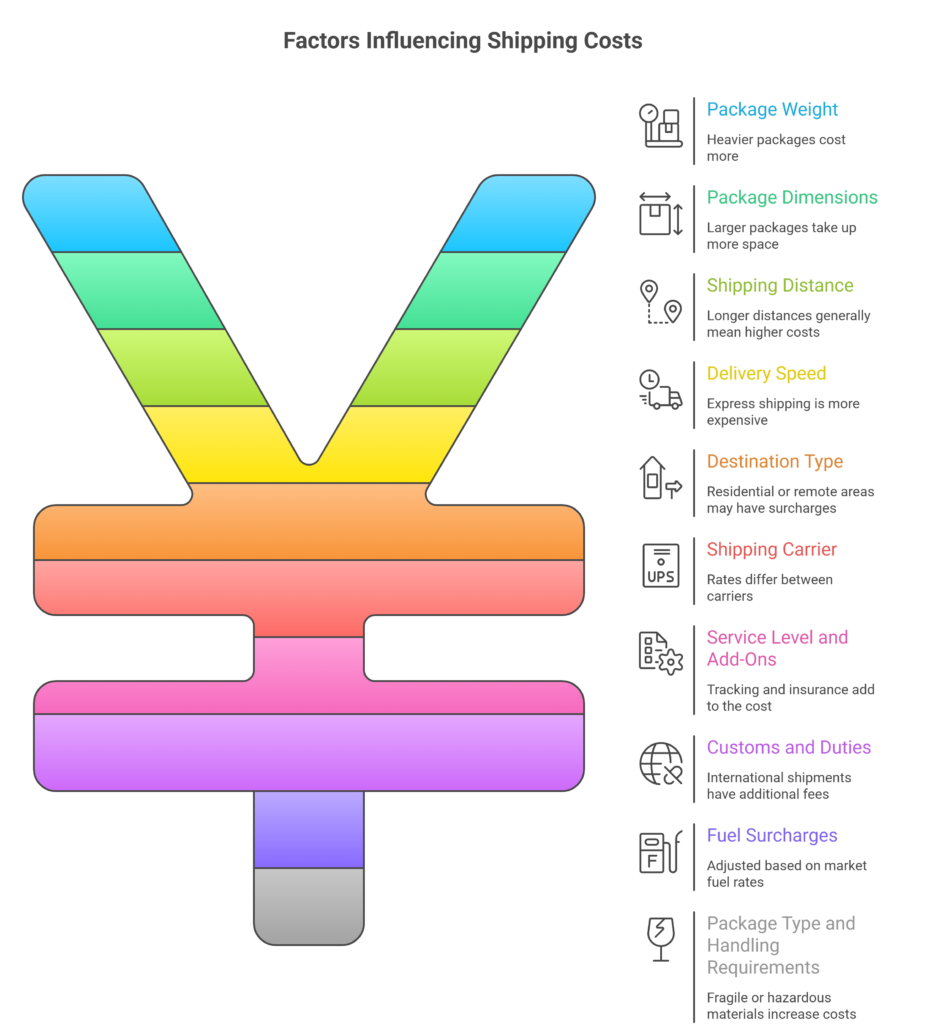
Understanding what influences your shipping costs can help you make informed decisions and potentially reduce expenses. Here are the main factors that affect shipping prices:
-
Package Weight
- Heavier packages cost more to ship.
- Pricing may be based on actual or dimensional weight, whichever is higher.
-
Package Dimensions
- Larger packages take up more space, affecting freight charges.
- Dimensional weight pricing applies to large but lightweight items.
-
Shipping Distance
- Longer distances generally mean higher costs.
- Domestic vs. international destinations can vary greatly in price (uShip, n.d.).
-
Delivery Speed
- Express or overnight shipping is significantly more expensive than ground shipping.
- Standard vs. expedited options affect final cost (FedEx, n.d.).
-
Destination Type
- Residential deliveries may incur additional fees.
- Remote or rural areas may have surcharges (Freightquote, n.d.).
-
Shipping Carrier
- Rates differ between UPS, FedEx, USPS, and DHL.
- Each carrier has its own pricing model and fuel surcharges (Freightquote, n.d.).
-
Service Level and Add-Ons
- Options like tracking, insurance, and signature confirmation add to the base rate.
- Weekend or holiday deliveries cost extra (uShip, n.d.).
-
Customs and Duties (for International Shipping)
- Duties, taxes, and brokerage fees apply to international shipments.
- Use an international shipping calculator to estimate these costs (FreightRun, n.d.).
-
Fuel Surcharges
- Adjusted regularly based on market fuel rates.
- Can significantly impact cost, especially for heavier or long-distance shipments (Freightquote, n.d.).
-
Package Type and Handling Requirements
- Fragile, perishable, or hazardous materials often require special packaging or handling, increasing the price.
By understanding these factors and using tools like the UPS shipping calculator or UPS pricing calculator, you can better plan and control your shipping expenses.
“According to logistics professionals, one of the most overlooked factors is dimensional weight. Shippers often underestimate how much empty space costs them, especially for lightweight but bulky items.”
What’s the most surprising factor you’ve encountered when calculating your shipping costs?
How to estimate shipping Costs
To accurately determine shipping costs for any package, follow these practical steps:
- Weigh the Package: Use a digital scale to determine exact weight. This is critical for calculating shipping rates by weight and determining which pricing tier your item falls into.
- Measure the Package: Take the length, width, and height in inches. Shipping providers use dimensional weight (DIM weight) for larger, lightweight packages.
- Determine the Destination: ZIP codes for domestic shipments and country codes for international destinations affect pricing.
- Choose a Shipping Speed: Decide on ground, 2-day, overnight, or international delivery.
-
Use Shipping Calculators:
- UPS shipping calculator for quick rate estimates.
- UPS price estimate to compare service levels.
- UPS shipping cost calculator for a complete pricing breakdown.
- UPS shipping estimator for multi-package shipments.
- International shipping calculator for global delivery estimates.
- Consider Insurance: If shipping high-value items like electronics or furniture, use the UPS insurance cost calculator.
- Compare Services: Weigh cost against delivery time and service reliability.
“A common pitfall is choosing the cheapest service without checking delivery windows. Always factor in the urgency of delivery alongside price”
Looking for a reliable shipping partner to streamline your logistics? Explore our shipping services to get expert support and real-time cost optimization.
How Freight Brokers Actually Price Loads
In real-world freight operations, pricing isn’t just based on formulas.
Brokers also consider:
- Current market rates, which fluctuate daily based on fuel prices, economic conditions, and overall freight demand, directly influence how much you’ll pay for a shipment
- Lane demand (supply vs. trucks available), meaning how many shipments are moving along a specific route compared to how many trucks are available, can drive prices up or down depending on the balance
- Urgency of the shipment, where tighter deadlines or expedited delivery requirements often lead to higher costs due to the need for faster service or dedicated capacity
- Carrier availability, which reflects how many carriers are willing and able to take on your load at a given time, impacting both pricing and scheduling flexibility
- Seasonal trends, such as peak shipping seasons, holidays, or weather-related disruptions, that can significantly affect capacity and cause noticeable shifts in freight rates
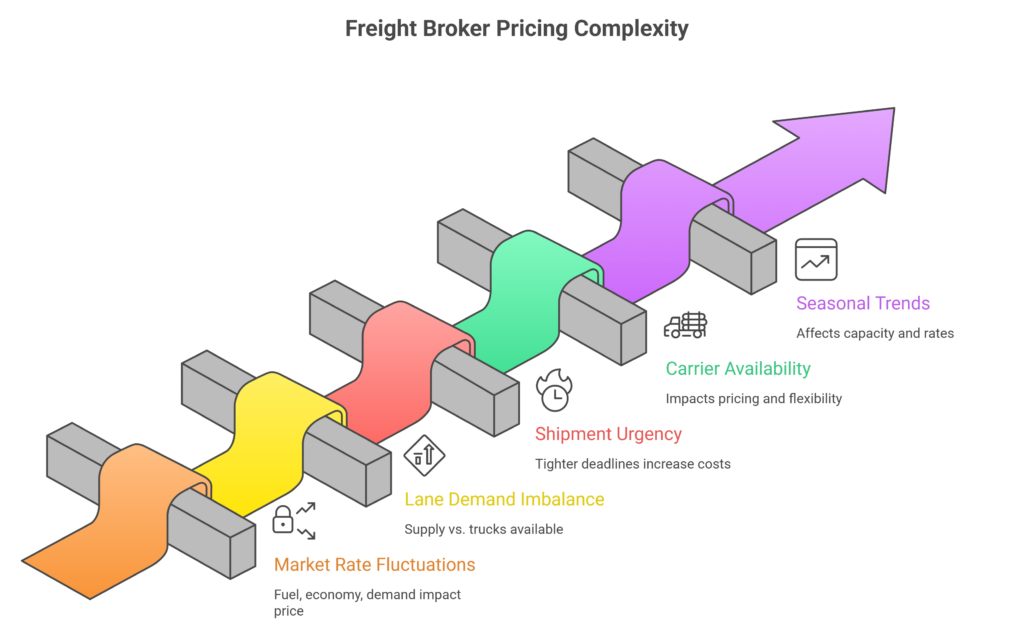
Freight pricing changes constantly due to market conditions, not just static inputs.
“Freight pricing is dynamic. What you pay today may not be the same tomorrow.”
Would you rather lock in a rate early or wait for potentially better pricing closer to shipment time?
How to Estimate UPS Shipping Charges
When estimating costs with UPS, use the following tools and considerations for the most accurate result:
1. UPS Shipping Tools
- UPS shipping calculator: Basic estimate based on weight, dimensions, origin, and destination.
- UPS package price calculator: Select your packaging type (box, envelope, irregular).
- UPS pricing calculator: Offers detailed pricing with add-ons like Saturday delivery.
- UPS shipping cost calculator: Comprehensive breakdown of base rate, surcharges, and insurance.
2. Compare by Service Type
- UPS estimate shipping cost: Useful for comparing options like UPS Ground vs. 2nd Day Air.
- Estimate UPS shipping rates: Ideal for small businesses or bulk shipments.
- UPS shipping estimator: Combines multiple services and offers expected delivery dates.
3. Include Add-Ons and Extras
- UPS insurance cost calculator: For declared value coverage.
- Furniture shipping cost calculator: Helpful for oversized or heavy items.
- International shipping cost calculator: For taxes, customs fees, and border delays.
4. Additional UPS Resources
- UPS charge estimate: Gives a ballpark figure.
- Estimating UPS shipping charges: Covers all service levels and regions.
- UPS shipping quote: Best for custom or commercial shipments.
Use these tools in combination to make informed decisions on how to ship efficiently and affordably with UPS.
“Dimensional weight is often overlooked by shippers, yet it plays a major role in pricing,”
Have you ever used more than one UPS calculator to compare estimates? What differences did you notice?
Common Mistakes When Estimating Shipping Costs
Most businesses make these mistakes:
- Ignoring dimensional weight
- Forgetting accessorial charges
- Choosing the cheapest option without checking delivery time
- Not comparing carriers
- Relying on outdated pricing
These small mistakes can significantly impact total shipping costs.
“Most costly shipping mistakes don’t come from complex issues, they come from small oversights that compound across every shipment.”
Which mistake do you think impacts your costs the most: mispricing, missing fees, or not comparing options?
How to Reduce Shipping Costs
If you want to lower costs:
- Optimize packaging to reduce dimensional weight by using appropriately sized boxes and minimizing empty space, which helps avoid higher charges based on volume rather than actual weight
- Compare multiple carriers to find the most competitive rates and service options, as pricing and transit times can vary significantly between providers
- Plan shipments in advance to avoid rush fees and take advantage of standard or economy pricing options that are typically more cost-effective
- Consolidate shipments when possible by combining smaller loads into a single shipment, reducing overall transportation costs and improving efficiency
- Work with a freight broker for better rates, as they have access to a wide network of carriers and can negotiate pricing and optimize routing on your behalf
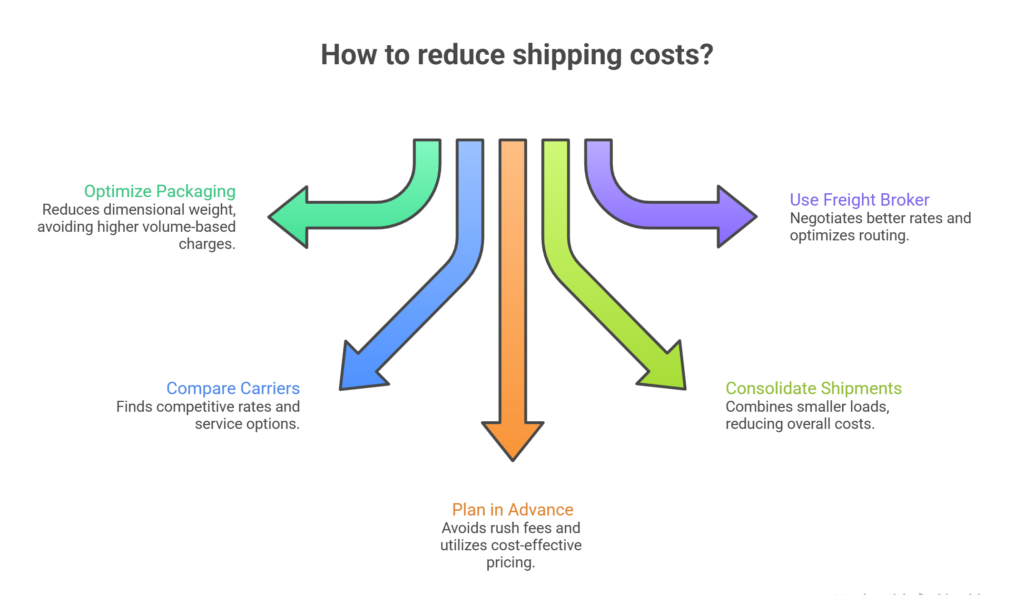
“Reducing shipping costs isn’t about finding one cheaper rate, it’s about consistently optimizing decisions across every shipment.”
Looking to reduce your shipping costs without sacrificing reliability? See how SPI helps you optimize rates, improve efficiency, and access better carrier options
Frequently Asked Questions (FAQs)
1. How much does it cost to mail a package?
The cost to mail a package depends on several factors including the package’s weight, dimensions, destination, and delivery speed. For example, sending a small parcel domestically via ground shipping may cost as little as $5–$10, while expedited or international shipping can cost significantly more. Using an online shipping calculator is the best way to get an accurate estimate.
2. How much does shipping cost?
Shipping costs can vary widely based on carrier, service level (e.g., ground, 2-day, overnight), and whether you’re sending a package domestically or internationally. A small lightweight package might cost under $10, while larger or heavier items can range from $20 to over $100. Fuel surcharges, insurance, and packaging materials can also affect the total price.
3. How much does it cost to ship a package?
Shipping a package typically costs anywhere from $5 to $100+, depending on its size, weight, destination, and urgency. For accurate pricing, use a shipping cost estimator or visit your preferred carrier’s website. Comparing services (e.g., UPS, FedEx, USPS) can also help you find the most cost-effective option.
4. How much does it cost to ship a printer?
Printers can be bulky and moderately heavy, so the shipping cost usually starts around $20–$50 for domestic ground shipping. If the printer is larger or requires special handling (like extra padding or insurance), the cost may increase. Be sure to measure and weigh your package and check with a shipping calculator for the most accurate price.
5. How much does it cost to ship a camera?
Shipping a camera usually costs between $10 and $30, depending on the camera’s size and weight, and whether you choose standard or expedited service. Since cameras are fragile and often valuable, it’s a good idea to use a shipping service that includes tracking, insurance, and proper protective packaging.
6. How much is shipping in California?
Shipping in California often depends on urban congestion and port-related surcharges. Cities like Los Angeles and San Francisco may see higher rates due to traffic delays and proximity to major shipping ports.
7. How much is shipping in Texas?
Shipping costs in Texas can vary. Central locations like Dallas typically benefit from lower rates due to efficient logistics hubs, while rural areas may incur higher fees due to longer transit times.
8. What affects shipping to Florida?
Shipping to Florida can become more expensive during hurricane season. Route disruptions and increased demand for expedited services often contribute to higher shipping costs during this time.
Want More Accurate Shipping Rates ?
Shipping costs aren’t random, they follow a clear structure. But in real freight operations, pricing is dynamic and constantly changing. The more you understand how rates are calculated and what affects them, the better decisions you can make, and the more you can save over time.
Getting accurate shipping rates isn’t just about using calculators, it’s about understanding the market and having access to real pricing data.
Working with a brokerage gives you:
- Real-time market rates
- Access to multiple carriers
- Optimized pricing strategies
- Support for complex shipments
Ready to streamline your shipping strategy? Contact us to explore how SPI helps you optimize shipping costs and improve freight efficiency.
References
FedEx. (n.d.). FedEx Shipping Rates and Tools. Retrieved from https://www.fedex.com
Freightquote. (n.d.). Freight Shipping Costs. Retrieved from https://www.freightquote.com
FreightRun. (n.d.). Online Freight Rate Tools. Retrieved from https://www.freightrun.com
uShip. (n.d.). Shipping Cost Factors. Retrieved from https://www.uship.com