For years, many shippers viewed cross-border freight as a simple extension of domestic transportation. A truck picks up in one country, crosses a checkpoint, clears customs, and continues toward its destination.
Simple, right? Not exactly.
Anyone who has spent time managing cross border logistics knows that a shipment crossing a national border introduces an entirely different level of complexity. A missed customs document, a carrier compliance issue, a poorly planned drayage transfer, or a sudden capacity shortage can turn a routine shipment into an expensive delay.
That challenge is becoming more significant in 2026.
The freight market is presenting a contradiction. Overall freight demand has not returned to a full boom, but available capacity is tightening in specific markets and lanes. According to the Cass Freight Index, April 2026 shipments were still down year over year, yet truckload pricing increased as carriers became more disciplined about capacity and operating costs [Cass Information Systems, 2026].
At the same time, DAT reported strengthening van load-to-truck ratios during 2026, indicating that available equipment is becoming more competitive, especially as certain regions experience tighter capacity [DAT Freight & Analytics, 2026].
For brokers managing established books of business, the conversation with shippers has to change. The question is no longer, “Can we find a truck?” The better question is, “Do we have the right cross border transportation strategy before the market gets tighter?”
“The best brokers are not waiting for a border disruption to happen before they prepare their customers. They are having those conversations while capacity still exists.”
If your largest cross-border customer had to move an urgent shipment tomorrow, do you have a plan that accounts for capacity, compliance, and border delays?
Why Cross-Border Freight Got Harder in June 2026
June 2026 brought another reminder that cross border shipping does not operate in isolation. Events affecting domestic trucking, compliance enforcement, and fuel costs quickly influence international freight flows.
One major factor was the annual CVSA International Roadcheck. FreightWaves reported increased spot-market and tender pressure leading into the enforcement period as carriers prepared for inspections and some capacity temporarily moved out of the market [FreightWaves, 2026].
The 2026 Roadcheck focus areas included:
- Hours-of-Service record compliance and electronic logging device (ELD) tampering.
- Tire maintenance and inspection standards.
- Cargo securement requirements that directly impact safety compliance [Commercial Vehicle Safety Alliance, 2026].
For cross border trucking operations, a vehicle placed out of service is not just a driver problem, it can disrupt appointments, customs schedules, drayage transfers, and customer production timelines.
The reality is that compliance has become a capacity issue.
A carrier with poor safety practices might look available today but create costly disruptions tomorrow.
| Cross-Border Challenge | Operational Impact |
| Roadcheck inspections | Temporary capacity reductions |
| ELD and compliance violations | Increased out-of-service risks |
| Cargo securement failures | Shipment delays and fines |
| Carrier shortages | Higher rates and reduced flexibility |
The strongest cross border freight companies understand that carrier quality matters just as much as carrier availability.
“A truck that cannot legally or safely complete the trip is not capacity, it is a future problem waiting to happen.”
Are your customers choosing carriers based on the cheapest rate, or based on the likelihood that the freight actually arrives without disruption?
What Changed: Capacity, Fuel, and Customs Complexity
The current cross-border environment is being shaped by several forces happening at the same time.
C.H. Robinson’s June 2026 market updates noted tightening conditions in cross-border lanes and significant variability in inland transportation networks, meaning service expectations can vary significantly depending on the origin, destination, and mode selected [C.H. Robinson, 2026].
Several factors are contributing to the challenge:
1. Capacity is becoming more selective
Carriers are becoming more strategic about the freight they accept. Rising operating expenses, better spot-market opportunities, and tighter equipment availability mean not every shipment receives the same priority.
2. Fuel continues to influence routing decisions
Fuel costs affect carrier operating decisions, lane profitability, and pricing strategies. Long-distance cross border transportation requires careful planning to avoid unnecessary empty miles and inefficient routing.
3. Customs and documentation remain a major risk area
Many border delays are not caused by a lack of trucks. They are caused by preventable administrative issues such as:
- Incorrect commercial invoices.
- Missing customs information.
- Incorrect product classifications.
- Poor communication between brokers, carriers, and customs partners.
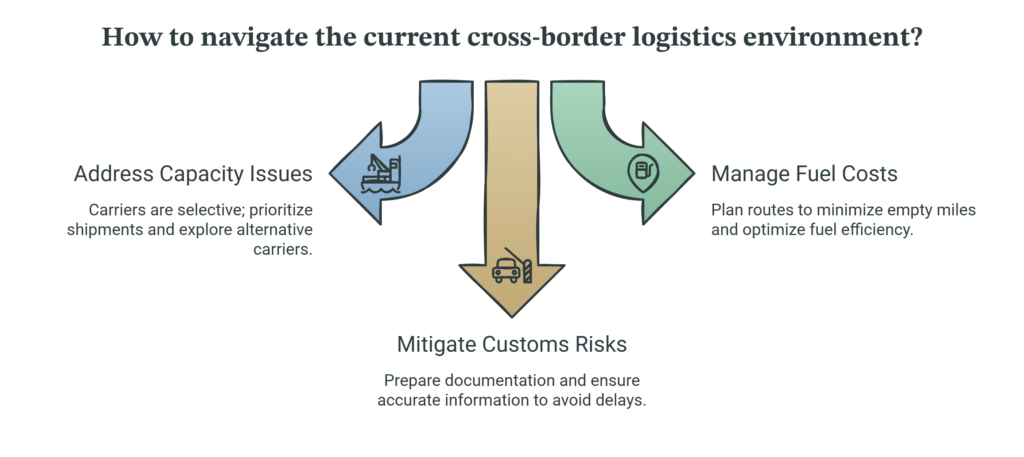
A successful cross border logistics strategy requires preparation before the truck arrives at the border, not after it is already waiting in line.
“The most expensive delay in freight is often the one that could have been prevented with a phone call or document review the day before pickup.”
How much of your cross-border strategy is focused on moving freight, and how much is focused on preventing avoidable delays?
The Five Shipper Mistakes That Create Avoidable Border Delays
Many shipping delays are not caused by market conditions. They are created by planning mistakes that could have been avoided.
The most common mistakes include:
1. Waiting Until the Last Minute to Secure Capacity
In a tightening market, assuming a truck will always be available creates unnecessary risk.
2. Treating Cross-Border Freight Like Domestic Freight
Cross border shipping requires additional planning for customs procedures, documentation, and carrier requirements.
3. Choosing the Lowest Rate Without Reviewing Carrier Quality
A low-cost option becomes expensive when a carrier fails compliance checks or misses critical appointments.
4. Ignoring Drayage Coordination
Many international shipments require smooth handoffs between carriers, terminals, and facilities. Poor coordination creates delays and additional charges.
5. Failing to Build Backup Capacity Plans
The best shippers prepare alternative routing and carrier options before disruptions occur.
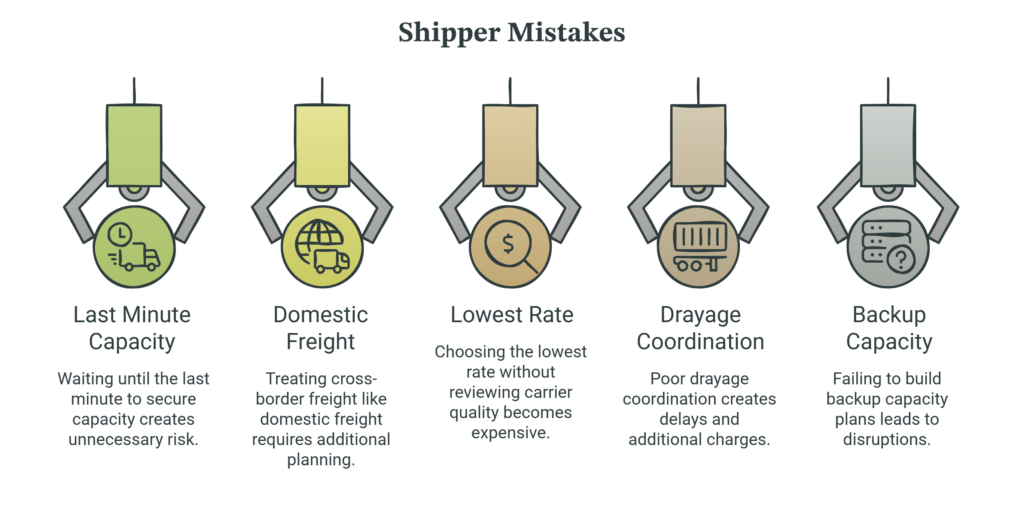
Example Cross-Border Lane Scenario: A manufacturer moving automotive components from Monterrey, Mexico, to a production facility in Texas scheduled a shipment with minimal lead time and relied on a single carrier option. When a compliance issue delayed the original carrier at the border, the shipper had no backup capacity arranged, causing a production delay and additional expedited transportation costs. A broker with established cross border logistics networks could have prepared alternative carriers and a contingency routing plan before the disruption occurred.
Experienced freight brokers reduce these risks by helping customers think beyond the immediate shipment.
“The companies that handle cross-border freight successfully do not simply book transportation. They build contingency plans.”
Which of these five mistakes creates the greatest risk within your current shipping process?
How Brokers Should Build a Cross-Border Routing and Carrier Plan
A strong cross border freight strategy requires more than a carrier list.
Experienced brokers build flexible networks that account for changing conditions.
An effective plan includes:
- Maintaining relationships with multiple qualified carriers.
- Monitoring lane-specific capacity trends.
- Reviewing carrier safety and compliance history.
- Creating backup options for critical lanes.
- Coordinating customs, drayage, and final-mile operations.
The best brokers understand that every cross-border lane behaves differently.
A lane with excellent capacity today can become difficult tomorrow due to inspections, seasonal demand, or equipment shortages.
This is why professional cross border freight services rely on market intelligence, strong carrier relationships, and operational discipline.
“The best routing plan is not the one that works when everything goes perfectly. It is the one that still works when something changes.”
Want to strengthen your cross-border strategy and make smarter routing decisions in changing market conditions? Explore SPI’s freight broker education resources.
When to Use Truckload vs. Intermodal vs. Drayage Support
Choosing the correct transportation mode has become increasingly important as market conditions shift.
| Transportation Option | Best Used For | Key Advantage |
| Truckload | Time-sensitive shipments and direct delivery | Speed and flexibility |
| Intermodal | Longer-distance freight with flexible transit times | Cost efficiency and reduced fuel exposure |
| Drayage | Port, rail, and border terminal movements | Efficient transfer between transportation modes |
The right solution depends on freight characteristics, delivery requirements, and current market conditions.
Strong brokers evaluate every option rather than forcing every shipment into the same transportation model.
This is where experienced cross border freight companies differentiate themselves: they provide solutions based on operational needs, not convenience.
“Mode selection is no longer just about cost. It is about building resilience into your supply chain.”
Are you selecting transportation modes based on old habits or current market conditions?
What Shippers Should Ask Their Brokerage Partner Before Tendering Freight
Before giving a brokerage partner a cross-border shipment, shippers should understand the systems behind the service.
Important questions include:
- How do you verify cross-border carriers?
- What backup capacity exists if the original carrier fails?
- How do you manage customs and documentation issues?
- What drayage partners and inland networks support the shipment?
- How do you communicate during delays or disruptions?
A broker who cannot answer these questions clearly may be managing freight reactively rather than strategically.
Cross border freight requires visibility, preparation, and reliable execution.
“The quality of a broker becomes most obvious when a shipment does not go according to plan.”
Does your current brokerage partner have a process for managing disruptions, or are they simply hoping disruptions do not happen?
Why Agent Support Infrastructure Matters When Cross-Border Volatility Rises
Independent brokers with strong customer relationships often reach a point where market knowledge alone is not enough.
Complex cross-border freight requires:
- Reliable carrier networks.
- Strong back-office support.
- Compliance assistance.
- Technology for shipment visibility.
- Payment and administrative support.
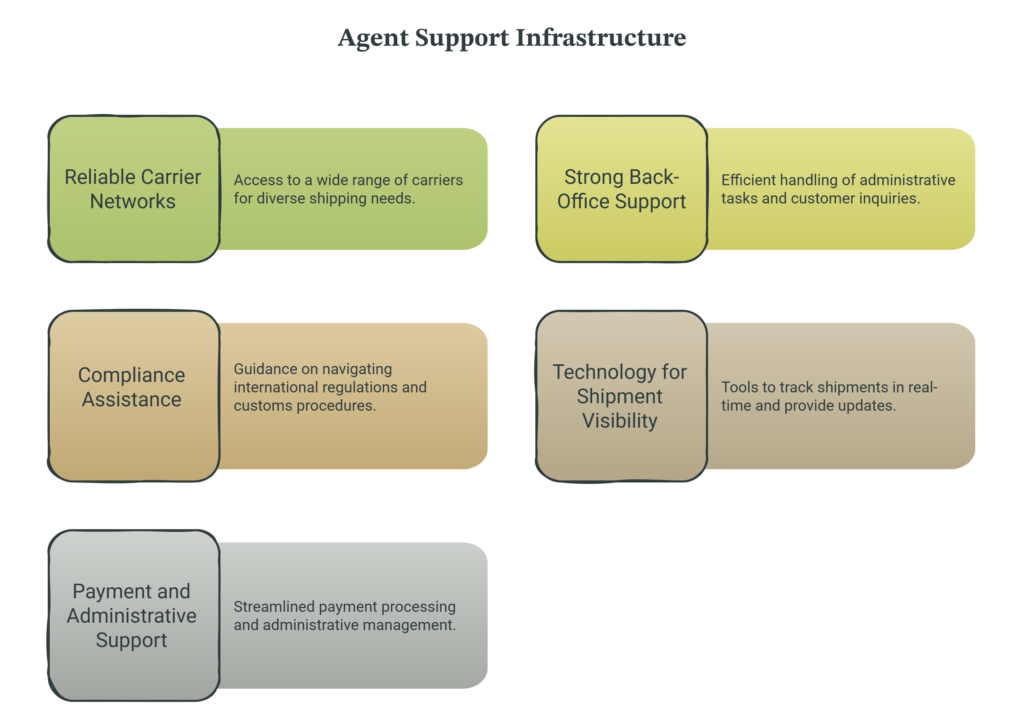
The right brokerage infrastructure allows agents to spend more time advising customers and less time solving administrative problems.
At SPI, the focus is not simply providing agents with a name and a logo. It is about giving experienced brokers the operational depth needed to compete in more complex freight environments.
As cross-border volatility increases, brokers with stronger systems and support will be better positioned to protect relationships and grow their books.
“The strongest agents are not necessarily those who do everything themselves. They are those who have the right systems behind them.”
Wondering how top agents stay competitive when freight markets become more complex? See how SPI’s independent freight agent model provides the support needed to scale with confidence.
Frequently Asked Questions
1. Why is cross-border freight becoming more difficult in 2026?
Cross-border freight is becoming more challenging due to tighter carrier capacity, increased compliance enforcement, fuel pressure, and more complex customs requirements. These factors require stronger planning and carrier management.
2. How can brokers reduce delays in cross-border shipping?
Brokers can reduce delays by verifying carriers, preparing customs documentation early, maintaining backup capacity, coordinating drayage handoffs, and using appropriate transportation modes.
3. What should shippers look for in cross-border freight companies?
Shippers should look for cross border freight companies that provide strong market visibility, contingency planning, technology support, and clear communication during disruptions.
Cross-Border Success Starts Before the Freight Moves
Cross-border freight in 2026 is no longer simply about getting a truck from one side of the border to the other. It is about managing a moving set of variables: capacity shifts, compliance requirements, fuel costs, customs processes, and carrier quality.
The brokers who provide the most value in this environment are not the ones who wait until a shipment has a problem. They are the ones who identify risks before they become delays.
For shippers, that means choosing partners who understand the details behind successful cross border logistics. For brokers, it means building stronger carrier networks, smarter routing strategies, and operational systems that can handle uncertainty.
As capacity continues to tighten, preparation will separate the companies that merely move freight from those that consistently protect supply chains.
If you already manage shipper freight and want stronger cross-border execution, carrier support, and the back-office depth needed for volatile markets, talk with SPI about joining as an independent brokerage agent.
References
Cass Information Systems. (2026). Cass Freight Index: April 2026 Transportation Report. Retrieved from https://www.cassinfo.com
Commercial Vehicle Safety Alliance (CVSA). (2026). International Roadcheck 2026 Inspection Focus Areas. Retrieved from https://www.cvsa.org
C.H. Robinson. (2026). Global Freight Market Update: June 2026 Cross-Border Conditions. Retrieved from https://www.chrobinson.com
DAT Freight & Analytics. (2026). Truckload Market Conditions and Load-to-Truck Ratio Trends. Retrieved from https://www.dat.com
FreightWaves. (2026). Roadcheck Week Creates Spot Market and Tender Pressure. Retrieved from https://www.freightwaves.com