Every few years, the freight industry gets a legal ruling that makes brokers collectively stop mid-coffee sip and say:
“…wait, what?”
This might be one of those moments.
A recent legal ruling has sparked serious conversation across the logistics industry because of what it could mean for freight broker liability, carrier selection, and operational risk exposure.
And no, this is not one of those industry-ending headlines people love posting on LinkedIn next to a stock image of a truck driving into the sunset.
But it is important. Because the ruling touches on one of the biggest questions modern brokerages face:
How responsible should brokers be for the carriers they hire?
That question affects:
- carrier vetting,
- operational oversight,
- insurance exposure,
- legal risk,
- and potentially the future structure of brokerage operations itself.
For brokers, carriers, and shippers alike, this is less about panic and more about adaptation.
Why This Ruling Has the Freight Industry Talking
The concern surrounding this ruling comes down to one core issue:
increased brokerage liability exposure.
Traditionally, brokers have operated as intermediaries coordinating freight movement between shippers and carriers. But rulings like this challenge where the legal line between “coordination” and “responsibility” actually exists (Transportation Intermediaries Association [TIA], n.d.).
In practical terms, many brokers worry this could mean:
- More lawsuits targeting brokerages
- Greater scrutiny of carrier selection practices
- Increased insurance costs
- Stronger compliance expectations
- Higher documentation standards
- More operational risk tied to carrier performance
In our experience, the logistics industry tends to evolve quickly whenever legal exposure increases. Companies immediately begin reassessing workflows, onboarding procedures, and internal compliance systems.
Because once liability risk changes, operational behavior changes with it.
For example, smaller brokerages with loose onboarding practices may suddenly find themselves under pressure to strengthen carrier qualification procedures much faster than expected. That’s where things get interesting.
“This ruling is less about one lawsuit and more about the future standard of operational accountability in brokerage.”
If regulators or courts examined your carrier onboarding process today, would it hold up under scrutiny?
Carrier Vetting Is No Longer Just a Compliance Box
For years, some brokerages treated carrier vetting like paperwork:
- verify authority,
- confirm insurance,
- check safety score,
- move the load,
- repeat tomorrow.
That approach may no longer be enough.
In our experience, the industry is shifting toward deeper operational verification, especially as fraud, double brokering, cargo theft, and legal exposure continue increasing across freight networks.
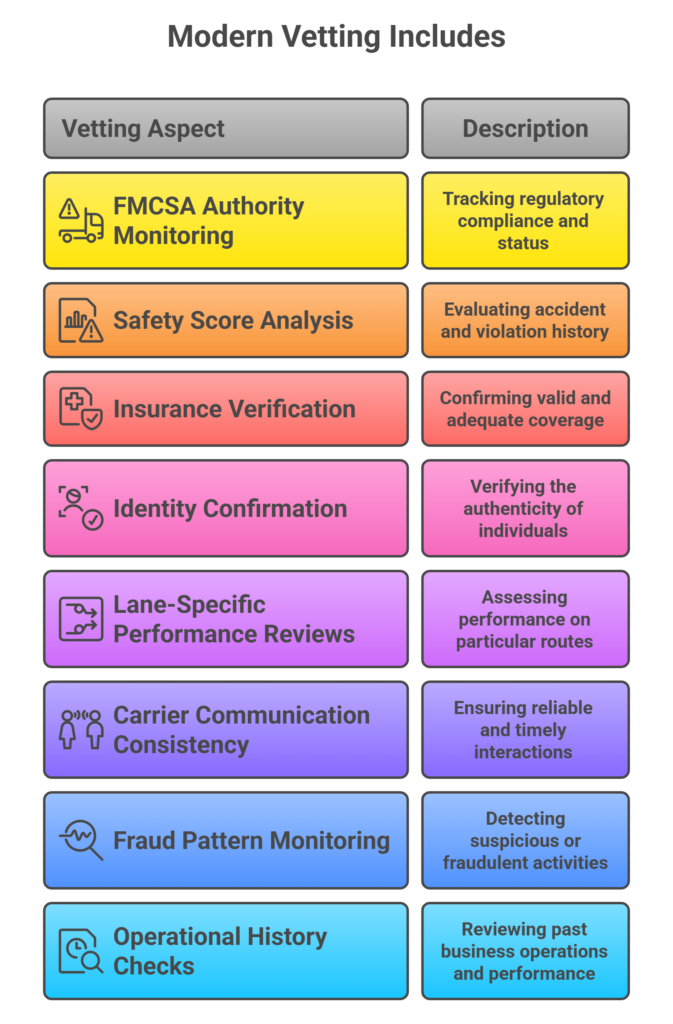
Modern vetting increasingly includes:
- FMCSA authority monitoring
- Safety score analysis
- Insurance verification
- Identity confirmation
- Lane-specific performance reviews
- Carrier communication consistency
- Fraud pattern monitoring
- Operational history checks
Because honestly, “they had active authority” is becoming a weaker defense every year.
For example, imagine a brokerage onboarding a carrier quickly during a tight capacity market without reviewing prior safety trends or operational inconsistencies. If a major service failure or accident occurs later, weak vetting documentation could become a major liability issue. That risk multiplies quickly.
According to FMCSA safety oversight guidance, carrier safety performance and operational compliance remain central components of transportation risk management (FMCSA, n.d.).
“The strongest brokerages today treat vetting as an operational discipline, not an administrative task.”
Is your carrier vetting process built for speed alone, or for long-term protection?
The Real Impact May Hit Smaller Brokerages Hardest
Large brokerages typically already have:
- compliance departments,
- legal resources,
- carrier monitoring systems,
- and structured operational oversight.
Smaller brokerages often operate leaner. That’s where this ruling could create serious pressure.
In our experience, many smaller operations still rely heavily on manual onboarding processes, spreadsheets, fragmented documentation, and reactive compliance workflows.
That creates operational vulnerability.
If legal expectations around broker responsibility continue expanding, brokerages without strong systems may face:
- higher insurance premiums,
- increased claim exposure,
- customer hesitation,
- and more operational friction.
And unfortunately, freight markets rarely slow down long enough for companies to “catch up” comfortably.
For example, a small brokerage handling rapid spot freight may onboard dozens of carriers weekly during tight capacity periods. Without automated monitoring or structured verification workflows, compliance gaps can grow quickly without leadership even realizing it.
That’s not necessarily negligence.Sometimes it’s simply operational overload. But courts generally care more about process than excuses.
“As brokerage liability expectations evolve, operational maturity becomes a competitive advantage.”
Would your current compliance process scale safely if your freight volume doubled tomorrow?
Case Study: How Stronger Vetting Reduced Operational Risk
Here’s a realistic operational scenario based on common brokerage risk-management patterns.
Initial Situation:
- Mid-sized brokerage managing high-volume spot freight
- Rapid carrier onboarding during tight capacity cycles
- Increasing concerns about fraud exposure and documentation inconsistency
- Limited standardized review procedures
What Changed (Over 90 Days):
The brokerage implemented:
- standardized carrier verification checklists,
- automated insurance monitoring,
- identity verification procedures,
- lane-specific carrier approval requirements,
- and centralized documentation reviews.
Operations staff also introduced secondary approval checks for higher-risk freight lanes.
Results After Implementation:
- Reduced onboarding inconsistencies
- Faster identification of questionable carrier submissions
- Fewer last-minute coverage disruptions
- Improved customer confidence during carrier selection reviews
One operations employee noted that many risky onboarding issues were not hidden—they were simply being missed during rushed freight coverage situations.
That’s an important distinction.
“Most operational risk grows quietly through inconsistent processes long before it becomes a visible problem.”
Are your systems designed to prevent problems, or just react once they happen?
Technology Is Quietly Becoming the Backbone of Brokerage Compliance
This ruling also highlights something the industry has been moving toward for years:
Manual compliance systems are becoming harder to defend.
Modern brokerages increasingly rely on technology for:
- carrier monitoring,
- insurance tracking,
- fraud detection,
- onboarding workflows,
- documentation management,
- and operational visibility.
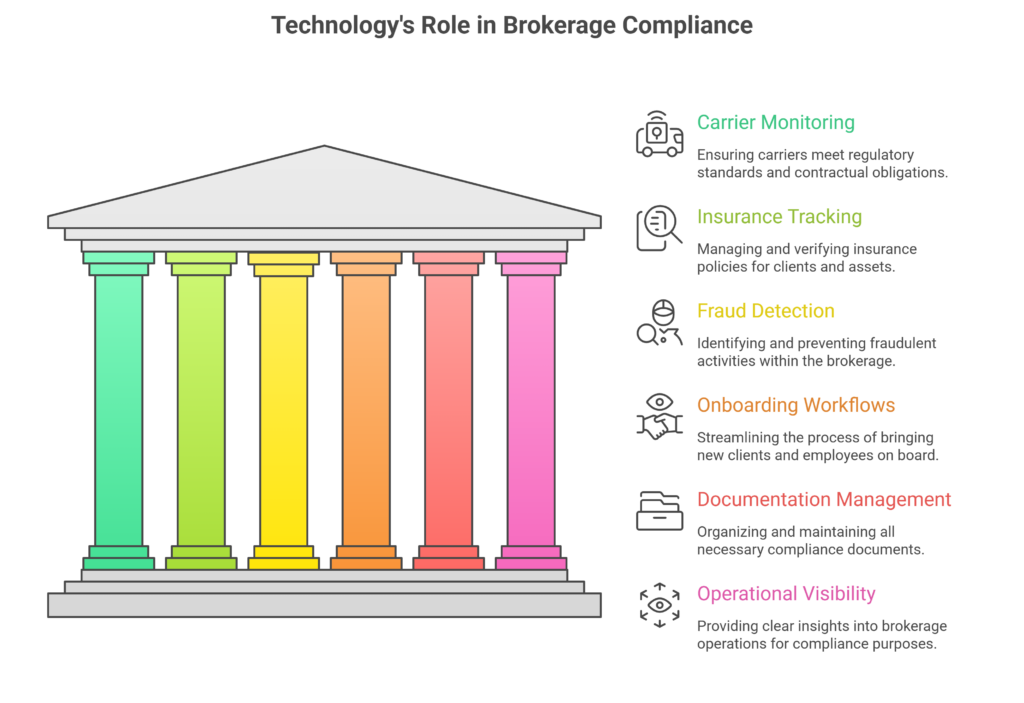
In our experience, technology now plays a major role in reducing preventable operational exposure.
For example:
- Automated alerts can flag authority changes instantly
- Insurance expirations can trigger real-time warnings
- Safety score monitoring can identify elevated-risk carriers earlier
- Integrated TMS workflows can improve documentation consistency
That operational visibility matters more than ever when legal accountability increases.
According to Gartner logistics research, companies using automated compliance workflows generally improve risk visibility and reduce manual operational gaps significantly (Gartner, n.d.).
And realistically, no brokerage wants a courtroom discussion centered around a spreadsheet nobody updated for three weeks.
“Technology cannot eliminate liability, but it dramatically strengthens operational defensibility.”
Still relying on manual compliance in a higher-risk freight market? See how the right freight technology helps brokers stay protected and efficient.
This Is Probably the Direction Brokerage Was Already Heading
The freight industry was already moving toward:
- stronger compliance,
- deeper vetting,
- more operational visibility,
- and tighter fraud prevention standards.
This ruling simply accelerates those conversations.
In our experience, the brokerages adapting best are not reacting emotionally. They’re reviewing workflows, strengthening systems, improving documentation, and building more structured operational controls.
Because ultimately, this is not just about avoiding lawsuits.
It’s about building sustainable operations in a freight market where accountability expectations continue increasing every year.
The industry is evolving.
And brokerages that evolve with it will likely be in much stronger positions long term.
“The future of brokerage will favor companies that combine operational speed with operational discipline.”
Preparing your brokerage for where the market is headed next? Learn how scalable systems support long-term growth and resilience.
Frequently Asked Questions (FAQs)
1. Why is this brokerage ruling important?
The ruling raises concerns about broker liability and how much responsibility brokers may hold for the carriers they hire and manage.
2. Could this change how brokers vet carriers?
Yes. Many brokerages are already strengthening vetting processes, documentation standards, and compliance systems in response to growing legal and operational risk.
3. Will technology become more important for brokers?
Absolutely. Automated compliance monitoring, carrier verification systems, and documentation management tools are becoming increasingly important for operational protection and scalability.
The Future of Freight Brokerage Requires More Than Speed
Freight brokerage has always operated in a fast-moving environment where speed matters.
But rulings like this remind the industry that speed without structure creates risk.
For brokers, this is not necessarily a signal to panic. It’s a signal to mature operationally. Carrier vetting, compliance systems, documentation workflows, and technology integration are no longer extra layers for larger companies alone. They are becoming core operational requirements for brokerages of every size.
In our experience, the companies that handle industry shifts best are rarely the loudest ones reacting online. They’re the ones quietly strengthening processes before problems force them to.
Because the reality is simple: The future of brokerage will likely belong to companies that can move freight efficiently while also proving they operate responsibly.
Ready to strengthen your brokerage operations and stay ahead of industry changes? Contact us to learn how we can help you build a smarter, more resilient operation.
References
Transportation Intermediaries Association (TIA). (n.d.). Broker compliance and risk management resources. Retrieved from https://www.tianet.org
Federal Motor Carrier Safety Administration (FMCSA). (n.d.). Safety compliance and carrier oversight guidance. Retrieved from https://www.fmcsa.dot.gov
FreightCaviar. (n.d.). This ruling could break brokerage. Retrieved from https://www.freightcaviar.com/this-ruling-could-break-brokerage
Gartner. (n.d.). Logistics technology and operational risk management research. Retrieved from https://www.gartner.com/en/supply-chain
FreightWaves. (n.d.). Freight brokerage operations and compliance trends. Retrieved from https://www.freightwaves.com