
For independent freight brokers, joining a freight agent program is one of the biggest business decisions they’ll make. It affects profitability, customer service, technology, work-life balance, and ultimately whether the brokerage grows or stalls.
Yet many recruiting pages still focus on the same promises:
- Higher commission splits
- More freedom
- Better technology
- Fast onboarding
Those things matter, but they’re rarely what separates the best freight agent programs from the rest.
Experienced brokers know something newer agents often learn the hard way:
The real value of a freight agent program isn’t measured on your first paycheck. It’s measured six months later when freight gets tight, a major customer has a problem, or the market suddenly changes.
The strongest programs don’t simply help agents move freight. They help them continue growing regardless of market conditions.
“The wrong freight agent program doesn’t usually fail because of commission. It fails because the broker discovers too late that they were expected to build an entire business alone.”
Commission Splits Are Important, But They’re Not the Whole Story
Ask almost any broker what they look for first, and commission will usually top the list.
That makes sense.
Higher percentages look attractive on paper. But experienced brokers know that commission means very little if the platform behind it creates operational bottlenecks.
Consider two hypothetical programs.
| Program A | Program B |
| 80% commission | 70% commission |
| Limited operations support | Dedicated operations team |
| Basic TMS | Integrated technology platform |
| Agent manages most administrative work | Back-office handles billing, claims, and settlements |
| Lower operating efficiency | Higher customer capacity |
On paper, Program A appears better. In practice, many brokers generate more revenue through Program B because they spend more time selling and less time solving administrative problems.
A broker who gains five extra hours each week for prospecting often earns far more than the additional commission percentage alone would provide.
That’s why experienced brokers evaluate the entire operating model, not just the split.
“High commission only matters if your platform gives you enough time to earn it.”
Wondering what matters beyond commission percentages? See how freight broker commission structures really impact your earnings.
The Best Freight Agent Programs Help You Keep Customers
Winning customers is difficult.Keeping them is even harder.
Most customers don’t leave because of one slightly higher freight quote. They leave after repeated service failures, delayed communication, or inconsistent execution.
That’s why the best freight agent programs invest heavily in operational support, not simply recruiting.
When evaluating a freight agent program, ask questions like:
- Who helps resolve shipment issues after hours?
- How are claims handled?
- Who manages carrier paperwork?
- Is accounting centralized?
- How quickly are settlements processed?
- What support exists during market disruptions?
These questions reveal far more about a brokerage than its recruiting brochure ever will.
Customer Retention Is Built Behind the Scenes
Experienced agents understand that customer loyalty often depends on processes customers never see.
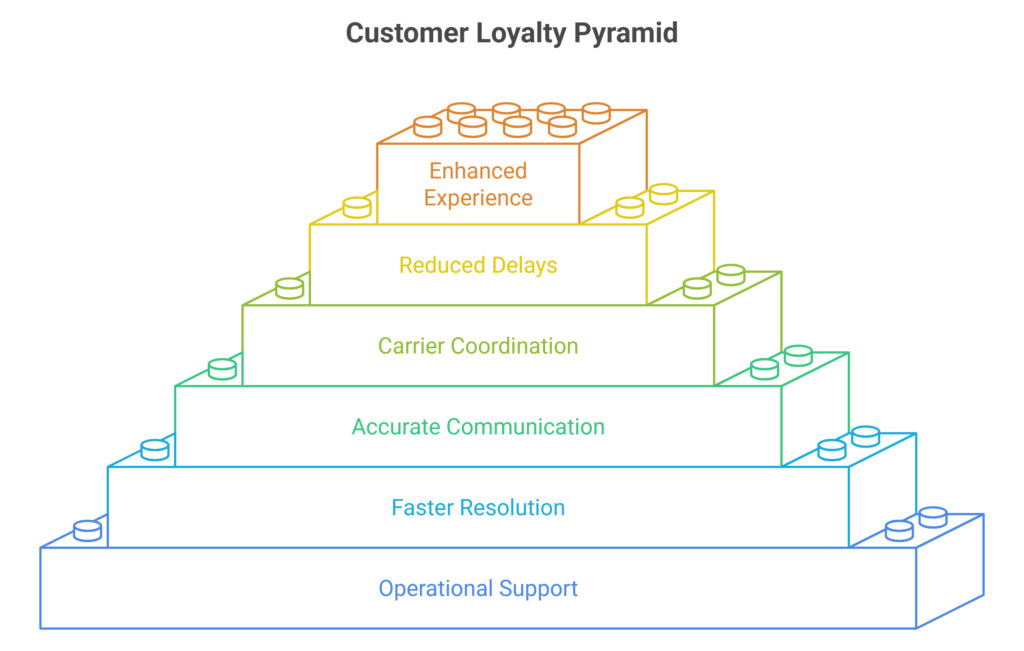
Strong operational support typically means:
- Faster issue resolution.
- More accurate communication.
- Consistent carrier coordination.
- Reduced administrative delays.
- Better overall customer experience.
A customer may never notice efficient back-office operations, but they certainly notice when those systems are missing.
“Customers judge brokers by the shipment. Experienced agents judge brokerages by the support behind the shipment.”
Which would improve your customer retention more: a larger commission split or stronger operational support?
Technology Should Remove Work, Not Create More
Every brokerage claims to have industry-leading technology.
The better question is: Does the technology actually make the agent’s job easier?
Technology shouldn’t impress during a sales demonstration. It should reduce daily friction.
When evaluating a freight agent program, consider whether the technology helps agents:
- Find capacity faster.
- Quote customers efficiently.
- Track shipments in real time.
- Access documents quickly.
- Communicate with customers from one system.
- Reduce repetitive administrative tasks.
Technology should create more selling time, not more screen time.
Compare Technology by Outcomes
| Weak Platform | Strong Platform |
| Multiple disconnected systems | Integrated workflow |
| Manual updates | Automated visibility |
| Duplicate data entry | Centralized information |
| More administrative work | More customer-facing time |
The best freight agent programs understand that technology is valuable only when it supports better execution.
“The best brokerage software is the software you barely notice because it quietly removes obstacles throughout your day.”
Want technology that helps you sell more instead of managing more? Explore SPI’s freight broker technology.
Market Support Matters More During Difficult Freight Cycles
Every brokerage looks impressive when freight is abundant.The real test comes when the market becomes unpredictable.
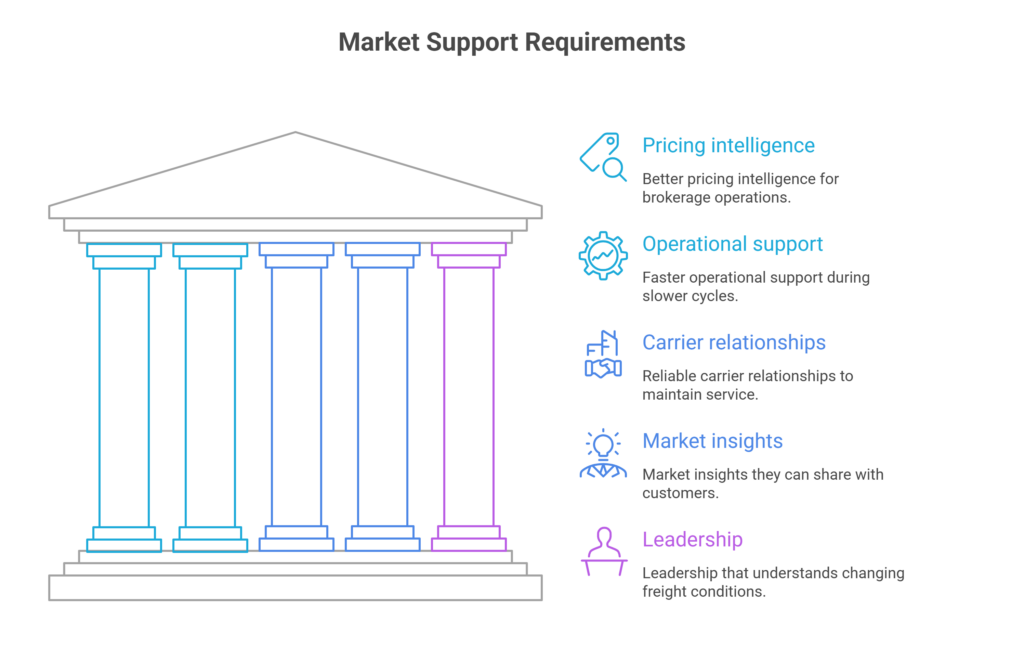
During slower cycles, experienced brokers need:
- Better pricing intelligence.
- Faster operational support.
- Reliable carrier relationships.
- Market insights they can share with customers.
- Leadership that understands changing freight conditions.
A quality freight agent program should make agents more competitive.not leave them navigating market volatility alone.
This becomes especially important as freight markets continue shifting between tightening capacity, changing customer expectations, and evolving transportation strategies.
“The value of a brokerage platform becomes most visible when the market becomes least predictable.”
If freight conditions changed dramatically next month, would your brokerage help you adapt, or simply expect you to figure it out yourself?
The Best Freight Agent Programs Invest in Long-Term Growth
The strongest freight agent program isn’t necessarily the one that recruits the fastest. It’s the one that helps agents build businesses that continue growing year after year.
Look beyond onboarding incentives and ask whether the brokerage provides:
- Ongoing education and market updates.
- Sales coaching for experienced brokers.
- Access to operational specialists.
- Technology improvements.
- Opportunities to expand into services like cross-border, drayage, or intermodal.
- Leadership focused on agent success instead of short-term recruiting.
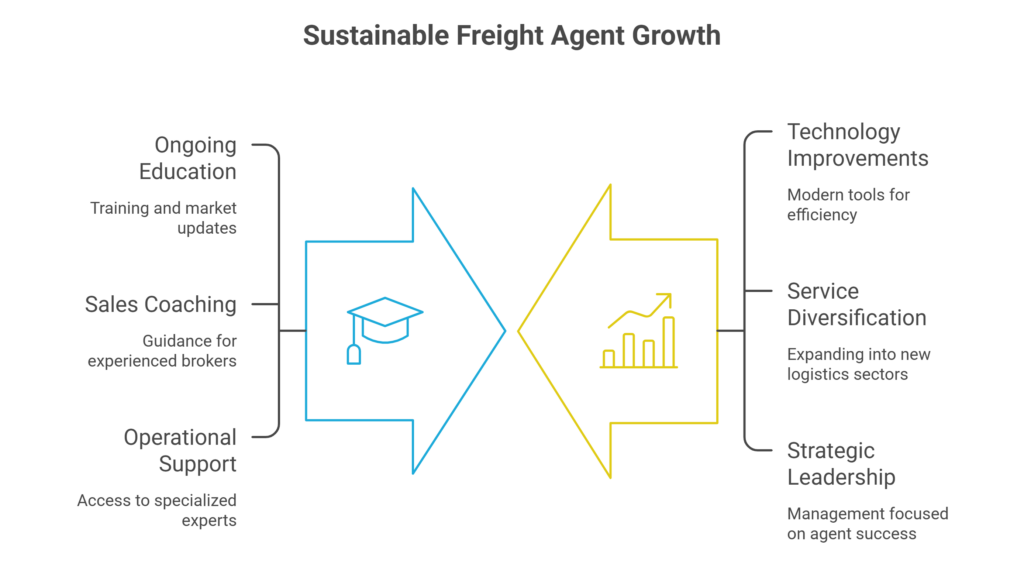
These investments compound over time, helping agents deepen customer relationships and expand their capabilities instead of simply maintaining the status quo.
A brokerage should feel like a long-term business partner, not just a commission processor.
“The strongest freight agent programs don’t just help brokers move more freight, they help them build more valuable businesses.”
Five years from now, will your current brokerage have helped you build a stronger business or just process more transactions?
What Experienced Brokers Ask Before Signing
Before joining any freight agent program, experienced brokers usually ask questions that go far beyond commission.
Evaluation Checklist
| Ask About | Why It Matters |
| Operations support | Determines how much time you spend selling versus solving problems |
| Technology | Impacts efficiency and customer experience |
| Accounting and settlements | Affects cash flow and administrative workload |
| Claims process | Shows how customer issues are handled |
| Carrier network | Supports reliable execution |
| Training and education | Helps agents continue growing |
| Leadership accessibility | Indicates long-term partnership quality |
The best freight agent programs welcome these questions because they understand that informed agents make stronger long-term partners.
“Experienced brokers don’t choose brokerages based on promises. They choose them based on systems.”
Which question do you wish you had asked before joining your current brokerage?
Frequently Asked Questions
1. What makes a good freight agent program?
A strong freight agent program combines competitive commissions with reliable operational support, integrated technology, efficient back-office services, and resources that help agents grow their business over time.
2. How do the best freight agent programs differ from others?
The best freight agent programs focus on long-term agent success by providing technology, accounting, claims support, market intelligence, and operational expertise, not just attractive commission splits.
3. Should commission be the most important factor?
Commission is important, but it should be evaluated alongside operational support, technology, customer service capabilities, and the brokerage’s ability to help agents grow sustainably.
Choose a Program That Grows With You
Choosing a freight agent program isn’t simply about earning a higher commission. It’s about deciding which platform will help you build a stronger business over the long term.
The most successful brokers understand that sustainable growth comes from combining strong customer relationships with dependable operations, modern technology, and experienced support. Those advantages become even more valuable during changing freight markets, when customers expect brokers to deliver confidence as well as capacity.
Ultimately, the best freight agent programs don’t compete solely on percentages. They compete on how effectively they help agents protect customer relationships, grow their books of business, and spend more time selling instead of managing administrative work. That’s the difference between joining a brokerage and building a business.
Ready to build your freight business with the right support behind you? Contact us to learn how our Freight Agent Program can help you grow with confidence.
References
American Trucking Associations. (n.d.). Industry Data and Economic Insights. Retrieved from https://www.trucking.org
Transportation Intermediaries Association. (n.d.). Resources for Freight Brokers and Third-Party Logistics Providers. Retrieved from https://www.tianet.org
Federal Motor Carrier Safety Administration. (n.d.). Broker and Carrier Regulations. Retrieved from https://www.fmcsa.dot.gov