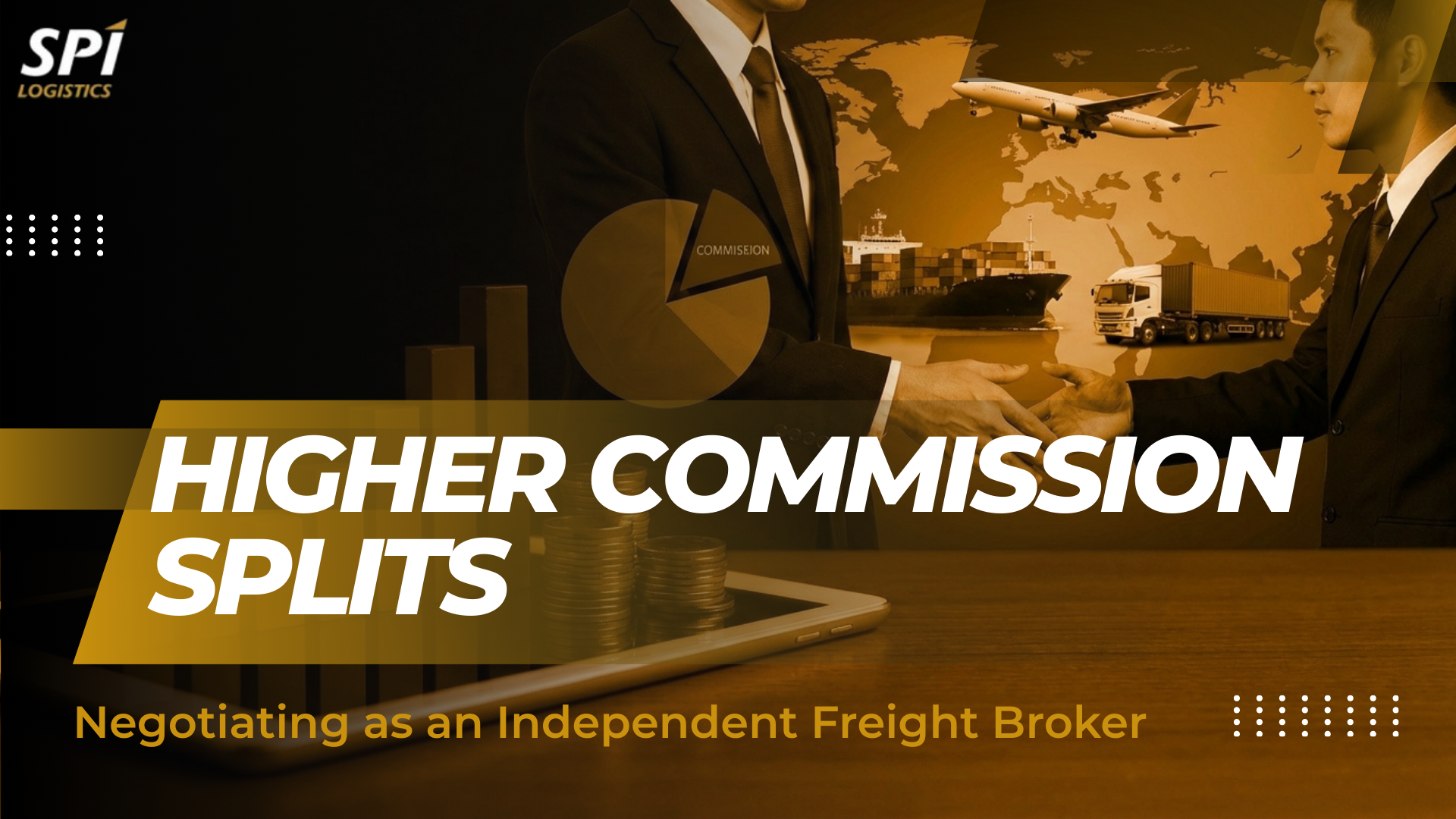
Commission structure is one of the most important drivers of long-term profitability for independent freight agents. While most brokerage partnerships begin with standardized commission splits, experienced agents often renegotiate as their book of business grows, their operational independence strengthens, and their value to the brokerage increases (Transportation Intermediaries Association [TIA], n.d.).
Negotiating a higher split is not about confrontation, it is about demonstrating measurable value, reduced operational risk, and revenue stability.
Prove Revenue Consistency and Margin Stability
Before negotiating, an agent must present documented performance metrics. Brokerages prioritize predictable revenue and stable gross margins because both reduce risk exposure and improve financial forecasting (FreightWaves, n.d.).
Agents seeking higher splits should prepare:
- 12–24 months of revenue reports
- Average gross margin percentage
- Customer concentration breakdown
- Load volume growth trend
- Claims and service performance history
For example,If an agent hypothetically generated $80,000 in month 1, $110,000 in month 2, and $140,000 in month 3, this trend demonstrates growth potential. In a negotiation, the agent might say “Over the past 9 months, I’ve grown my monthly revenue by 75%. I’d like my commission structure to reflect that sustained growth.”
“In our experience, brokers respond to data, not requests. When an agent can demonstrate consistent revenue growth and minimal operational issues, the negotiation shifts from ‘why’ to ‘how much.’”
What does your last 12 months of performance data say about your value to the brokerage?
Demonstrate Operational Independence
Brokerages incur overhead costs in compliance, carrier vetting, accounting, and back-office administration. Agents who reduce operational burden create measurable value (Small Business Administration [SBA], n.d.).
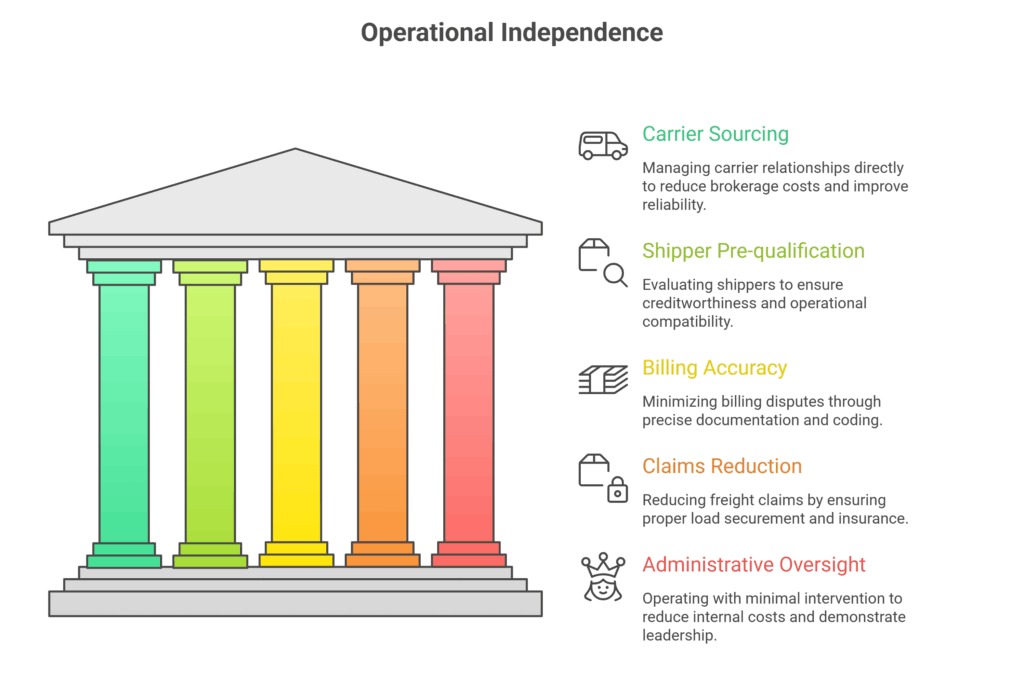
To negotiate higher splits, show that you:
- Manage carrier sourcing independently: This means you are not relying heavily on the brokerage’s internal carrier development team. You actively build and maintain your own vetted carrier network, monitor carrier performance history, verify insurance and safety scores, and proactively secure capacity during tight market cycles. When an agent controls carrier relationships directly, it reduces brokerage labor costs and strengthens service reliability. Demonstrating that you can consistently cover loads without internal escalation shows operational maturity and lowers the brokerage’s risk exposure.
- Pre-qualify shippers: High-performing agents do not simply onboard any shipper. They evaluate creditworthiness, payment history, freight consistency, lane density, and operational compatibility before committing capacity. By filtering out high-risk or low-margin accounts early, you protect the brokerage from bad debt exposure and administrative strain. Brokerages highly value agents who bring in clean, creditworthy business that aligns with internal compliance and financial standards.
- Minimize billing disputes: Billing corrections consume accounting resources and delay cash flow. Agents who submit accurate rate confirmations, verified accessorial documentation, signed PODs, and properly coded invoices reduce back-office corrections significantly. Demonstrating a low dispute rate shows that your loads move cleanly through accounting, which directly impacts brokerage profitability and operational efficiency.
- Reduce claims exposure: Freight claims impact reputation, profitability, and carrier relationships. Agents who properly communicate load securement requirements (especially in flatbed or specialized freight), confirm cargo insurance limits, and match equipment appropriately reduce claims risk. Showing that your loads have low claims frequency, or that you resolve claims quickly and professionally, signals strong operational control.
- Require minimal administrative oversight: Brokerages invest heavily in compliance, carrier onboarding, and financial controls. If you operate with minimal intervention, meaning few compliance flags, limited payment escalations, and independent problem resolution, you represent lower internal cost per revenue dollar. Agents who solve problems before involving management demonstrate leadership capability, which strengthens negotiation leverage.
According to industry analysis, brokerages with lower back-office correction rates experience stronger EBITDA performance (Journal of Commerce, n.d.).
“We tested an internal documentation workflow that cut invoice corrections almost in half. That operational discipline became part of our commission negotiation discussion.”
If your brokerage reviewed your file today, would they see operational friction or operational efficiency?
Expand and Diversify Your Book of Business
Higher splits often correlate with reduced customer concentration risk. A book of business reliant on one or two large accounts is riskier for brokerages than diversified revenue (FreightWaves, n.d.).
Agents who diversify:
- Improve brokerage valuation: A diversified book of business reduces volatility and improves financial predictability, two factors that directly impact brokerage valuation multiples (FreightWaves, n.d.). When revenue is spread across multiple industries, lanes, and shipping profiles, the brokerage faces lower concentration risk. If one customer reduces volume or exits the market, revenue stability remains intact. Agents who demonstrate portfolio strength position themselves as long-term assets rather than transactional contributors.
- Reduce revenue volatility: Freight cycles fluctuate due to seasonality, fuel costs, capacity tightening, and macroeconomic shifts. Agents serving multiple industries (e.g., construction, manufacturing, food-grade, retail) can offset downturns in one vertical with stability in another. Reduced volatility strengthens forecasting accuracy, which benefits brokerage cash flow planning and operational staffing decisions.
- Strengthen long-term partnership value: A broad customer base increases stickiness within the brokerage relationship. When an agent controls multiple shipper relationships, lane networks, and recurring freight cycles, the brokerage has more incentive to retain and reward that agent. Diversification signals business-building intent rather than short-term revenue generation.
For example, If an agent hypothetically grew from 2 primary customers to 11 active accounts over 14 months, single-client exposure drops from 48% to 19%. Diversification strengthens negotiating leverage.
Industry M&A data shows diversified customer portfolios typically command stronger valuation multiples (TIA, n.d.).
“When an agent proves they are building an asset, not just moving loads, their bargaining power increases significantly.”
How diversified is your revenue stream today?
Increase Technology Utilization and Efficiency
Modern brokerages invest heavily in Transportation Management Systems (TMS), load tracking platforms, and compliance automation tools (DAT Freight & Analytics, n.d.).
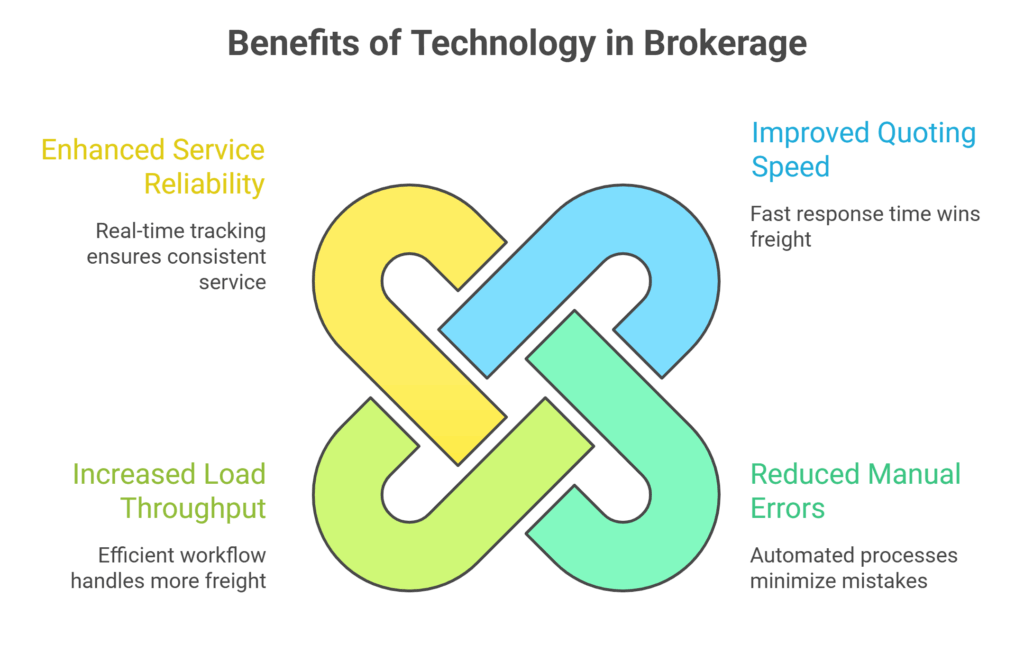
Agents who fully utilize brokerage technology:
- Improve quoting speed: Fast response time wins freight. Agents leveraging integrated rate tools, live market indices, and lane history data can generate competitive quotes in minutes instead of hours. This speed advantage increases close ratios and positions the brokerage as responsive and data-driven in competitive bidding environments.
- Reduce manual errors: Automated rate confirmations, digital document uploads, and system-triggered compliance checks reduce costly mistakes. Errors in accessorial coding, equipment selection, or lane pricing can erode margin quickly. Agents who minimize correction cycles directly protect profitability and reduce internal rework for operations and accounting teams.
- Increase load throughput: Efficient workflow automation allows agents to manage more freight volume without increasing administrative burden. If technology allows an agent to handle 20–30% more loads per week, that higher productivity strengthens the case for higher commission splits because revenue growth is scalable.
- Enhance service reliability: Real-time tracking dashboards, predictive ETAs, and automated exception alerts reduce missed appointments and communication breakdowns. Consistent service performance lowers claim risk and strengthens shipper trust, which in turn protects brokerage brand reputation.
Freight technology adoption studies show that agents leveraging automated pricing and tracking tools improved quoting efficiency by up to 18% and reduced manual load planning hours by 12–20% (FreightWaves, n.d.).
“Technology doesn’t just help the brokerage, it increases the agent’s production capacity, which directly supports commission renegotiation.”
Are you fully leveraging the right freight technology to increase your productivity and commission potential? Explore how advanced tools can elevate your performance here
Present a Structured Negotiation Proposal
Rather than asking for more, structure your proposal. Effective negotiation frameworks may include:
- Tiered commission splits based on revenue thresholds: A tiered structure protects brokerage profitability while rewarding performance. For example, maintaining the current split up to $1.5M annual revenue, increasing by 5% at $2M, and adjusting again at $3M ensures growth benefits both parties. This structure shifts the negotiation from emotion to performance metrics.
- Performance-based increases: Splits tied to margin percentage, claims ratio, or volume consistency create accountability. If an agent maintains a 16%+ average gross margin with under 2% claims exposure, incremental split adjustments feel justified and defensible.
- Reduced house percentage after reaching target margins: If the brokerage’s internal cost per load decreases due to operational efficiency and revenue growth, lowering the house percentage can reflect improved economies of scale. This demonstrates mutual benefit rather than one-sided gain.
- Incentives tied to annual growth: Structuring split increases around 10–20% year-over-year growth targets align agent incentives with brokerage expansion goals. This approach frames renegotiation as a growth strategy, not a compensation demand.
For example, An agent could propose a split increase from 60% to 70% once annual revenue hypothetically exceeds $2.5 million while maintaining margins above 15%.
Negotiation research emphasizes that structured, data-driven proposals outperform informal requests (SBA, n.d.).
“We didn’t ask for a higher split outright. We presented a growth target with built-in protections for the brokerage. That changed the tone of the conversation.”
If you were the brokerage owner, would your proposal feel like a risk, or an investment?
Time Your Negotiation Strategically
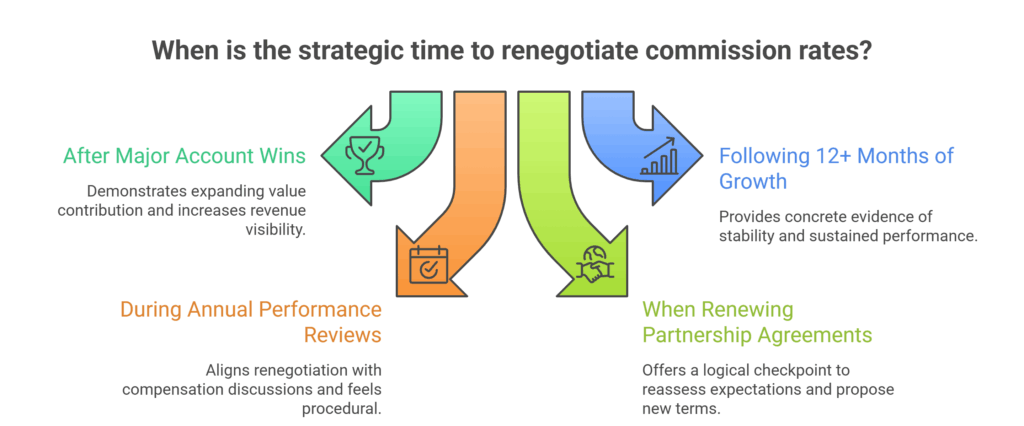
Timing matters. Appropriate moments include:
- After major account wins: Landing a new shipper with consistent lane volume significantly increases brokerage revenue visibility. Presenting a renegotiation immediately after onboarding a high-volume account demonstrates your expanding value contribution.
- Following 12+ months of growth: Sustained performance carries more weight than short-term spikes. Showing a full year of upward revenue and margin trends provides concrete evidence of stability.
- During annual performance reviews: Structured review periods are naturally aligned with compensation discussions. Bringing documented performance metrics into a formal evaluation setting makes renegotiation feel procedural rather than confrontational.
- When renewing partnership agreements: Contract renewal is a logical checkpoint for adjusting financial terms. At renewal time, both parties reassess expectations, goals, and revenue contributions, making it a strategic opportunity to propose new commission structures.
Market conditions also influence leverage. During strong freight cycles with capacity tightness, productive agents have increased negotiating power (DAT Freight & Analytics, n.d.). However, negotiation during downturns requires stronger performance documentation.
“The best commission increases we’ve seen happened immediately after measurable growth milestones, not during slow periods.”
Are you timing your commission negotiation strategically to maximize your earnings? Learn how commission structures work and how to position yourself for growth here.
Frequently Asked Questions
1. What is a typical freight agent commission split?
Freight agent commission splits commonly range from 50% to 70%, depending on production level, operational support, and brokerage structure (Transportation Intermediaries Association, n.d.).
2. How much revenue should I generate before negotiating a higher split?
There is no fixed number, but agents with consistent annual revenue above $1–2 million and stable margins often have stronger negotiating leverage (FreightWaves, n.d.).
3. Can a brokerage refuse to renegotiate commission splits?
Yes. However, brokerages typically evaluate renegotiation based on profitability, risk exposure, and growth potential. Presenting structured performance data significantly improves approval likelihood (Journal of Commerce, n.d.).
Negotiate Higher Commissions with Confidence
Negotiating higher commission splits as an independent freight agent is not about confrontation, it’s about demonstrating measurable value, operational efficiency, and long-term growth potential. By presenting documented revenue consistency, showcasing operational independence, diversifying your book of business, leveraging technology, and structuring your proposal around performance metrics, agents position themselves as indispensable assets to their brokerage.
Ready to strengthen your operations and prove your value to earn higher commissions? Contact us to implement systems that position you as an indispensable partner.
References
DAT Freight & Analytics. (n.d.). Freight rate trends and analytics. Retrieved from https://www.dat.com
FreightWaves. (n.d.). Freight brokerage market analysis and performance trends. Retrieved from https://www.freightwaves.com
Journal of Commerce. (n.d.). Freight brokerage profitability and valuation insights. Retrieved from https://www.joc.com
Small Business Administration. (n.d.). Negotiation and small business growth guidance. Retrieved from https://www.sba.gov
Transportation Intermediaries Association. (n.d.). Freight broker and agent industry resources. Retrieved from https://www.tianet.org