

For many freight brokers, the first quarter of the year is slower compared to the high shipping volumes of late Q3 and Q4. While lower freight activity can feel like a slowdown in business momentum, experienced brokerage teams often see it as an opportunity.
The early months of the year provide time to address operational issues that become difficult to fix during peak freight periods. One of the most important areas brokers often focus on is their payment process.
Industry discussions highlighted by FreightCaviar note that Q1 provides a strategic window for brokerages to evaluate financial workflows, improve settlement systems, and strengthen carrier relationships before freight demand increases again (FreightCaviar, 2026).
Instead of waiting for payment problems to appear during busy shipping months, many brokerages use this period to review their invoicing procedures, settlement timelines, and documentation workflows.
Slower Freight Cycles Allow Brokers to Audit Internal Payment Workflows
Seasonal freight patterns typically slow slightly during the first quarter as supply chains stabilize following the holiday shipping surge. This slowdown gives brokerage teams time to evaluate internal systems that may have been overlooked during busier months.
During peak seasons, the focus is often on moving loads quickly rather than examining operational efficiency. Q1 provides an opportunity to step back and review whether payment workflows are functioning effectively.
Common payment workflow areas that brokers evaluate include:
- Invoice approval processes to identify delays caused by manual reviews
- Proof-of-delivery documentation requirements to ensure carriers submit the correct paperwork
- Accounting approval timelines that may slow down settlements
- Communication channels for document submission that can create confusion between carriers and accounting teams
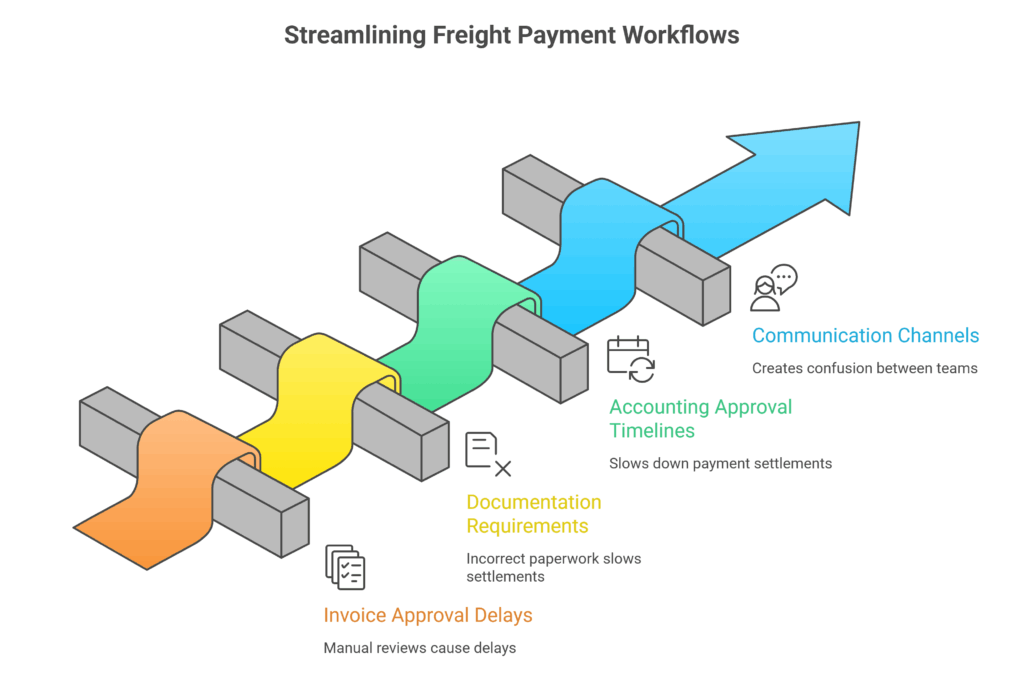
In our experience reviewing brokerage workflows, payment delays often occur because required documentation is inconsistent or incomplete. When documentation standards are unclear, accounting teams must request additional information before invoices can be processed.
By auditing these systems early in the year, brokerages can reduce future payment delays and improve operational efficiency.
“The first quarter often provides the only realistic window for brokerages to examine operational workflows without the pressure of high shipment volumes.”
If your brokerage audited its payment process today, what operational issues would likely surface first?
Faster Carrier Payments Improve Broker–Carrier Relationships
Payment reliability is one of the most important factors influencing broker–carrier partnerships. Carriers regularly evaluate brokers based on how consistently and quickly they settle invoices.
Delayed payments can create frustration and erode trust between carriers and brokers. Over time, this may affect a broker’s ability to secure reliable capacity, especially when the freight market tightens.
Brokers looking to improve payment reliability often focus on several operational improvements:
- Reducing invoice processing time through standardized settlement procedures
- Centralizing document submission to avoid lost or delayed proof-of-delivery forms
- Clarifying payment terms with carriers to ensure expectations are aligned
- Integrating financial workflows with transportation management systems
For example, a brokerage might discover that carrier documentation arrives through several channels, including email, mobile messages, and scanned attachments. This fragmentation makes it difficult for accounting teams to locate required documents quickly.
By implementing a centralized documentation system, brokers can simplify invoice verification and reduce administrative workload.
These improvements help ensure payments are processed faster, strengthening long-term carrier relationships.
“Carriers frequently prioritize working with brokers who demonstrate consistent payment reliability and transparent settlement practices.”
Want to improve carrier relationships and operational efficiency across your brokerage? Learn how modern brokerage solutions can help streamline freight management and payment workflows.
Payment Inefficiencies Become Larger Problems During Busy Freight Seasons
Operational inefficiencies that appear minor during slow periods can become significant obstacles when shipment volumes increase.
Manual processes, incomplete documentation, and complex approval procedures can slow down settlements when hundreds of invoices enter the system simultaneously.
Typical payment process bottlenecks include:
- Multi-step approval procedures that delay invoice processing
- Manual data entry errors requiring invoice corrections
- Disorganized document storage systems that slow down verification
- Limited accounting staff capacity during peak freight periods
For instance, imagine a brokerage that requires three separate approvals before settling every carrier invoice. While manageable during slow months, this workflow could create significant delays when shipment volumes increase.
By simplifying approval steps and improving document management systems during Q1, brokerages can ensure their payment process scales effectively during busier periods.
“Operational bottlenecks rarely appear when freight volumes are low—they become visible when shipment activity increases.”
Would your brokerage’s current payment system function efficiently if freight volume doubled next quarter?
Technology Can Improve Freight Payment Efficiency
Digital tools are playing an increasingly important role in improving brokerage financial operations. Modern logistics platforms allow brokerages to automate several steps in the payment process.
Technology solutions that improve payment workflows often include:
- Transportation Management Systems (TMS) that integrate shipment and accounting data
- Automated invoice verification tools that detect discrepancies before processing
- Digital proof-of-delivery uploads that eliminate manual document collection
- Payment scheduling platforms that streamline carrier settlements
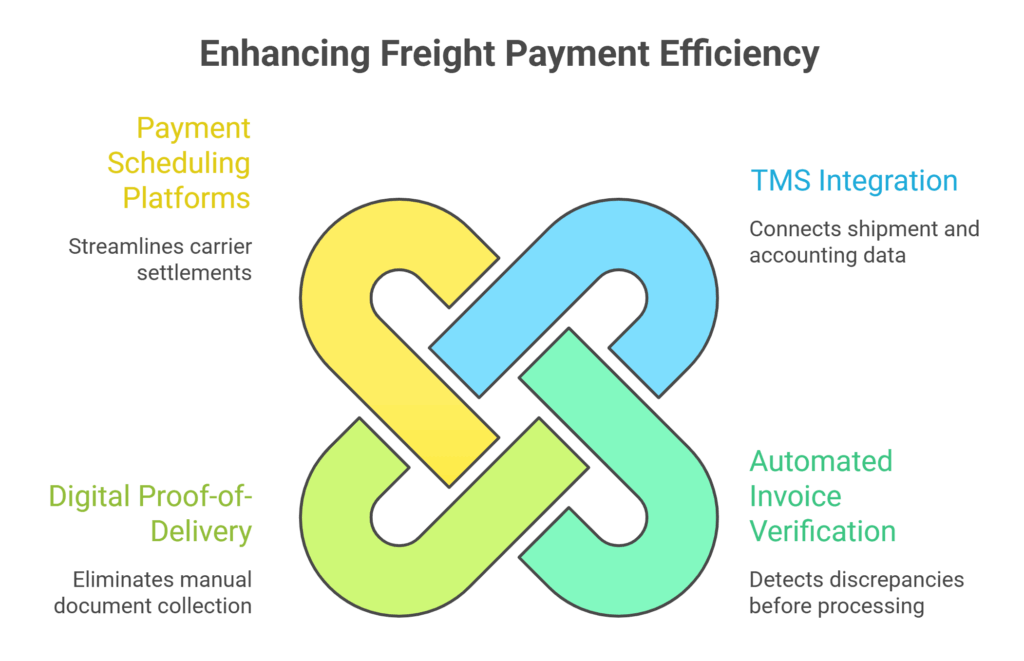
In our experience testing digital documentation workflows, automation can significantly reduce administrative workload. For example, if drivers upload proof-of-delivery documents directly through a digital platform, accounting teams no longer need to manually request or track those documents.
This type of automation improves both efficiency and transparency in the settlement process.
“The most effective logistics technology solutions focus on reducing repetitive administrative work while improving financial accuracy.”
How much of your brokerage’s payment workflow is currently automated?
Operations Case Study: Improving a Broker Payment Workflow in 30 Days
To illustrate how Q1 improvements can impact operations, consider a hypothetical brokerage scenario.
A mid-sized brokerage reviewed its payment system at the start of the year after noticing frequent delays in carrier settlements.
The operations team identified several issues:
- Carrier invoices often lacked complete documentation
- Proof-of-delivery forms were submitted through multiple communication channels
- Accounting staff spent significant time requesting missing documents
The brokerage implemented a structured improvement plan over a 30-day period.
Week 1: Process Audit
The team analyzed its invoice pipeline and identified where delays occurred. Documentation requirements were clarified and standardized for carriers.
Week 2: Documentation System Update
A centralized document submission portal was introduced to ensure all invoices included required paperwork.
Week 3: Accounting Workflow Simplification
Approval steps were reduced, allowing accounting teams to process settlements faster.
Week 4: Monitoring and Adjustment
The brokerage monitored settlement timelines and corrected minor process issues.
After implementing these changes, the brokerage observed measurable improvements:
- Invoice processing time reduced by approximately 35%
- Documentation-related payment delays decreased significantly
- Accounting workload became more manageable during busy weeks
While every brokerage operates differently, similar operational reviews during Q1 can reveal opportunities for efficiency improvements.
“Operational improvements rarely require major system overhauls, often small workflow adjustments produce meaningful efficiency gains.”
If your brokerage spent 30 days optimizing payment workflows, what improvements could you realistically achieve?
Common Payment Process Mistakes Freight Brokers Make
Even experienced brokerages occasionally develop inefficiencies in their payment systems. These issues often emerge gradually as shipment volume grows and operational complexity increases. During peak freight periods, teams focus primarily on moving loads rather than reviewing financial workflows, which allows small problems to accumulate.
Several common mistakes appear repeatedly across brokerage operations.
- Relying heavily on manual invoice processing. When accounting teams must review and verify each invoice manually, processing speed slows dramatically as shipment volume increases. Manual entry also increases the risk of clerical errors that may require corrections before payment.
- Allowing inconsistent documentation submission from carriers. When proof-of-delivery documents, rate confirmations, and invoices arrive through different communication channels, accounting teams often spend additional time locating required files.
- Unclear payment terms with carriers. If brokers do not clearly communicate settlement timelines or documentation requirements, misunderstandings can occur that delay payments or create disputes.
- Limited integration between operational and accounting systems. When transportation management platforms and accounting tools operate independently, staff may need to duplicate work across systems.
- Failing to audit payment workflows regularly. Without periodic reviews, inefficiencies remain unnoticed until they begin affecting settlement timelines or carrier satisfaction.
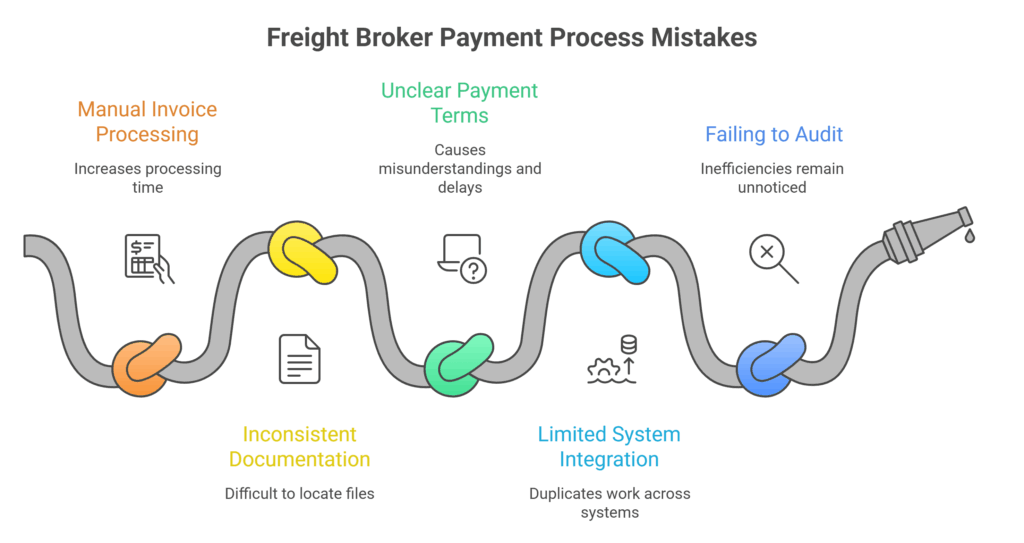
Addressing these issues early, especially during slower periods like Q1, can significantly improve payment reliability and operational efficiency.
“Most payment problems are not caused by accounting teams, they are caused by unclear operational processes that affect the entire brokerage workflow.”
Discussion prompt: Which of these payment process challenges does your brokerage encounter most frequently?
Freight Broker Payment Process Checklist
Brokerages looking to improve their payment systems can start with a simple operational review. The following checklist highlights several practical steps that operations and accounting teams often use when evaluating settlement workflows.
- Audit invoice processing timelines. Determine how long it currently takes for invoices to move from submission to payment approval.
- Standardize documentation requirements. Ensure that carriers clearly understand which documents must accompany every invoice submission.
- Centralize document management. Store proof-of-delivery forms, rate confirmations, and invoices within a single system to prevent delays caused by missing paperwork.
- Automate invoice verification when possible. Many modern logistics platforms allow automated validation of rates, shipment details, and documentation.
- Review carrier payment terms. Confirm that payment expectations are clearly defined and communicated to all carrier partners.
- Monitor settlement performance metrics. Tracking metrics such as average payment cycle time can help identify operational improvements.
In our experience, brokerages that perform structured payment audits once or twice per year often discover opportunities to reduce administrative workload and accelerate settlements.
“Payment workflows should evolve alongside freight operations, what worked when moving 50 loads per week may not work when moving 500.”
Looking for better tools to streamline invoicing, carrier payments, and operational efficiency? Explore how modern logistics technology can simplify brokerage workflows and support scalable growth.
Frequently Asked Questions (FAQs)
1. Why is Q1 considered a good time for operational improvements in freight brokerage?
Freight volumes often stabilize after the holiday season, giving brokerage teams time to evaluate internal systems and improve operational workflows before the next peak shipping cycle.
2. what are the most common payment process issues brokers face?
Typical challenges include missing documentation, manual approval delays, fragmented communication channels, and limited automation within accounting systems.
3. How can technology improve brokerage payment workflows?
Transportation management systems, automated invoicing tools, and digital documentation platforms can streamline invoice verification, reduce manual work, and improve settlement timelines.
Use Q1 to Strengthen Your Brokerage Operations
The first quarter may not always bring the highest freight volumes, but it offers a valuable opportunity for brokerages to strengthen their operational foundation.
By reviewing payment workflows, improving documentation systems, and introducing technology where appropriate, brokers can eliminate inefficiencies before shipment volumes increase.
Taking advantage of this quieter period allows brokerage teams to build more reliable payment systems, improve relationships with carriers, and prepare for the demands of the months ahead.
In a competitive freight market, operational efficiency is often what separates brokers who simply move loads from those who build long-term partnerships and scalable businesses.
Ready to streamline your brokerage operations before freight volumes rise? Contact us to learn how we can help you build a more efficient and scalable operation.
References
FreightCaviar. (2026). Why Q1 is the best time for freight brokers to fix their payment process.
https://www.freightcaviar.com
FreightWaves. (2025). Freight market seasonality trends. Retrieved from https://www.freightwaves.com
DAT Freight & Analytics. (2025). Logistics technology and brokerage operations insights. Retrieved from https://www.dat.com