The freight brokerage industry has become increasingly crowded, with new entrants, digital platforms, and aggressive pricing models reshaping competition. To survive and grow, brokerages must clearly define how to stand out as a freight broker while building long-term value beyond transactional pricing (Inbound Logistics, n.d.).
This guide breaks down the most effective freight brokerage differentiators that successful firms use to win trust, retain customers, and build durable growth. From service quality and niche focus to technology, automation, and relationships, we’ll explore modern freight broker strategies that create a real, defensible freight broker competitive advantage.
Service Quality as a Core Differentiator
Service quality remains one of the most overlooked yet powerful unique selling points for freight brokers. While rates may win the first shipment, service consistency wins the relationship (McKinsey & Company, n.d.).
What High-Impact Service Really Means
Customer service in freight brokerage goes beyond answering calls. It’s about proactive problem-solving and ownership.
Key elements include:
- Real-time shipment visibility
- Proactive delay notifications
- Fast, accurate quoting
- Dedicated account management
- Clear escalation paths for issues
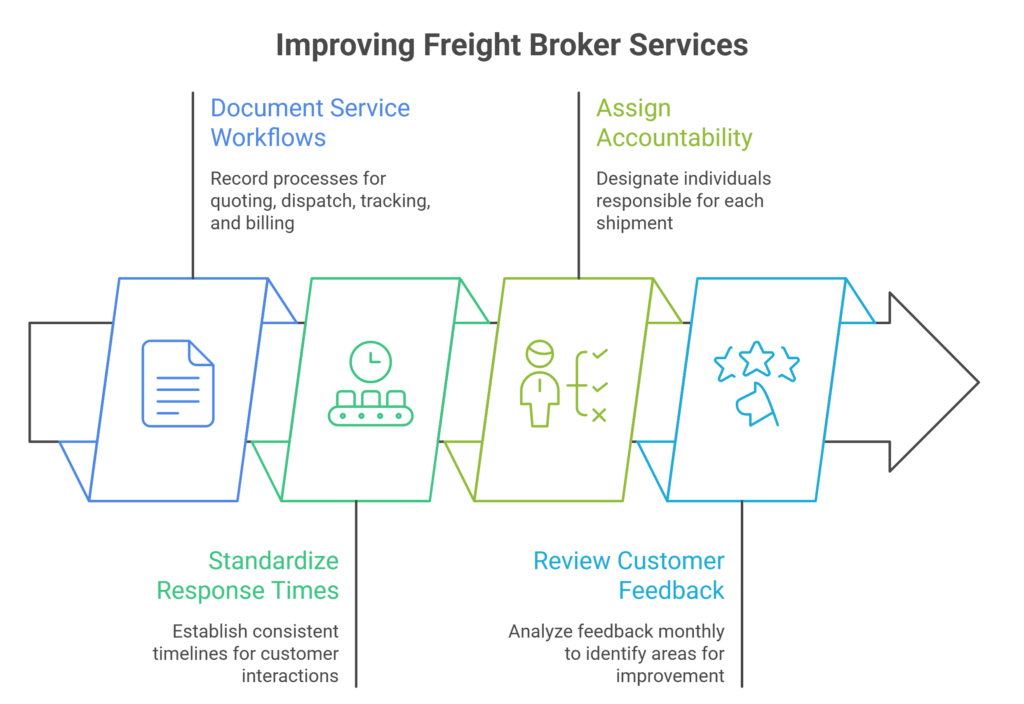
How to Improve Freight Broker Services
To elevate service quality:
- Document service workflows (quoting, dispatch, tracking, billing)
- Standardize response times
- Assign accountability per shipment
- Review customer feedback monthly
Service-driven brokerages often outperform larger competitors simply by being easier to work with, one of the most reliable freight brokerage best practices in the industry (Gartner, n.d.).
“ In a commoditized market, consistent service execution becomes the real brand signal shippers remember.”
Where does your brokerage lose time or clarity in the customer journey, and how could tightening that process improve retention?
Niche Expertise and Specialized Markets
Generalist brokerages compete on volume. Specialists compete on value.
Focusing on specialized freight broker markets allows you to command higher margins while reducing competition (Inbound Logistics, n.d.).
Examples of Niche Freight Brokerage Services
- Temperature-controlled freight
- Port drayage and intermodal
- Construction and project cargo
- Hazmat or regulated commodities
- Time-critical or white-glove freight
Niche freight brokerage services require deeper knowledge, but that expertise becomes a strong barrier to entry.
Why Specialization Works
- Shippers prefer brokers who understand their constraints
- Fewer competitors bid on niche lanes
- Pricing becomes value-based, not transactional
This approach is one of the most effective modern freight broker strategies, especially for small-to-mid-sized firms.
“Brokers who master one niche often outperform generalists across multiple verticals, even at a smaller scale.”
Which freight type do you already handle well enough to turn into a defined niche offering?
Technology as a Strategic Differentiator
Technology is no longer optional. It’s a baseline expectation, and a powerful lever when used correctly.
Essential Freight Broker Technology Tools
- Transportation Management Systems (TMS)
- Real-time tracking platforms
- Automated quoting engines
- Carrier vetting and compliance tools
- CRM systems for shipper data
Using the right freight broker technology tools enables speed, accuracy, and scalability.
Automation in Freight Brokerage
Automation in freight brokerage improves margins by reducing manual work:
- Auto-tendering loads
- Automated status updates
- Invoice matching and billing
- Fraud detection triggers
When aligned with digital freight brokerage trends, automation frees your team to focus on relationships and strategy instead of repetitive tasks (Gartner, n.d.).
“Technology should reduce friction, not replace relationships, brokers who balance both scale fastest.”
Are your systems helping you move faster or holding you back? Explore smarter freight broker technology solutions designed to streamline operations, improve visibility, and support scalable growth.
Relationship-Building as a Long-Term Advantage
Strong relationships are still one of the most durable freight brokerage differentiators, especially when markets tighten (Transport Topics, n.d.).
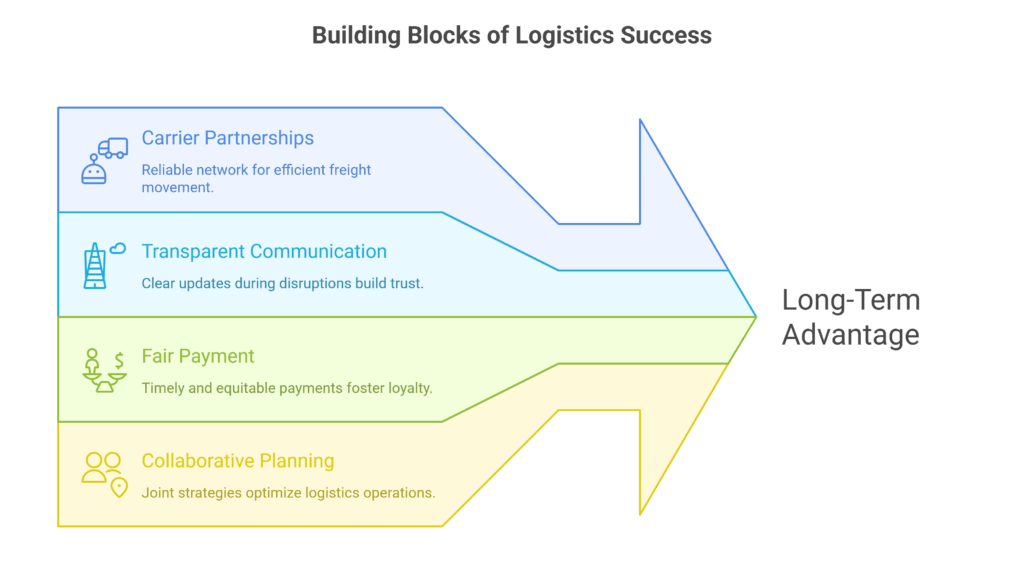
Relationship Building in Logistics
Effective relationship building in logistics includes:
- Long-term carrier partnerships
- Transparent communication during disruptions
- Fair and consistent payment practices
- Collaborative planning with shippers
Why Relationships Create Stability
- Loyal carriers protect capacity during shortages
- Trusted brokers get repeat freight
- Shippers forgive mistakes when trust exists
This human element remains critical, even as digital freight brokerage trends accelerate.
“In volatile markets, relationships determine who gets capacity and who gets left behind.”
Are your relationships actually driving long-term freight success? Discover freight broker solutions built to strengthen partnerships, improve service consistency, and create lasting competitive advantage.
Clear Value Proposition and Positioning
Many brokerages struggle because they can’t clearly explain how to stand out as a freight broker (McKinsey & Company, n.d.).
Defining Your Unique Selling Points
Your unique selling points for freight brokers should answer:
- Who do you serve best?
- What problems do you solve faster or better?
- Why should a shipper choose you over others?
Examples include:
- Niche market expertise
- Faster response times
- Specialized compliance handling
- Data-driven insights for shippers
Clarity here strengthens both sales and retention.
“If your value proposition sounds generic, your brokerage will be treated as interchangeable.”
Can your team explain your brokerage’s value in one clear sentence?
Marketing Strategies That Reinforce Differentiation
Strong differentiation must be visible. That’s where freight brokerage marketing strategies come into play (Inbound Logistics, n.d.).
High-Impact Marketing Channels
- Educational content (blogs, guides, videos)
- LinkedIn thought leadership
- Case studies and testimonials
- Email nurture campaigns
- Industry partnerships
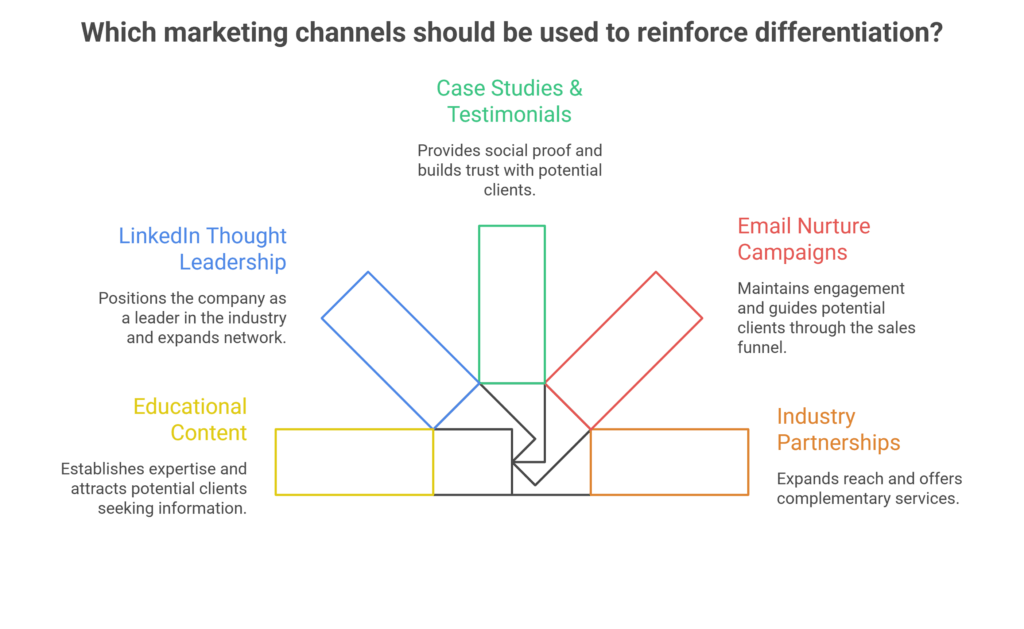
Marketing should reinforce your freight broker competitive advantage, not just generate leads.
Aligning Marketing With Operations
Marketing promises must match delivery. Otherwise, credibility erodes quickly, one of the most common failures in freight brokerage best practices.
“The best marketing doesn’t exaggerate, it clarifies and proves real operational strengths.”
Does your marketing clearly reflect what your brokerage actually does best?
Continuous Improvement as a Differentiator
Differentiation isn’t static. Markets shift, and so must your brokerage.
Building a Culture of Improvement
- Track service KPIs
- Review lost deals
- Analyze customer churn
- Stay current with modern freight broker strategies
Brokerages that adapt quickly stay ahead, even when rates compress.
“Sustainable differentiation comes from iteration, not a one-time strategy shift.”
How often do you formally review and refine your brokerage’s positioning?
Frequently Asked Questions (FAQs)
1. What are the most important freight brokerage differentiators today?
The most impactful freight brokerage differentiators include service quality, niche specialization, smart use of technology, automation, and strong shipper–carrier relationships.
2. How can a small brokerage compete with large digital platforms?
By focusing on specialized freight broker markets, offering personalized service, and using selective freight broker technology tools to stay efficient without losing the human touch.
3. Is automation in freight brokerage replacing traditional brokers?
No. Automation in freight brokerage enhances efficiency but does not replace trust, negotiation, or relationship management that are core broker strengths.
Differentiation Is a Strategy, Not a Feature
Standing out in logistics requires intention. The brokerages that win long-term don’t rely on price alone, they build niche freight brokerage services, invest in people and technology, and commit to continuous improvement.
By combining service excellence, specialization, automation, relationships, and clear positioning, you create a defensible brand that survives market cycles and earns loyalty.In a crowded market, differentiation isn’t about doing everything, it’s about doing the right things exceptionally well.
Ready to position your freight brokerage as a trusted, specialized partner? Contact us to build a strategy that sets you apart.
References
Gartner. (n.d.). Technology and automation in logistics operations. Retrieved from Discover more
Inbound Logistics. (n.d.). Freight brokerage specialization and market positioning. Retrieved from Discover more
McKinsey & Company. (n.d.). Customer experience and differentiation in B2B logistics. Retrieved from Discover more
Transport Topics. (n.d.). Digital freight brokerage and automation trends. Retrieved from Discover more