There’s a quiet divide happening in freight brokerage right now. On one side, you have brokers moving loads, quoting lanes, and competing on price. On the other side, you have brokerages building systems, relationships, and operational advantages that make them hard to replace.
The difference isn’t volume. It’s how the business is structured. In the current market, being basic doesn’t just mean being average, it means being replaceable.
Basic Brokerages Compete on Price,Top Brokers Compete on Value
When a brokerage operates without differentiation, pricing becomes the only lever left. And that’s a race that rarely ends well.
In our experience, brokers who rely heavily on undercutting rates often struggle with margin stability and long-term customer retention.
Top-performing brokerages shift the conversation by focusing on:
- Service reliability: Consistently meeting pickup and delivery expectations builds trust that outweighs small pricing differences (FreightWaves, n.d.)
- Lane expertise: Understanding specific shipping lanes allows brokers to anticipate challenges and provide better solutions
- Proactive communication: Keeping shippers informed reduces friction and increases perceived value
- Problem-solving ability: Brokers who resolve issues quickly become partners rather than vendors
For example, when a shipment faces unexpected delays, a basic broker reports the issue. A high-performing broker presents solutions before the customer asks.
That difference changes how the client evaluates the relationship.
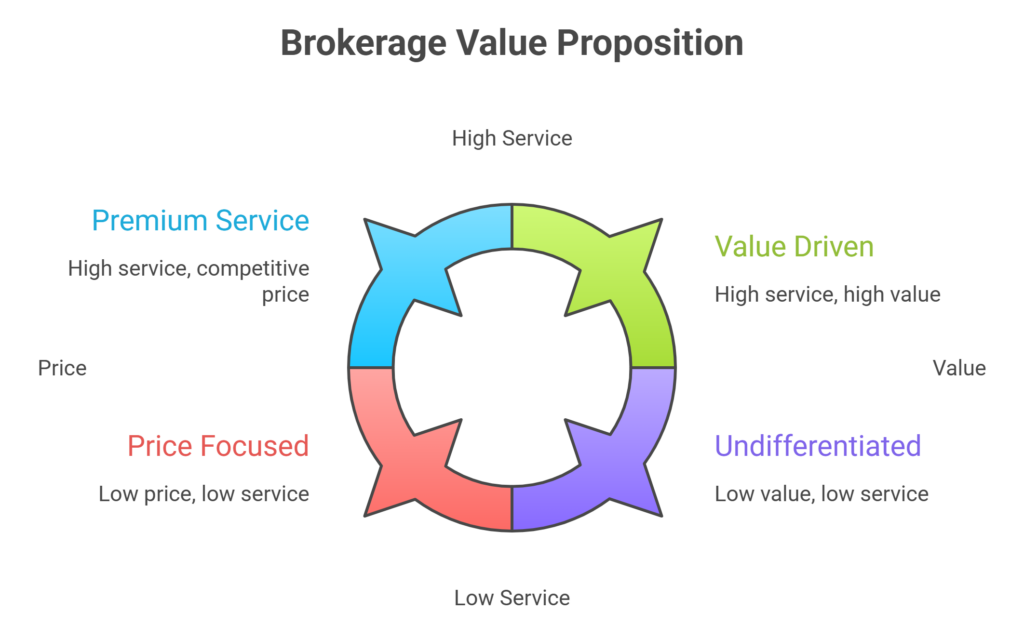
“Price wins loads, but performance wins relationships, and relationships are what sustain brokerages long term.”
If your top customer compared you to three other brokers, what would make you stand out beyond price?
Systems Beat Hustle: Why Process Matters More Than Effort
Many brokers start by relying on hustle, long hours, quick responses, and constant availability.
That works early on. It doesn’t scale.
In our experience, brokerages that grow sustainably invest in repeatable systems, not just individual effort.
Key operational systems that separate top brokers include:
- Standardized carrier onboarding processes to reduce risk and ensure consistency (Transportation Intermediaries Association [TIA], n.d.)
- Defined load workflows that eliminate confusion between operations, sales, and accounting
- Centralized communication channels to prevent missed updates and delays
- Structured documentation processes to reduce billing and compliance issues
For example, one operations team we analyzed reduced internal confusion simply by standardizing how load updates were logged and shared across departments.
The result wasn’t just efficiency, it was fewer mistakes and faster execution.
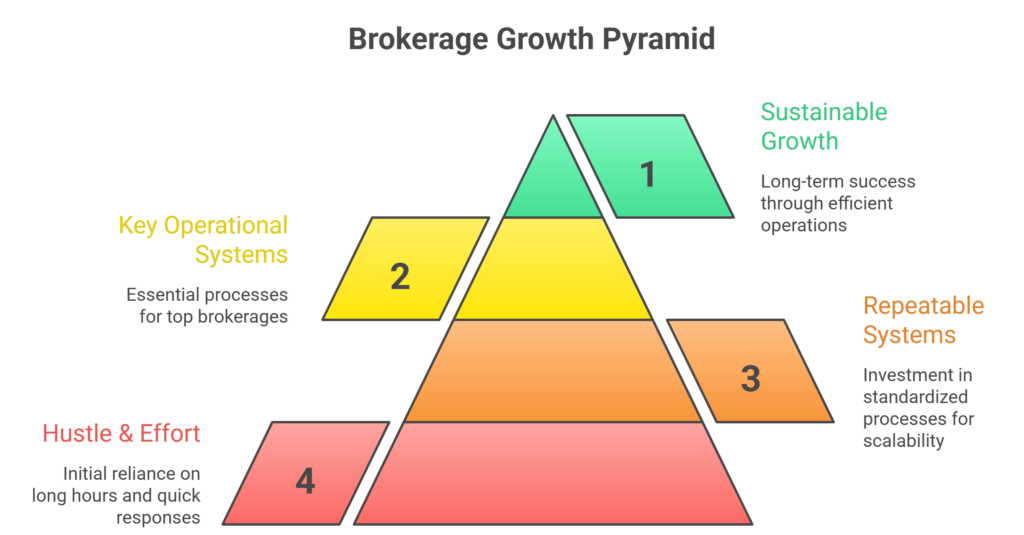
“Hustle gets you started, but systems are what allow brokerages to scale without breaking.”
Are your processes built to scale or still relying on hustle? Learn how structured systems can help grow your brokerage efficiently.
Case Study: From Transactional Broker to Strategic Partner in 90 Days
To illustrate how brokerages evolve beyond “basic,” consider a hypothetical but realistic scenario based on common industry patterns.
Initial Situation:
- Broker focused primarily on spot market loads
- Limited differentiation beyond competitive pricing
- Inconsistent communication with customers
- Moderate but unstable monthly revenue
Operational Changes (Over 90 Days):
The brokerage implemented a structured improvement plan:
- Introduced daily shipment tracking updates for key customers
- Focused on specific lanes instead of broad coverage
- Built a dedicated carrier pool for repeat shipments
- Standardized internal communication and documentation processes
Results After 90 Days:
- Customer retention improved significantly due to consistent service
- Load volume increased by approximately 32% from repeat business
- Margin stability improved as reliance on spot pricing decreased
In our experience, these types of changes don’t require massive investments, they require consistency and discipline.
The biggest shift was not in tools or technology. It was in how the brokerage approached its role.
“The fastest way to grow isn’t adding more customers, it’s becoming indispensable to the ones you already have.”
What would change in your business if your top three customers relied on you as a strategic partner instead of a backup option?
Relationships Outperform Transactions Every Time
Freight brokerage is often viewed as a transactional business. But the most successful brokers operate differently.
They build relationships that reduce churn and increase long-term revenue.
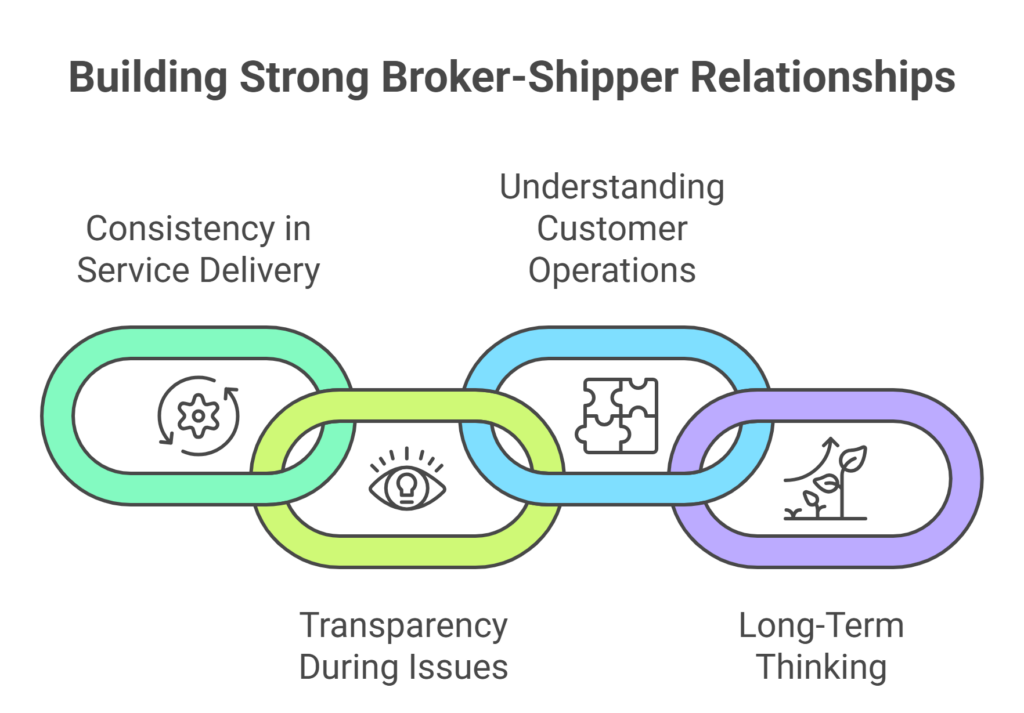
In our experience, strong broker–shipper relationships are built through:
- Consistency in service delivery: Doing the basics well, every time
- Transparency during issues: Communicating early and clearly when problems arise
- Understanding customer operations: Knowing how freight fits into the shipper’s business
- Long-term thinking: Prioritizing partnership over short-term gains
For example, a broker who understands a shipper’s production schedule can anticipate shipping needs and secure capacity in advance.
That level of insight shifts the relationship from reactive to proactive.
“Transactions generate revenue, relationships generate stability.”
Are you building relationships that last, or just closing loads that move on?
Technology Is a Multiplier, But Only If Used Strategically
Most brokerages today have access to technology. The difference lies in how effectively they use it.
In our experience, technology becomes valuable when it enhances decision-making, not just speed.
High-performing brokers use technology to:
- Analyze lane performance and pricing trends: This involves using historical and real-time data to understand which lanes are consistently profitable, which are volatile, and where pricing opportunities exist. By tracking rate fluctuations, seasonality, and capacity trends, brokers can quote more accurately, avoid underpricing, and identify lanes worth prioritizing for long-term growth (DAT Freight & Analytics, n.d.).
- Automate repetitive tasks to reduce manual workload: Tasks such as load entry, carrier emails, document collection, and status updates can consume a large portion of a broker’s day. Automation tools streamline these processes, reducing human error and freeing up time for higher-value activities like customer relationship management and strategic planning.
- Improve shipment visibility for both brokers and customers: Real-time tracking and automated updates allow brokers and shippers to monitor shipments throughout the entire lifecycle. This reduces the need for constant check calls, improves communication transparency, and helps quickly identify and resolve delays before they escalate.
- Identify inefficiencies in operations: Technology can highlight bottlenecks such as slow booking times, frequent billing corrections, or delays in communication. By analyzing these patterns, brokerages can refine workflows, eliminate redundant steps, and improve overall operational efficiency.
For example, a brokerage using real-time rate data can adjust pricing faster and remain competitive without sacrificing margins.
However, simply having tools is not enough. Teams must be trained to use them effectively.
“Technology doesn’t create advantages. How you use it does.”
Are you using technology to make smarter decisions, or just move faster? Discover tools that can elevate your brokerage performance.
Operational Discipline Is What Separates Good Brokers from Great Ones
At its core, the difference between basic and high-performing brokerages comes down to discipline.
In our experience, the most successful brokers are not necessarily the busiest, they are the most consistent.
They:
- Follow defined processes
- Track performance metrics
- Continuously refine workflows
- Treat every shipment as part of a larger system
This consistency builds trust, improves efficiency, and reduces risk. And over time, it compounds.
“Success in freight brokerage isn’t about doing extraordinary things, it’s about doing ordinary things exceptionally well, every single time.”
What is one process in your operation that, if improved, would have the biggest impact on performance?
Frequently Asked Questions (FAQs)
1.What does it mean to be a basic brokerage?
A basic brokerage typically focuses on transactional load coverage without strong differentiation, relying heavily on pricing rather than value-added services.
2.How can brokers stand out in a competitive market?
By focusing on service reliability, building strong relationships, leveraging technology effectively, and creating repeatable operational systems.
3.Is technology enough to improve brokerage performance?
No. Technology supports efficiency, but operational processes, discipline, and relationship management are equally important.
Build a Brokerage They Don’t Want to Replace
The difference between a basic brokerage and a high-performing one isn’t luck, timing, or even volume, it’s structure.
In this market, simply moving loads is no longer enough. Shippers expect reliability, visibility, and problem-solving. Carriers expect consistency and clear communication. And the brokerages that deliver on both sides are the ones that stand out.
In our experience, the shift happens when brokers stop thinking transactionally and start operating strategically. That means building systems that scale, strengthening relationships that last, and using technology to make smarter decisions, not just faster ones.
The reality is simple: there will always be another broker willing to match your price.
But there won’t always be one who can match your consistency, your process, or your value.
And that’s where the real advantage is built. Because in a market full of options, the goal isn’t just to compete, it’s to become the broker they don’t want to replace.
Ready to build a brokerage that stands out for the right reasons? Contact us to learn how we can help you scale with structure, consistency, and long-term value.
References
FreightCaviar. (2026). Stop being a basic brokerage. https://www.freightcaviar.com/stop-being-a-basic-brokerage/
FreightWaves. (n.d.). Freight brokerage market insights.
https://www.freightwaves.com
Transportation Intermediaries Association (TIA). (n.d.). Broker best practices and operational standards.
https://www.tianet.org
DAT Freight & Analytics. (n.d.). Freight data and pricing tools.
https://www.dat.com