
Independent freight brokers operate in one of the most demanding sectors of the U.S. economy. Freight doesn’t sleep and neither does the responsibility that comes with managing shipments, solving problems, and maintaining client relationships.
Work-life balance for freight brokers refers to the intentional structuring of workload, client communication, and operational coverage in a way that supports long-term performance without constant burnout. In a 24/7 logistics environment, achieving this balance requires systems, not just good intentions (Transportation Intermediaries Association [TIA], n.d.).
For independent agents, especially those operating on commission-based models, the pressure is real. If you don’t hunt, you don’t eat. But sustainability matters just as much as hustle.
Why Work-Life Balance Is Hard in Freight Brokerage
Freight brokerage operates in a real-time, high-stakes environment. Delays, rate volatility, and customer expectations create constant urgency.
Key stress drivers include:
- After-hours calls and weekend coverage
- Shipment tracking and service failures
- Market rate swings in the freight market
- Carrier capacity constraints
- Commission-based income models
According to industry workforce studies, turnover in logistics roles often exceeds 25% annually in high-pressure environments, largely due to burnout and unpredictable hours. That makes work-life balance not just a lifestyle goal, but a business sustainability strategy.
Separate Identity From Occupation
As one experienced freight agent put it:
“Our life is not this job. This job supports our life.”
That distinction matters. When brokers tie their identity entirely to shipment performance or revenue cycles, stress compounds quickly.
High-performing independent freight brokers treat brokerage as a revenue engine, not their identity.
This mindset shift reduces emotional burnout when:
- A load falls through
- A rate drops unexpectedly
- A shipper pushes back
- A holiday shipment needs coverage
The job supports your life, it shouldn’t replace it.
“Sustainable brokers separate performance metrics from personal worth. Revenue fluctuates, identity should not.”
Do you measure your value by weekly revenue, or by the systems you’ve built for long-term stability?
Build Structured Coverage Systems
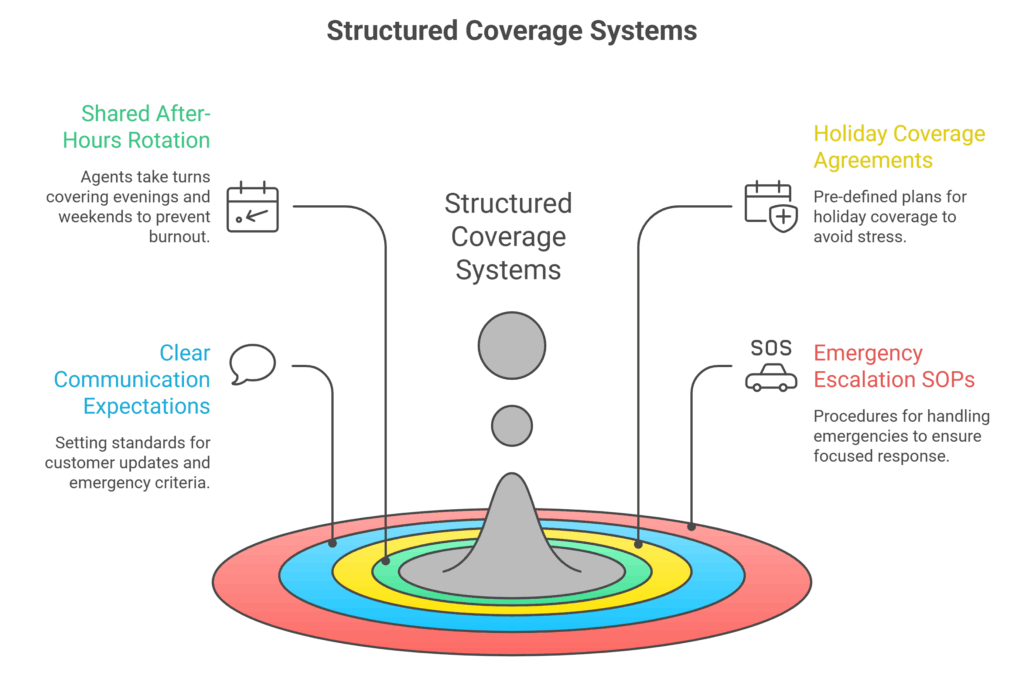
Freight brokerage is a 24/7 industry, but that does not mean you personally must be available 24/7. Sustainable brokers create structured coverage systems:
• Shared After-Hours Rotation Among Agents: Instead of every broker staying on-call all the time, create a scheduled rotation for evenings and weekends. Assign one person to monitor active loads and urgent updates during a defined window. This reduces burnout, clarifies responsibility, and ensures faster response times because coverage is intentional, not scattered (FreightWaves, n.d.).
• Pre-Defined Holiday Coverage Agreements: Before major holidays, clearly outline who covers which days and which accounts require monitoring. Define what qualifies as an emergency and when normal operations resume. Planning coverage in advance prevents last-minute stress and protects both personal commitments and customer service standards.
• Clear Communication Expectations With Customers: Set structured communication standards, such as end-of-day shipment updates and defined after-hours emergency criteria. When customers know what to expect, they are less likely to reach out unnecessarily. Clear expectations build professionalism while reducing reactive stress.
• SOPs for Emergency Escalation: Create a simple Standard Operating Procedure outlining what qualifies as a true emergency, who should be contacted first, and how issues are documented. This prevents overreacting to minor delays and keeps escalation focused on high-impact problems.
For example, some brokerage teams divide responsibility during holidays, one covers Christmas Eve, another covers post-Christmas loads, allowing most agents to disconnect between Christmas and New Year’s.
Intermittent downtime prevents long-term burnout and improves freight broker productivity over time.
“If your brokerage model depends on constant personal availability, it’s not scalable, it’s fragile.”
Curious how top brokers manage work‑life balance in real time? Watch this video to see proven strategies in action.
Set Strategic Customer Boundaries
Many independent freight brokers fear setting communication boundaries. However, professional expectations often improve when structured properly.
• Scheduled end-of-day updates: Sending structured load status summaries before the close of business reduces late-night check-ins and reassures customers that shipments are monitored consistently. This proactive approach minimizes reactive communication and sets a predictable rhythm for updates.
• Clear definitions of after-hours emergencies: Establishing what qualifies as a true emergency (e.g., breakdowns, missed appointments, temperature-controlled freight risks) prevents unnecessary late-night interruptions and ensures urgent issues receive immediate attention while non-critical matters wait until business hours.
• Proactive tracking communication: Using real-time freight visibility tools and automated tracking alerts allows brokers to inform customers of delays or ETA changes before being asked, reducing stress and demonstrating control over shipment execution.
• Repeat-lane capacity planning: Securing consistent carrier partners on high-volume lanes reduces last-minute sourcing pressure, improves rate stability, and decreases the likelihood of after-hours disruptions caused by capacity shortages.
According to freight visibility standards promoted by FreightWaves and broader digital freight reporting trends, structured communication improves service reliability more than reactive communication ( FreightWaves, n.d.).
In our experience, customers respond well when expectations are clear. If you consistently provide strong service during agreed hours, most shippers respect professional boundaries. The key is consistency, not constant availability.
“Professional boundaries improve service quality, they don’t reduce it.”
Have you clearly defined what constitutes an after-hours emergency for your customers?
Leverage Automation and Digital Freight Technology
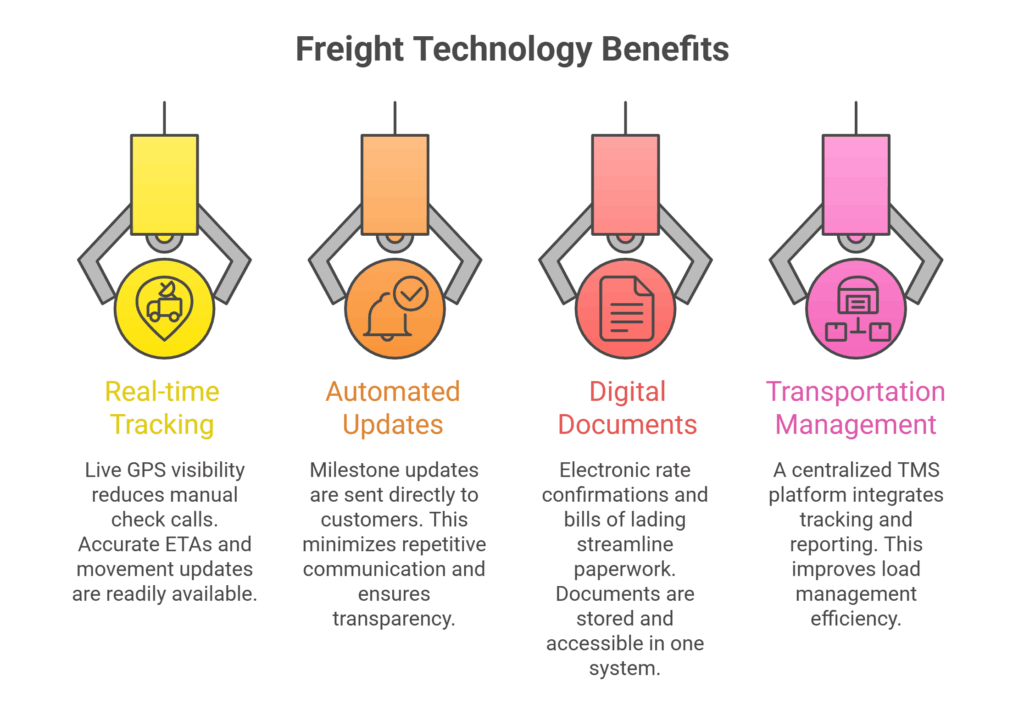
Technology reduces cognitive load. Freight broker efficiency metrics consistently improve when brokers use:
• Real-time load tracking systems: These tools provide live GPS visibility into shipment location and transit progress, reducing the need for manual check calls and constant driver follow-ups. With accurate ETAs and movement updates readily available, brokers can monitor loads efficiently without being tied to their phones all day.
• Automated shipment status updates: Automated notifications send milestone updates, such as pickup confirmation, in-transit movement, or delivery completion directly to customers. This minimizes repetitive communication while ensuring transparency and maintaining high service standards.
• Digital document management: Electronic rate confirmations, bills of lading, and proof-of-delivery uploads streamline paperwork processing and reduce administrative delays. Having documents stored and accessible in one system eliminates after-hours scrambling for missing files.
• Transportation Management Systems (TMS): A centralized TMS platform integrates tracking, carrier communication, documentation, and reporting into a single dashboard. This operational visibility improves load management efficiency and allows brokers to oversee multiple shipments without constant manual coordination.
The growth of digital freight platforms and predictive freight analytics tools has transformed how brokers manage time-sensitive shipments.
According to market reporting across transportation technology sectors, brokers who adopt automation tools experience measurable improvements in load management efficiency and reduced manual workload. Reducing manual tasks frees brokers to focus on revenue-generating activities instead of constant reactive coordination.
“Automation doesn’t replace brokers, it protects their time and decision-making capacity.”
Looking to streamline your brokerage operations with smart technology? Explore our solutions here.
Plan Around Freight Cycles and Market Volatility
Freight brokerage revenue fluctuates with:
• Seasonal produce surges: During peak produce seasons, especially in regions with heavy agricultural output, refrigerated capacity tightens and spot rates increase rapidly. Brokers handling reefer freight often experience heightened urgency, tighter appointment windows, and increased after-hours coordination.
• Retail Q4 shipping demand: The fourth quarter typically brings a surge in retail freight driven by holiday inventory replenishment and e-commerce demand. Capacity tightens, rates rise, and service expectations intensify, creating longer hours and faster decision-making cycles for brokers.
• Construction freight cycles: Construction activity increases in warmer months, driving higher demand for flatbed and specialized equipment. This seasonal uptick can strain capacity in certain markets, requiring proactive carrier sourcing and tighter shipment planning.
• Spot rate compression periods: When freight demand slows and carrier capacity exceeds volume, spot rates decline. While this may benefit shippers, brokers often face margin pressure and must focus more heavily on contract freight, customer retention, and cost discipline.
The American Transportation Research Institute highlights how freight market volatility directly impacts brokerage margins and operational pressure.Strategic brokers anticipate:
• Slower Q1 freight volume: After the holiday surge, freight demand often softens in the first quarter, leading to lower shipment counts and reduced rate activity. Experienced brokers use this period to strengthen carrier relationships, refine processes, and plan personal downtime.
• Capacity tightening during peak seasons: In high-demand periods, available trucks become scarce and rates escalate quickly. Brokers who anticipate tightening capacity secure trucks early and reduce last-minute stress (Council of Supply Chain Management Professionals [CSCMP], n.d.)
• Rate compression during oversupply periods: When too many trucks compete for limited freight, rates decline and margins shrink. Brokers who diversify customer portfolios and maintain contract freight during these cycles protect revenue stability.
By scheduling personal downtime during historically softer shipping windows, brokers protect mental bandwidth without sacrificing income potential.
“You cannot control freight cycles, but you can control how you schedule around them.”
Do you proactively plan downtime during slower freight months, or wait until burnout forces a break?
Redefine Urgency vs. Panic
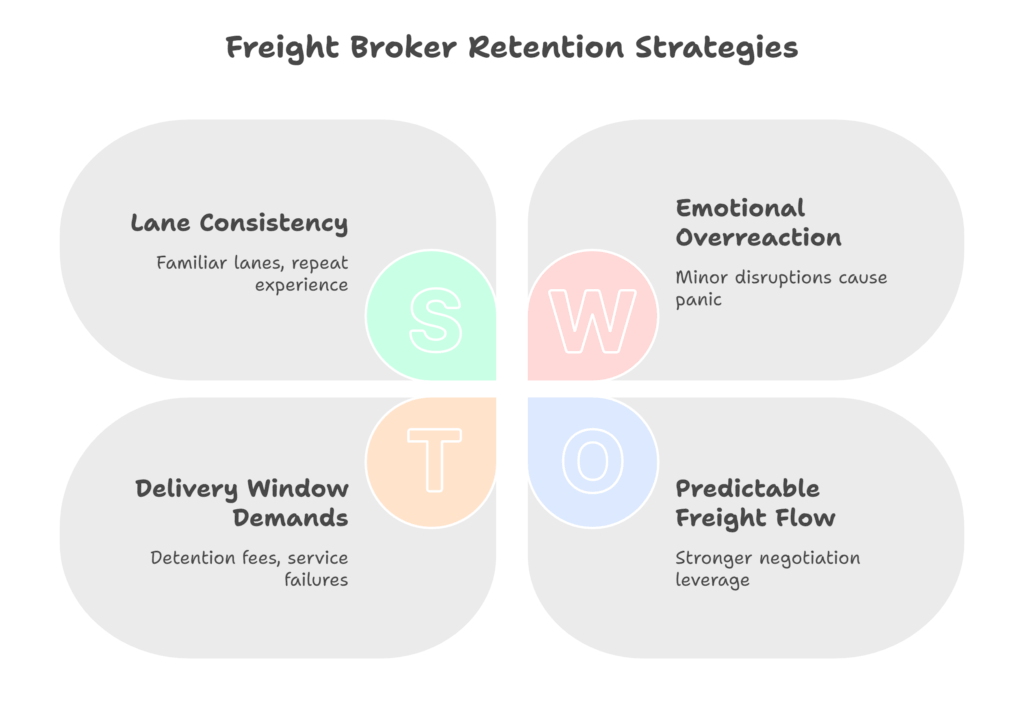
Freight brokerage requires urgency. Delivery windows, detention fees, service failures, and rate negotiations demand decisive action. But constant panic is unsustainable.
Long-term freight broker retention strategies focus on:
• Prioritize lane consistency: Focus on moving freight along familiar lanes where you have repeat experience and trusted carriers. This reduces surprises, streamlines operations, and allows better planning for volumes, rates, and potential delays.
• Build repeat shipper relationships: Cultivate long-term relationships with shippers to ensure predictable freight flow and stronger negotiation leverage. Repeat business reduces the need to constantly chase new loads, which lowers stress and stabilizes income.
• Strengthen carrier partnerships: Maintain strong, reliable relationships with your carriers, including clear communication, fair rates, and trust-building practices. Reliable carriers reduce last-minute disruptions and give you more flexibility during peak or emergency situations.
• Avoid emotional overreaction to minor disruptions: Not every delay or change in shipment status is a crisis. Experienced brokers assess the situation, prioritize critical issues, and respond strategically, preventing burnout and preserving professional judgment (American Psychological Association [APA], n.d).
When brokers invest in repeat freight lanes and reliable carrier partnerships, operational disruptions decrease and after-hours emergencies become less frequent. Operational resilience reduces emotional volatility. The difference between urgency and panic is structure.
“Urgency should drive execution, not exhaustion.”
Are your current stress levels driven by true emergencies, or by a lack of repeatable systems?
Protect Long-Term Health to Protect Long-Term Revenue
Burnout directly impacts:
• Decision-making quality: Effective brokers make fast, informed decisions under pressure by relying on structured systems, real-time data, and past experience. High-quality decisions reduce costly errors, prevent shipment delays, and maintain operational flow even during high-stress periods.
• Negotiation effectiveness: Strong negotiation skills allow brokers to secure competitive rates with carriers while protecting margins. By preparing with market data, historical lane performance, and carrier preferences, brokers can negotiate confidently without reacting emotionally to short-term fluctuations
• Carrier relationship management: Maintaining solid relationships with trusted carriers ensures reliable capacity, smoother load execution, and faster problem resolution. Consistent communication, fair treatment, and repeat business help brokers build a dependable network that supports both operations and work-life balance
• Customer retention: Delivering reliable service and proactive updates strengthens shipper trust and loyalty. Brokers who consistently meet expectations, provide clear communication, and anticipate issues retain customers longer, reducing the stress of constantly acquiring new accounts.
Research in high-performance sales industries consistently shows that professionals with structured downtime outperform peers over long time horizons.
Freight brokerage is not a sprint. It is a career built on consistency, relationships, and reputation. Protecting your personal life protects your revenue stream.
“Sustainable brokers recognize that protecting mental and physical health is not optional, it directly impacts long-term revenue and business resilience.”
Want to manage freight cycles more efficiently and reduce stress? See how we can help here.
Balance Life and Brokerage Success
Achieving work-life balance as an independent freight broker in a 24/7 industry is challenging, but entirely possible with the right systems, strategies, and mindset. By separating identity from performance, building structured coverage systems, setting clear customer boundaries, leveraging automation, planning around freight cycles, and redefining urgency versus panic, brokers can protect their time, reduce stress, and maintain high operational performance.
Sustainable success in freight brokerage comes from working smarter, not longer and prioritizing both business growth and personal well-being ensures you stay in the game for the long term.
Ready to streamline your brokerage operations and reclaim your time? Contact us to implement strategies that boost efficiency while supporting work-life balance.
Frequently Asked Questions (FAQs)
1. How can independent freight brokers reduce after-hours emergencies?
By implementing structured coverage systems, defining true emergency protocols, leveraging real-time tracking tools, and developing repeat-lane and carrier relationships, brokers can minimize unexpected issues and avoid constant interruptions.
2. What tools help brokers maintain work-life balance?
Digital solutions like Transportation Management Systems (TMS), automated shipment notifications, freight visibility dashboards, and document management systems reduce manual workload and allow brokers to monitor shipments efficiently without being tethered to their phones.
3. How can brokers plan downtime during peak freight cycles?
Understanding seasonal surges such as Q4 retail demand, produce season peaks, and construction freight cycles enables brokers to schedule personal time strategically. Contracting repeat freight lanes and diversifying shippers also helps manage workload without sacrificing revenue.
References
American Psychological Association. (n.d.). Workplace stress and burnout prevention. Retrieved from https://www.apa.org
Council of Supply Chain Management Professionals. (n.d.). Supply chain best practices. Retrieved from https://www.cscmp.org
FreightWaves. (n.d.). Freight market news and analysis. Retrieved from https://www.freightwaves.com
Transportation Intermediaries Association. (n.d.). Freight broker industry resources. Retrieved from https://www.tianet.org