
Rising oil prices are usually seen as a cost problem in logistics. Fuel gets more expensive. Margins get tighter. Everyone braces for impact.But there’s another side to the story that doesn’t get as much attention.
Higher oil prices can actually increase freight demand, particularly across energy-related supply chains. As activity rises in drilling, refining, and petrochemical production, freight volumes often follow.
For freight brokers, this creates a unique dynamic. While costs may increase, load opportunities can increase at the same time.
The key is understanding where that demand shows up, and how to position your brokerage to capture it.
Rising Oil Prices Often Trigger Increased Energy Sector Activity
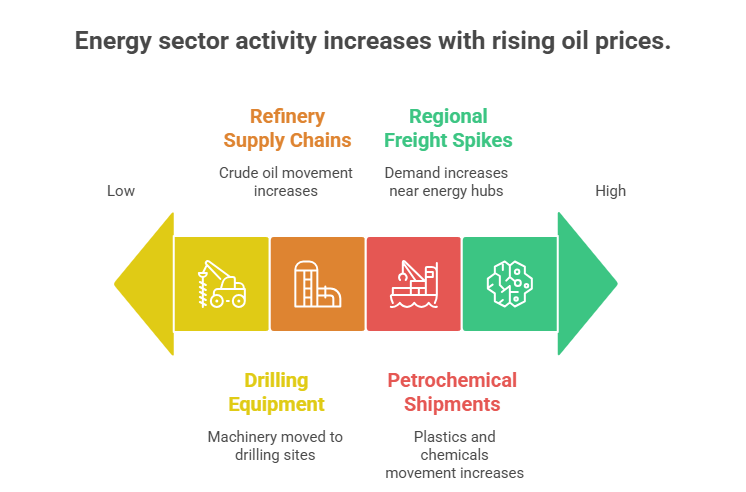
When oil prices climb, energy companies tend to increase production, exploration, and infrastructure activity. This creates a ripple effect across multiple industries that depend on transportation (FreightWaves, n.d.).
In our experience analyzing freight cycles, increased energy activity typically leads to higher demand in:
- Drilling equipment transportation: Machinery, pipes, and materials must be moved to active drilling sites
- Refinery supply chains: Crude oil movement and refined product distribution increase as production ramps up
- Petrochemical shipments: Plastics, chemicals, and industrial materials see increased movement tied to energy production
- Regional freight spikes: Areas near energy hubs often experience localized demand increases
For example, when drilling activity increases in a region, flatbed and specialized carriers are often needed to move heavy equipment. This creates opportunities for brokers who understand those lanes and equipment requirements.
While fuel costs may rise, the increase in freight demand can offset those pressures if brokerages are positioned correctly.
“In freight markets, cost increases and demand increases often happen simultaneously. Understanding both sides is what creates opportunity.”
Is your brokerage positioned to capture freight opportunities tied to energy sector activity?
Fuel Costs Rise, But So Do Freight Volumes
It’s true that rising oil prices increase fuel costs, which directly affects carrier operating expenses. However, higher fuel prices don’t always reduce freight movement. In many cases, they coincide with increased industrial activity.
According to market observations, freight demand is often influenced more by economic activity and production levels than by fuel prices alone (FreightWaves, n.d.).
This creates an interesting balance:
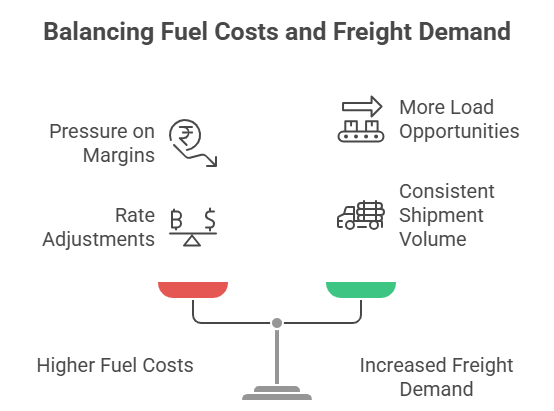
- Higher fuel costs can pressure margins if not managed properly
- Increased freight demand can create more load opportunities
- Stronger industrial output supports consistent shipment volume
- Rate adjustments may occur to reflect higher operating costs
In our experience, brokers who adjust pricing strategies quickly tend to maintain profitability even when fuel costs rise. This includes updating rate structures, communicating with shippers, and monitoring market conditions closely.
A common mistake is focusing only on cost increases without recognizing the demand side of the equation.
“Fuel prices impact costs, but freight demand is ultimately driven by production, consumption, and supply chain activity.”
Are you adjusting your pricing strategy based on both fuel costs and demand trends, or just reacting to cost increases?
Case Study: How Energy Activity Can Drive Freight Growth
To better understand how oil price increases can impact freight, consider a hypothetical brokerage scenario.
A mid-sized brokerage specializing in general freight noticed a shift in demand when energy sector activity increased in a specific region.
Initial Situation:
- Limited exposure to energy-related freight
- Primarily focused on dry van shipments
- Moderate, stable load volume
Operational Shift (Over 60 Days):
The brokerage identified increased demand in energy-related shipments and adjusted its strategy:
- Began sourcing flatbed and specialized carriers
- Developed relationships with shippers in industrial and energy sectors
- Focused on regional lanes near production and refining hubs
Results After 60 Days:
- Load volume increased by approximately 28%
- Average revenue per load improved due to specialized freight
- Expanded carrier network to support new equipment types
In our experience, brokerages that recognize emerging demand patterns early are often able to adapt faster and capture new opportunities.
This example highlights how shifts in one sector, such as energy, can create ripple effects across the broader freight market.
“Freight growth opportunities often come from adjacent industries.Brokers who adapt quickly can expand beyond their core lanes.”
Want to scale your freight opportunities like this? See how the right brokerage support can help you expand into new markets.
Specialized Freight Demand Increases with Energy Activity
Energy-related supply chains often require specialized transportation solutions. This creates opportunities for brokers who can coordinate more complex shipments.
As energy production increases, demand may rise for:
- Flatbed and heavy haul transport for oversized equipment
- Tanker shipments for liquid products and chemicals
- Hazmat-certified carriers for regulated materials
- Time-sensitive deliveries tied to production schedules
In our experience, these types of shipments typically command higher margins but also require stronger operational expertise.
For example, coordinating a flatbed shipment for industrial equipment involves more than just booking a truck. Brokers must consider securement requirements, route planning, and compliance with safety regulations.
Brokerages that invest in understanding these requirements can position themselves to handle higher-value freight.
“Specialized freight is not just about higher rates, it’s about higher operational responsibility and expertise.”
Discussion prompt: Does your brokerage currently have the capability to handle specialized or energy-related freight?
Technology and Data Help Brokers Respond Faster to Market Shifts
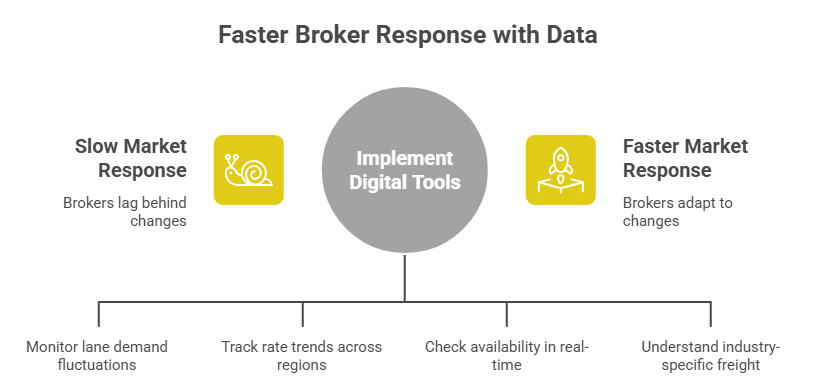
Freight markets move quickly, and brokers who rely on real-time data often respond more effectively to changing conditions.
Digital tools such as transportation management systems (TMS) and market analytics platforms allow brokers to monitor:
- Lane demand fluctuations
- Rate trends across regions
- Capacity availability
- Industry-specific freight patterns
According to industry insights, brokers using data-driven tools can make faster pricing decisions and adjust to market changes more efficiently (DAT Freight & Analytics, n.d.).
In our experience, access to accurate market data allows brokerages to identify emerging opportunities before they become widely competitive.
For example, if data shows increased load activity in regions tied to energy production, brokers can proactively build carrier networks and secure capacity in those areas.
“Data doesn’t predict the future, but it helps brokers react faster than the market.”
Are you using the right tools to stay ahead of freight market shifts? Discover how modern freight technology can improve your speed and decision-making.
Frequently Asked Questions (FAQs)
1.Do rising oil prices always increase freight demand?
Not always, but higher oil prices can stimulate activity in energy, refining, and petrochemical sectors, which may increase freight volumes in those industries.
2.How can freight brokers benefit from energy sector growth?
Brokers can benefit by expanding into specialized freight, building relationships with energy-related shippers, and positioning themselves in high-demand regions.
3.What risks should brokers consider when oil prices rise?
Higher fuel costs, rate volatility, and increased competition for specialized carriers are key factors brokers should monitor.
Turn Rising Fuel Costs into Freight Opportunities
Rising oil prices are often viewed as a challenge for the freight industry, primarily due to increased fuel costs.
However, they can also signal increased activity in sectors that rely heavily on transportation. Energy production, refining, and industrial manufacturing all contribute to freight demand when activity rises.
For freight brokers, the opportunity lies in recognizing these patterns early and adapting accordingly.
Those who monitor market trends, expand their capabilities, and adjust their strategies can position themselves to benefit from shifting demand.
In freight, changes in one part of the economy often create opportunities in another. The key is knowing where to look, and being ready to act when those opportunities appear.
Ready to stay ahead of market shifts and capitalize on new freight opportunities? Contact us to learn how our Freight Broker Solutions can help you adapt and grow.
References
FreightWaves. (n.d.). Freight market trends and demand insights.
https://www.freightwaves.com
DAT Freight & Analytics. (n.d.). Freight market data and analytics tools.
https://www.dat.com
U.S. Energy Information Administration (EIA). (n.d.). Oil market and energy production data.
https://www.eia.gov