Carriers are the backbone of your brokerage. But too often, they face recurring pain points like detention, slow pay, confusing communication, and unfair rates that push them toward competitors. Understanding common carrier pain points and addressing them proactively is the key to building a strong, reliable, and loyal carrier base (ATRI, n.d).
This guide breaks down the biggest issues carriers face and shows you exactly how to fix them through carrier-first freight broker practices, clear communication, and transparent processes.
How to Reduce Carrier Detention Proactively
Detention is one of the most frustrating operational issues carriers deal with. It wastes time, burns fuel, delays schedules, and reduces earning potential. This is where carrier detention pain points and broader trucking detention pay issues become real threats to your carrier relationships (FMCSA, n.d.).
What Brokers Can Do
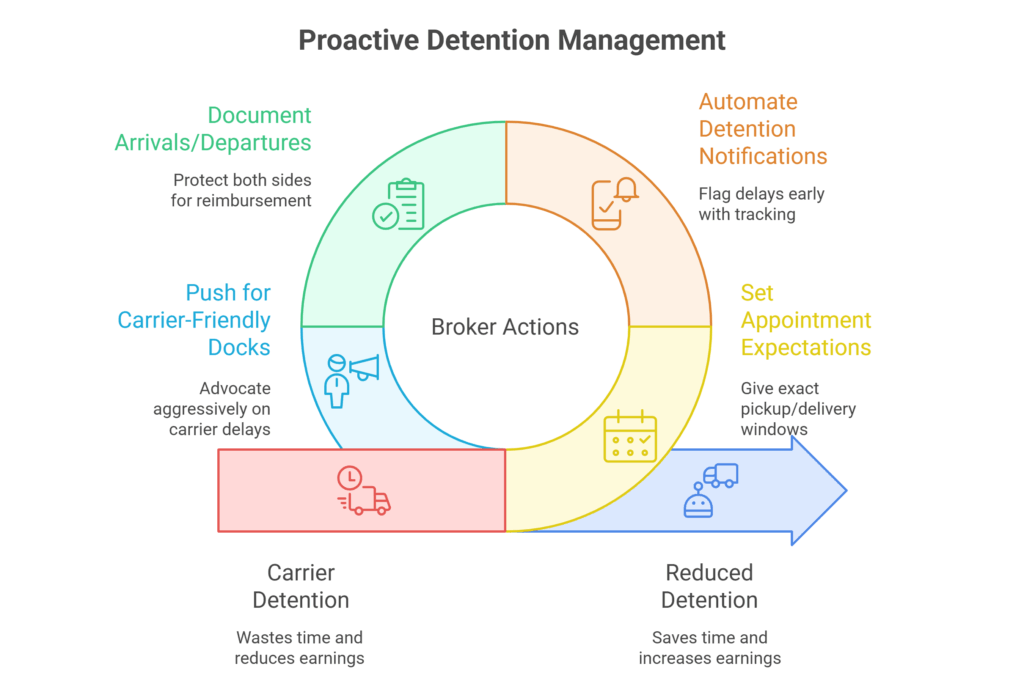
Use proactive detention management practices to minimize surprises:
-
Set Appointment Expectations Early
- Give exact pickup and delivery windows.
- Share any known facility delays.
-
Automate Detention Notifications
- Use load-tracking tools that flag delays early.
-
Document All Arrivals & Departures
- Protect both sides when filing for detention reimbursement.
-
Push Shippers for Carrier-Friendly Dock Processes
- Advocate aggressively on carrier delays (FreightWaves, n.d.).
Use digital timestamps, check-in logs, and real-time tracking to establish proof, accelerate disputes, and reduce detention exposure.
“The brokers who win carriers long-term are the ones who take detention seriously, not when it happens, but before it happens.”
What detention-prevention workflows does your brokerage currently use, and where do carriers still experience delays?
How Brokers Can Avoid Slow Pay Freight Brokers Reputation
Payment issues are one of the biggest common carrier pain points in the industry. Slow pay damages trust, affects driver morale, and leads to trucking carrier relationship issues down the line. Some carriers even struggle with carrier non payment from brokers, which destroys relationships permanently.
What Carriers Need From You
When carriers choose which brokers to work with, payment reliability ranks among their top decision factors. Many have dealt with freight broker slow pay problems, unexpected deductions, vague invoice requirements, or even carrier non-payment from brokers in the past, so they naturally gravitate toward brokers who offer clarity, consistency, and transparency in every step of the payment cycle.
To avoid being seen as one of the slow pay freight brokers, you need a payment system that carriers can depend on without chasing you down for updates.
Here’s what carriers truly need:
1. Predictability
Carriers want to know:
- Exactly when they will get paid
- How much they will get paid
- What steps they need to follow to trigger payment. Predictability eliminates stress and preserves trust.
2. Transparency
Carriers prefer brokers who show:
- Real-time invoice status
- Document approval progress
- Payment release dates
- Any accessorials pending approval. When there’s transparency, there’s no room for misunderstandings (FreightWaves, n.d.).
3. Consistency
Carriers don’t want different rules for every load. They want:
- Standardized invoice submission requirements
- Consistent pay cycles
- Clear communication every time. Consistency makes your brokerage easy to work with, something carriers value heavily.
4. Ease of Use
The submission process should be simple:
- No overly complicated portals
- No unclear instructions
- No request for documents the carrier wasn’t told about. Clear expectations lead to fewer delays and faster payouts.
5. Options
Many carriers want flexibility:
- Quick pay
- Factoring-friendly billing
- Same-day or next-day ACH. Providing multiple payment choices gives carriers control over their cash flow which is a huge advantage.

Slow pay issues often stem from unorganized billing processes, missing documents, miscommunication, or backlogged finance systems. Here’s how you can fix or prevent all of those issues proactively.
1. Offer Multiple, Carrier-Friendly Payment Options
Give carriers payment methods that match their business model:
- Standard pay terms (21–35 days)
- Quick pay options (1–3 days)
- Fuel advances for high-urgency loads
- ACH payments for faster direct deposits
- Factoring-compatible invoices without extra hurdles (FMCSA, n.d.)
The more options you offer, the easier it becomes to avoid slow pay freight brokers reputation.
2. Standardize Document Requirements & Make Them Clear Upfront
Before the load begins, tell carriers exactly which documents you need:
- BOL
- POD
- Lumper receipts
- Detention forms
- Invoices
- Any shipper-specific forms
Send an automated or standard document sheet so there’s no confusion. This eliminates surprise delays and reduces administrative workload for both sides.
3. Use Technology to Support Freight Broker Payment Transparency
Adopt systems that allow carriers to:
- Upload documents digitally
- Track invoice approval
- View payment timelines
- Receive notifications for missing items
- See their remittance history
This level of visibility goes a long way in building trust with freight carriers.
4. Communicate About Money Early, Often, and Clearly
Payment silence damages trust faster than anything else. Communicate:
- When documents are received
- When the invoice is approved
- If anything is missing
- When the payment is scheduled
- When the payment has been sent
Carriers should never have to chase you for payment updates. You should always be ahead of the questions.
5. Resolve Disputes Quickly & Fairly
Sometimes payments get delayed because:
- The POD is incomplete
- The BOL is corrected
- Detention approval is pending
- A lumper fee wasn’t included
- There’s a discrepancy in rate confirmation
To maintain trust:
- Respond quickly
- Investigate fairly
- Communicate clearly
- Avoid blaming the carrier
Quick dispute handling makes carriers feel respected and valued.
6. Build a Reputation for Paying On Time
Paying on time consistently is the fastest way to:
- Get more capacity
- Increase loyalty
- Gain preferred carrier status
- Reduce negotiation friction
- Grow your network organically
Consistency protects your brand and allows you to scale.
“Transparency is more valuable than speed. Even if you can’t pay instantly, showing carriers exactly where their payment stands builds trust.”
Want to work with a broker that actually pays on time ? Explore how SPI’s payment process protects your cash flow and gives you total visibility into every invoice.
How to Negotiate Fairly & Build Trust With Freight Carriers
Every carrier has experienced unfair freight rates for carriers at some point. This problem escalates during market downturns, when shippers push for savings and brokers pass the pressure downward.
But ethical brokers take steps to negotiate fair rates with brokers and carriers in a way that keeps relationships intact.
Practical Steps
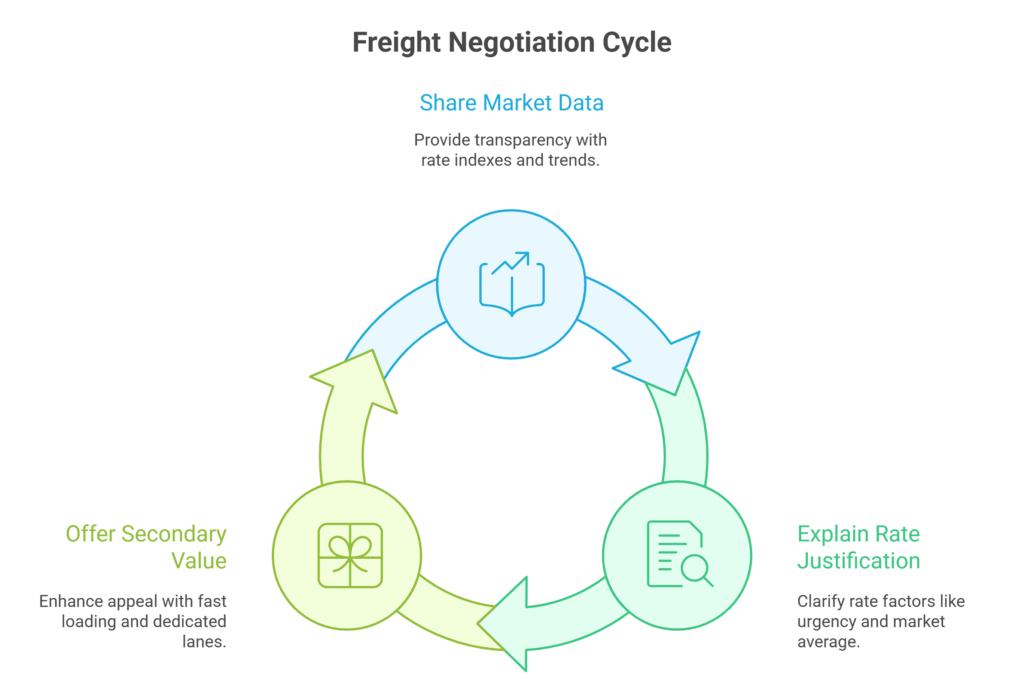
-
Share Market Data
- Rate indexes (DAT, n.d.)
- Seasonality trends
- Lane volatility
-
Explain Why a Rate Is What It Is
- Shipper constraints
- Load urgency
- Market average
-
Provide Secondary Value Beyond Rate
- Fast loading
- Fewer cancellations
- Better freight quality
- Dedicated lanes
Consistency, communication, and transparency are the three habits that reliably build trust with freight carriers over time.
“Fair negotiation isn’t about achieving the lowest rate, it’s about maintaining a long-term pool of carriers who are willing to show up when you need capacity fast.”
Looking for a broker who negotiates fairly and prioritizes long-term trust? Explore SPI’s Freight Broker Solutions to see how SPI helps brokers deliver transparent rates, stronger carrier partnerships, and scalable operations.
Improve Communication With Carriers Through Better Processes
Many issues such as delays, cancellations, and accessorial disputes are made worse by poor communication. This is where brokers must apply carrier-first freight broker practices that improve communication with carriers consistently.
Practical Steps
-
Create a Communication SOP
- First update at pickup
- Second at mid-transit
- Final at delivery
-
Set Expectations Upfront
- Special equipment
- Deadlines
- Facility quirks
-
Use Fast, Multi-Channel Communication
- Text
- App notifications
- Call
Good communication lowers disputes, reduces detention, and increases reliability, making it easier to keep your carrier network engaged.
“Good communication eliminates 70% of avoidable problems. The broker who communicates fastest wins the carrier.”
What communication channels do your carriers prefer, and how do you adjust to meet those preferences?
Frequently Asked Questions (FAQs)
1. What’s the fastest way to reduce carrier frustration?
Prioritize clear communication, fast payments, and consistent updates. Address problems before they escalate.
2. How do brokers prevent detention fights?
Proactive scheduling, timestamp documentation, and constant shipper coordination drastically reduce detention disputes.
3. Why do carriers leave certain brokers permanently?
Slow pay, unfair rates, miscommunication, and lack of transparency are the biggest long-term relationship killers.
Secure Reliable Capacity and Grow Your Brokerage
Carrier satisfaction is one of the most powerful growth levers for any freight broker. By using proactive detention management, freight broker payment transparency, and carrier-first freight broker practices, you eliminate the biggest common carrier pain points, strengthening your reputation and building a dependable network that supports long-term business stability.
This is how you avoid slow pay freight brokers labels, reduce carrier detention, and create a brokerage that carriers are excited to work with again and again.
Ready to expand your carrier network and ensure reliable capacity? Contact us to strengthen relationships and grow your brokerage with confidence.
References
ATRI. (n.d.). Driver detention impacts and industry research. Retrieved from Discover more
DAT. (n.d.). Market rate analytics and freight data. Retrieved from Discover more
FMCSA. (n.d.). Hours of service, compliance, and regulatory guidance. Retrieved from
Discover more
FreightWaves. (n.d.). Industry news, detention analysis, and freight market trends. Retrieved from Discover more