
Building and managing a freight broker carrier network is one of the most important tasks for any independent broker looking to scale. Whether you’re trying to build a reliable carrier network, improve freight coverage, or streamline freight broker carrier onboarding, your long-term success comes down to sourcing strong partners, vetting safely, and developing meaningful relationships with motor carriers.
This guide breaks down the essential steps, tools, and strategies independent brokers must use to build reliable carrier network performance, improve broker carrier partnerships, and operate confidently using a systematic, repeatable process.
How Independent Brokers Find Capacity That Lasts
To build reliable carrier network coverage, sourcing must be intentional, not random. Independent brokers often lack the large routing guides of enterprise brokers, so your success depends on using efficient carrier sourcing strategies that allow you to find reliable carriers for brokers who can handle your lanes consistently (FreightWaves, n.d).
How to Source High-Quality Carriers
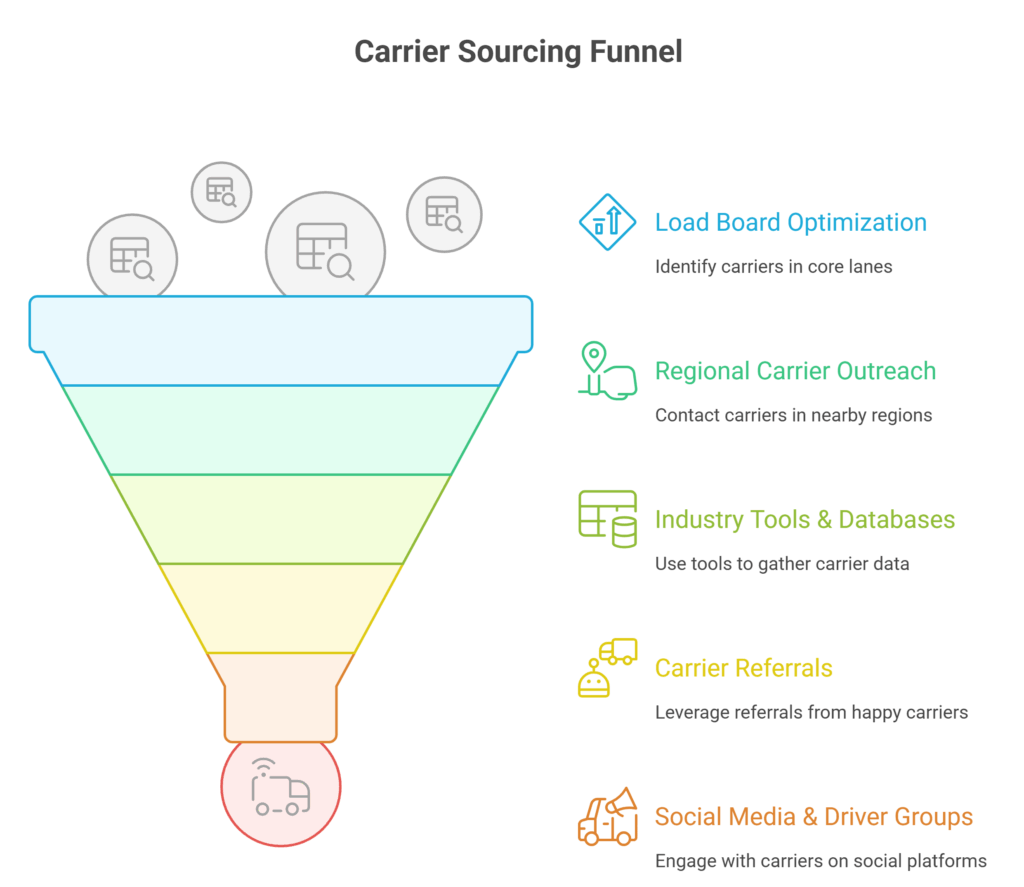
Use a mix of channels to find carriers:
1. Load Board Optimization
- Identify carriers regularly posting trucks in your core lanes
- Set alerts for preferred equipment types
- Build outreach lists for lane-specific calling (DAT Solutions, n.d.)
2. Regional Carrier Outreach
- Contact carriers operating within 200–400 miles of your customer base
- Smaller fleets are often more loyal and flexible
- Focus on relationship-first communication (FreightWaves, n.d.)
3. Industry Tools & Databases
Tools help you build carrier network broker coverage faster by:
- Showing fleet size, equipment, and safety history
- Identifying capacity hotspots
- Filtering by specialty freight (DAT Solutions, n.d.)
4. Leverage Carrier Referrals
Happy carriers often refer to other carriers who operate similarly. This creates organic, low-risk growth within your independent broker carrier network.
5. Social Media & Driver Groups
- Facebook trucking groups
- Regional trucking association groups
- LinkedIn outreach
These communities are increasingly effective for discovering capacity.
“Brokers who source carriers proactively during slow seasons outperform competitors during surge periods. A strong carrier list built early acts as rate protection during high-demand cycles.”
What sourcing method has brought you the most reliable carriers so far: load boards, referrals, or local outreach?
Build a Reliable Carrier Network from Day One
Once you find potential carriers, your next job is ensuring your freight broker carrier onboarding process is fast, safe, and consistent. Effective onboarding ensures you vet carriers for freight properly while also building trust early which is crucial when trying to build carrier network broker partnerships that last (Transport Topics, n.d).
Your Onboarding Process Should Include
1. Document Verification
- W-9
- Active authority
- Insurance certificates
- MC/DOT verification (FMCSA, n.d.)
2. Qualification Checks
- Safety history
- Equipment fit
- Operating lanes
- Experience with similar freight
3. Communication Expectations
Set carrier expectations clearly:
- Pickup and delivery standards
- Tracking requirements
- Accessorial communication
- Contact windows
4. Digital Onboarding Tools
Using carrier network management tools helps automate most steps and reduces manual follow-ups (DAT Solutions, n.d.).
5. Relationship-Based Approval
Instead of approving any carrier, approve those who show:
- Responsiveness
- Professional communication
- Consistency and reliability
This strengthens your long-term broker carrier partnerships and reduces turnover.
“Top-performing brokerages onboard carriers in under 15 minutes using digital forms and API-connected verification tools.”
What part of onboarding slows you down the most: document collection, safety checks, or communication expectations?
Carrier Vetting for Freight Brokers
Carrier vetting is the backbone of freight broker risk control. Even with a strong list of partners, brokers must regularly review safety data, insurance validity, and on-the-road performance. A well-structured vetting process ensures you only move freight with trusted professionals, helps you avoid problem carriers, and strengthens your independent broker carrier network over time (FMCSA, n.d).
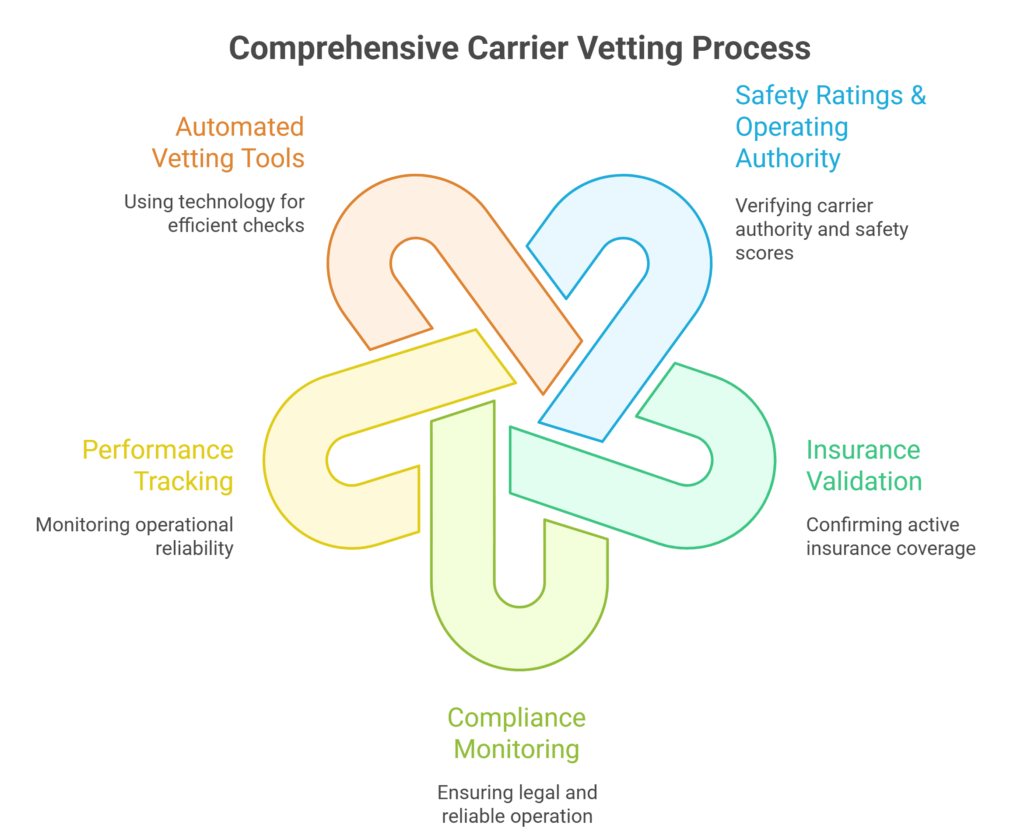
Core Vetting Elements
1. Safety Ratings & Operating Authority
Verifying carrier authority status and reviewing freight broker safety ratings gives brokers a snapshot of operational quality. Check for:
- Out-of-service rates
- Inspection history
- Crash data
- Behavior Analysis & Safety Improvement Categories (BASICs)
A carrier with consistently poor safety scores increases risk for claims, delays, and reputational damage.
2. Insurance Validation
Carriers must maintain active insurance that aligns with your standards. Confirm:
- Liability limits
- Cargo coverage types (reefer, high-value, specialty)
- Policy expiration dates
- Additional insured requirements
Verifying insurance during onboarding, and periodically after, is a must for preventing avoidable losses.
3. Compliance Monitoring
Ongoing carrier compliance freight broker checks help ensure the carrier continues to operate legally and reliably. Red flags include:
- Frequent equipment breakdowns
- Missed appointments
- Unresponsive dispatch
- Questionable subcontracting behavior
These issues often predict future claims or service failures.
4. Performance Tracking
Strong brokers monitor the carrier’s operational reliability over time. Track:
- On-time pickup rate
- On-time delivery rate
- Number of accessorial issues
- Communication quality during transit
- Driver professionalism
This data helps you build a high-performing, low-risk list of partners.
5. Use Automated Vetting & Rating Tools
The best carrier rating systems and modern carrier network management tools automate many checks:
- Safety score updates
- Insurance expiration alerts
- Performance scoring
- Carrier risk flags
Automation helps brokers vet carriers for freight faster while reducing human error.
“High-performing brokers build internal carrier scorecards and rank carriers monthly. This ensures you always know who your top performers are, and who needs to be replaced.”
Looking for tools and support to strengthen your carrier vetting and reduce risk? Explore our comprehensive Freight Broker Solutions to access better safety tools and the resources you need to build a stronger, safer carrier network.
How to Keep a Strong Carrier Network Engaged
Carrier management is the heart of a long-lasting freight broker carrier network. Once you’ve built up strong partnerships, you must maintain them in order to scale.
To build reliable carrier network performance over time, brokers must treat carriers as true partners, not replaceable vendors.
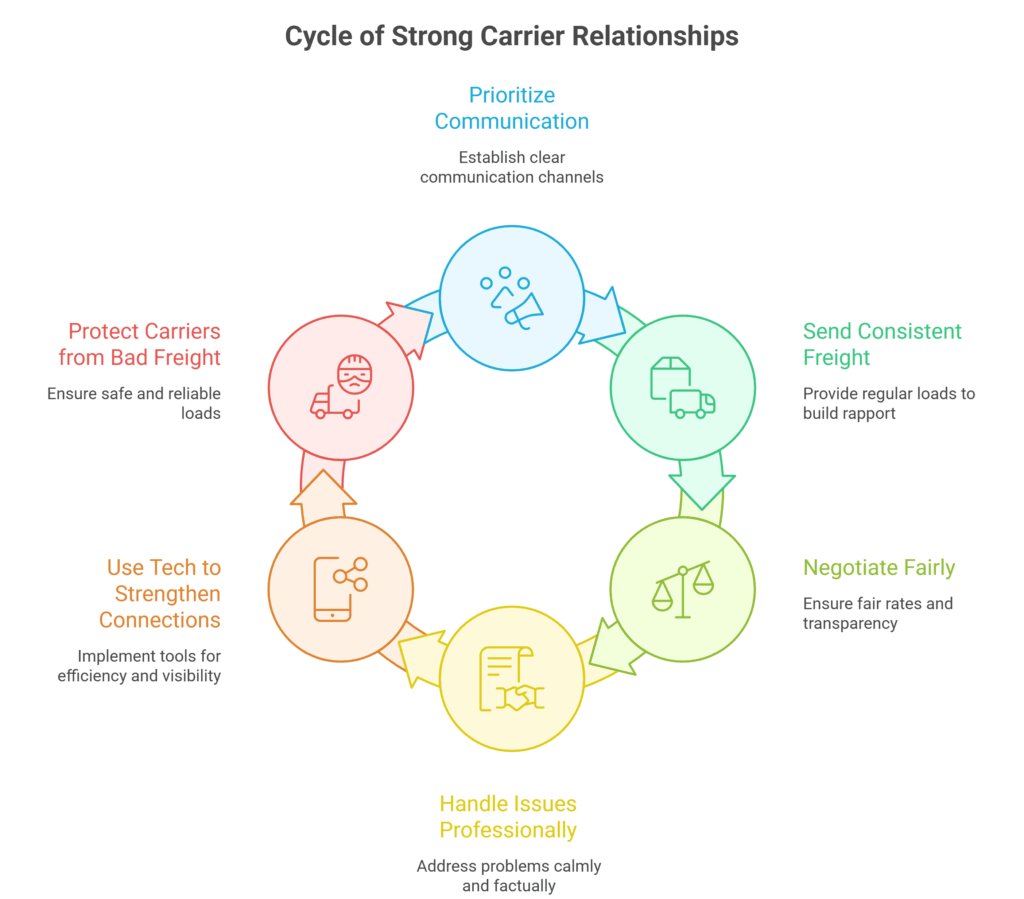
How to Manage Strong Carrier Relationships
1. Prioritize Communication
Carriers should know:
- Who to call
- How payments work
- What updates you expect
2. Send Them Consistent Freight
Even small but frequent loads go a long way toward building rapport.
3. Negotiate Fairly
Carriers remember:
- Fair rates during slow seasons
- Respectful negotiation
- Transparency
4. Handle Issues Professionally
When problems arise:
- Avoid emotional responses
- Stick to facts
- Focus on solutions
5. Use Tech to Strengthen Connections
Carrier network management tools help:
- Reduce check calls
- Improve visibility
- Speed up payments
6. Protect Carriers from Bad Freight
This earns loyalty, and keeps your broker carrier partnerships healthy.
“Carriers become loyal when brokers consistently offer more than freight, such as problem-solving support, fast payments, and clear communication. Loyalty is built one positive touchpoint at a time.”
Want to learn how the best brokers maintain long-term, profitable carrier relationships? Watch this breakdown to see real-world strategies for communication, loyalty building, and consistent carrier performance that keeps your network running smoothly.
Frequently Asked Questions (FAQs)
1. How long does it take to build reliable carrier network coverage?
Most independent brokers can begin forming a solid network in 60–90 days, but full optimization can take 6–12 months depending on freight volume and specialization.
2. What’s the best way to improve broker carrier partnerships?
Consistency like steady loads, fast communication, and mutual respect, creates long-term loyalty.
3. Do I need special software for carrier network management tools?
You don’t need them, but automated systems improve safety checks, monitoring, and onboarding speed dramatically.
Build Your Carrier Network
Building and managing a strong network of carriers isn’t just about moving freight, it’s about developing a system that gives you repeat capacity, protects your reputation, and grows your brokerage. By combining carrier sourcing strategies, fast freight broker carrier onboarding, performance monitoring, and relationship-based communication, you can build reliable carrier network coverage that lasts for years.
Ready to expand your carrier network and ensure reliable capacity? Contact us to strengthen relationships and grow your brokerage with confidence.
References
Federal Motor Carrier Safety Administration (FMCSA). (n.d.). Carrier Safety & Compliance. Retrieved from Discover more
FreightWaves. (n.d.). Carrier Vetting and Broker Partnerships. Retrieved from Discover more
Transport Topics. (n.d.). Managing Carrier Relationships and Onboarding. Retrieved from Discover more
DAT Solutions. (n.d.). Carrier Rating Systems & Performance Tracking. Retrieved from Discover more